Nizami Ganjavi Statue - Azerbaijan Baku
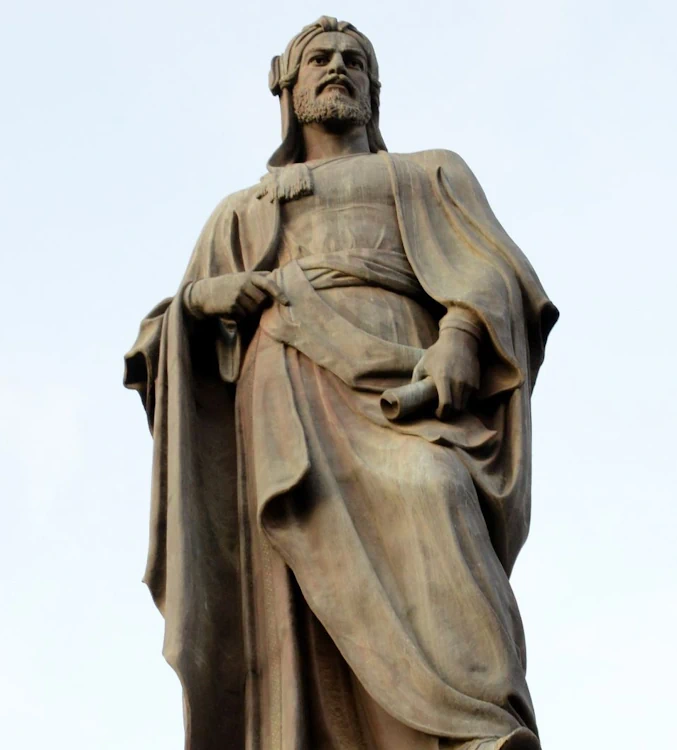
In Baku, two great figures from two different eras coexist side by side: one the political architect of the 20th century, the other the poetic genius of the 12th. The Nizami Ganjavi Statue stands at one of the city's busiest points, with that quietly towering presence that people pass by every day and are somehow influenced by without even realizing it. Nizami is a universal name that belongs not only to Azerbaijan but to the Persian poetic tradition and to Islamic literature as a whole.
Nizami Ganjavi: The Architect of Poetry
Nizami Ganjavi, who lived in Ganja during the second half of the 12th century, transformed the course of Middle Eastern and Central Asian literatures with his five great narrative poems known as the Khamsa. Comprising Makhzan al-Asrar, Khusraw and Shirin, Layla and Majnun, Iskandarnamah, and Haft Paykar, these works continue to be read, translated, and studied to this day as profound narratives on love, justice, philosophy, and humanity. When one considers that it was Nizami who gave the story of Layla and Majnun the universal form it holds today, the scale of his influence on the literary world becomes far clearer.
The Significance of the Statue in Baku
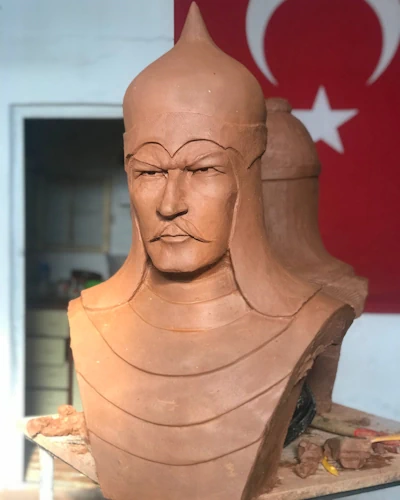
The Nizami Ganjavi Statue has become an emblem of Nizami Street, situated in one of Baku's busiest pedestrian districts. Since this street is one of the focal points of the city's shopping and social life, the statue stands in a location where thousands of people pass by every day. The statue's placement gives tangible form to Nizami's place in Azerbaijani cultural identity: he is not a presence confined to books, but one woven into the fabric of everyday life.
Nizami's Universality and the Dispute Over Ownership
The question of which national literature Nizami belongs to periodically becomes a source of academic and political tension among Iran, Azerbaijan, and other countries in the region. This poet, who wrote in Persian, is claimed as national heritage by both Iran and Azerbaijan. This multilateral sense of ownership can also be interpreted as proof of Nizami's universality: the fact that such intense rivalry exists over a poet's legacy demonstrates how enduring and defining his works truly are. The statue in Baku is the symbol that most openly expresses Azerbaijan's position in this debate.
Sonnet 4.6Date Added: