Matthew Flinders Statue - Australia Adelaide
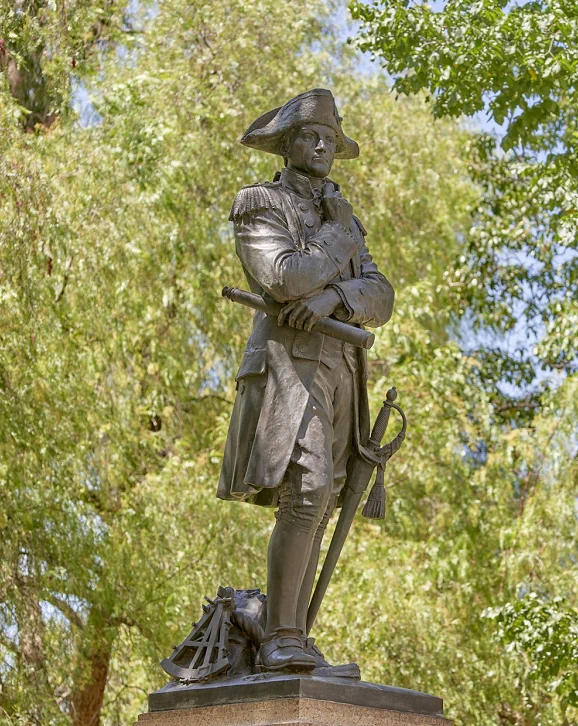
Standing in the heart of Adelaide under the bright sun of the southern hemisphere, the Matthew Flinders Statue is not merely a bronze reflection of an explorer; it is a silent but enduring witness to how a continent was discovered, mapped, and named. The statue of Flinders stands right in the heart of the lands he once set foot upon; this is not a coincidence but a conscious choice. Because Matthew Flinders went down in history as the first person to use the name Australia in the sense we use it today, and his contribution to the identity of this continent extends far beyond the coastline. Every visitor standing before the statue is actually looking not just at a man, but at the most critical period in the birth of modern Australia.
Who is Matthew Flinders?
Matthew Flinders was born in 1774 in the Lincolnshire region of England. Flinders, whose passion for seafaring became apparent at a young age, joined the Royal Navy as a young officer. The experience he gained during his early voyages soon made him an extremely talented naval officer for his time. However, he earned his true fame through his voyages of discovery to the Australian continent.
In his early explorations with George Bass in 1795, Flinders examined the southern coasts of Australia. These first journeys proved both his navigational skills and his capacity for geographical observation. Yet his most significant expedition took place between 1801 and 1803: he circumnavigated the entire continent of Australia with the HMS Investigator and prepared the first comprehensive map of the continent. This voyage was not just a geographical success; it was a scientific revolution.
Botanist Robert Brown and artist Ferdinand Bauer, who accompanied Flinders on the expedition, documented hundreds of new plant and animal species during this journey. Consequently, the HMS Investigator expedition was not only a mapping project but a comprehensive scientific expedition that introduced Australia's natural riches to the world. Flinders proposed naming the continent "Australia" instead of "Terra Australis," and this suggestion was accepted over time, reaching the present day.
Physical Characteristics and Artistic Identity of the Statue
The Matthew Flinders Statue is crafted with a realistic portrait approach and depicts Flinders in the naval officer attire of the period. One of the striking elements of the statue is the details such as the map or navigational instruments he holds in his hand: these symbolize the spirit of navigation and discovery that forms the essence of Flinders' identity. The location of the monument has been carefully chosen; its proximity to the city's central business district turns the statue from just a historical monument into a part of daily life.
In many cities across Australia, there are streets, bridges, universities, and other public structures bearing Flinders' name. This widespread naming practice shows how deep Flinders' place is in the Australian collective memory. The statue in Adelaide is the focal point of this broad symbolic picture, but only a part of it.
Flinders in the Context of Australia's Exploration History
The discovery and colonization of Australia by Europeans is a highly complex and controversial historical process. Names like James Cook, Arthur Phillip, and Matthew Flinders played decisive roles in this process. However, a narrative that positions these names only as heroes risks excluding the perspectives of indigenous peoples.
In recent years, there has been a growing trend in Australia to evaluate the legacy of such historical figures with a more critical eye. Aboriginal communities argue that discovery narratives mask the great destruction of their own lands and ways of life. This debate enriches the layers of meaning of monuments like the Matthew Flinders Statue: the statue now becomes an object that allows us to question not just a success story, but how a history is told and from whose perspective it is told.
Flinders Route on an Adelaide Visit
For someone visiting Adelaide and interested in Australian history, the Matthew Flinders Statue is one of the most natural starting points for exploring the city. The South Australian Museum, located near the statue, houses one of the world's most comprehensive collections of Australia's natural history and Aboriginal culture. The Adelaide Central Market, just a few minutes' walk away, is an ideal spot to discover the city's gastronomic culture.
When supported by trips to the Flinders Islands, the Flinders Ranges, and other geographical regions named Flinders in South Australia, this journey starting from Adelaide turns into a holistic experience that tells how far the legacy of a single explorer has spread across a vast geography. The Matthew Flinders Statue continues to be the starting point in the city for this grand picture.
Date Added: