Leshan Giant Buddha Statue - China
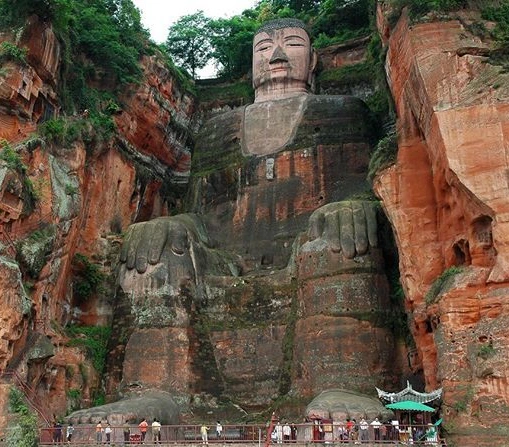
Rising at the confluence of three rivers in China's Sichuan province, the Leshan Giant Buddha has gone down in history as the world's largest stone-carved statue. Construction of this massive structure began in 713 AD during the Tang Dynasty and was completed in 803 AD, the result of approximately 90 years of labor. The statue is carved into a steep cliff face right next to the intersection of the Min, Dadu, and Qingyi rivers. With a height of 71 meters, it still holds the title of the world's largest stone Buddha statue today and attracts millions of visitors every year.
By Whom and Why Was the Statue Built?
The construction of the Leshan Giant Buddha was initiated by the Buddhist monk Hai Tong. Deeply affected by the frequent floods and drownings in this geography where the three rivers meet, Hai Tong conceived the idea of building a massive Maitreya Buddha statue to alleviate these sufferings. According to belief, the presence of such a large and holy statue would calm the river waters and protect the region. Furthermore, the stones and rock fragments discarded into the river during the carving process regulated the water flow and indeed reduced the risk of flooding. Hai Tong passed away before he could see the completion of the statue; the structure was finished by the officials who followed him.
Dimensions and Structural Features of the Statue
The dimensions of the Leshan Giant Buddha are among the fundamental elements that make it unique worldwide. The height of the statue is 71 meters, and the shoulder width is 28 meters. Its ears are 7 meters long, and its toes average 1.5 meters in length; this means that each toe is larger than an adult human. The Statue is crafted in the form of a seated Maitreya Buddha, with its hands resting on its knees. The cliff face is equipped with hidden drainage channels carefully designed to protect it against natural erosion over the centuries. This engineering detail reveals how advanced the technical knowledge of that period truly was.
Artistic and Religious Significance
The Leshan Giant Buddha stands out not only for its size but also for the deep religious and artistic meaning it carries. In Buddhist belief, Maitreya represents the Buddha who will come to the world in the future—the harbinger of happiness and salvation. The face of the statue leaves a powerful impact on visitors with the sense of calmness and peace in its expression. The fine craftsmanship reflecting the artistic understanding of the Tang Dynasty is clearly felt in the folds of the statue's clothing, facial features, and hand positions. The statue also showcases the powerful influence of the Buddhist communities of that period in the region and how magnificent state-sponsored religious art could reach.
UNESCO World Heritage Status
The Leshan Giant Buddha was included in the UNESCO World Heritage List in 1996 along with Mount Emei. This status represents the official recognition of the universal value the statue holds, not only for China but for all of humanity. This decision by UNESCO emphasizes the unique importance of the statue in terms of both cultural and natural heritage. When evaluated alongside the rich biodiversity and religious significance of Mount Emei, the region becomes one of China's most comprehensive heritage sites. Conservation efforts continue today, with the Chinese government and international organizations conducting various restoration projects to prevent surface erosion on the statue.
Where is the Largest Buddha Statue in China?
Leshan is a mid-sized city with a population of approximately 3.5 million, located in China's Sichuan province. The city is an important economic center in the region due to its geographical location, temperate climate, and fertile agricultural lands. The Leshan Giant Buddha has become an integral part of both the cultural identity and the economy of the city. The region also hosts an important Buddhist pilgrimage center like Mount Emei. This geography, the homeland of Sichuan cuisine, is an extremely attractive destination for both domestic and foreign tourists with its spicy flavors, natural beauties, and historical riches.
Visiting and Conservation Process
Tourists wishing to visit the Leshan Giant Buddha can reach Leshan from Chengdu in about a 2-hour journey. Boat tours on the river have gained great popularity to see the statue best; these tours offer a unique perspective that frames the massive figure in its entirety. On the other hand, it is also possible to reach the statue closely via narrow stairs descending along the rocky face. In recent years, comprehensive restoration work has been initiated against surface erosion and moisture problems. Protecting this unique example of history of sculpture art is considered a critical responsibility on behalf of both Chinese and world cultural heritage.
Date Added: