Leopold Sedar Senghor Statue - Senegal Dakar
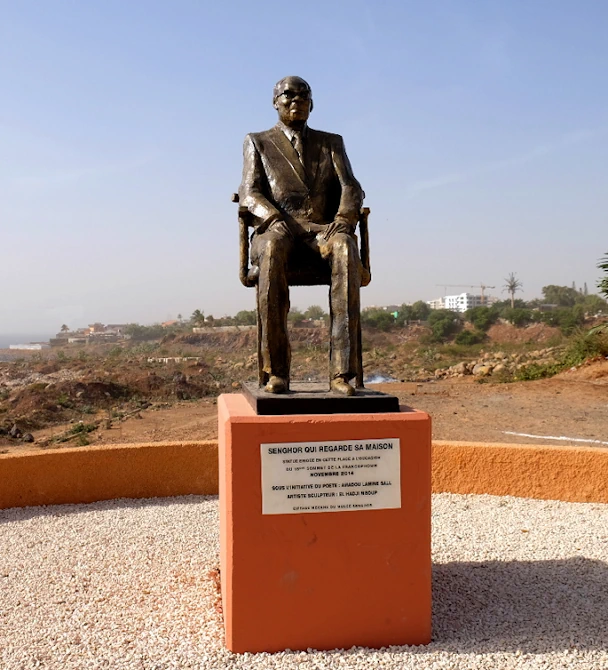
Dakar, the capital of Senegal, known as the gateway to West Africa, bears the traces of one of the continent's most powerful intellectual and cultural legacies. Senegal's first president, world-renowned poet, and one of the founders of the "Negritude" movement, Léopold Sédar Senghor, was born in 1906; in addition to his political identity, he went down in history as an intellectual who left a lasting mark on African literature and culture. Today, Dakar hosts a monumental statue that keeps his name and legacy alive. This monumental statue has become an indispensable stop for history and culture enthusiasts visiting the city.
Construction and History of the Statue
The Léopold Sédar Senghor statue is located in a special, green setting across from the museum dedicated to him in Dakar. The statue depicts Senghor with his glasses, cast in bronze in a seated position, with the Atlantic Ocean in the background. This calm and thoughtful depiction reflects Senghor's identity as both a poet and a statesman. The green areas around the statue and the nearby Léopold Sédar Senghor Museum offer visitors both a visual and cultural experience. Senghor's legacy is not limited to this statue and museum; Dakar's international airport also bears his name.
Features and Artistic Details of the Statue
The statue depicts Senghor in deep thought, with his characteristic glasses and seated posture. This depiction was deliberately chosen to immortalize Senghor not merely as a political leader, but also as a poet and thinker. The bronze statue is located in a quiet, tree-lined corner of Dakar, at a point where it meets the sea view, creating a special atmosphere with its surroundings. Due to its proximity to street vendors, the statue has also become a natural meeting point for local people.
Senghor Museum and Surroundings
The statue is located in Dakar's Fann-Point E-Amitié district, on Léopold Sédar Senghor Avenue. The museum directly opposite houses a comprehensive collection dedicated to Senghor's life and works. The area is one of Dakar's quiet and prestigious neighborhoods, surrounded by parks and gardens suitable for walking. It can be reached from other important points of the city by bus number 8 or 35. Nearby Gorée Island, the African Renaissance Monument, and Independence Square are also must-see attractions during a visit to Dakar.
Senghor's Legacy
Léopold Sédar Senghor, born in Joal in 1906, completed his education in Paris and became one of the foremost representatives of the "Negritude" movement, along with Aimé Césaire, which aimed to rebuild the cultural identity of black Africans. In 1960, Senghor declared Senegal's independence and became the country's first president. He voluntarily stepped down from office in 1980; this act solidified his historical reputation as one of the rare African leaders to peacefully transfer power. Senghor, the first person of African descent to be elected to the French Academy in 1983, passed away in Portugal in 2001. His legacy continues to be one of the cornerstones of Senegal's national identity in politics, poetry, and culture.
Visitor Information
The Léopold Sédar Senghor Statue is located in Dakar's Fann-Point E-Amitié district, on Léopold Sédar Senghor Avenue. It can be reached from the city center by bus number 8 or 35; visitors need to get off approximately 10 minutes' walk from the statue. The statue is in a public area and admission is free. Early morning or afternoon light conditions are more suitable for photography.
Date Added: