Kunsthistorisches Museum - Vienna, Austria
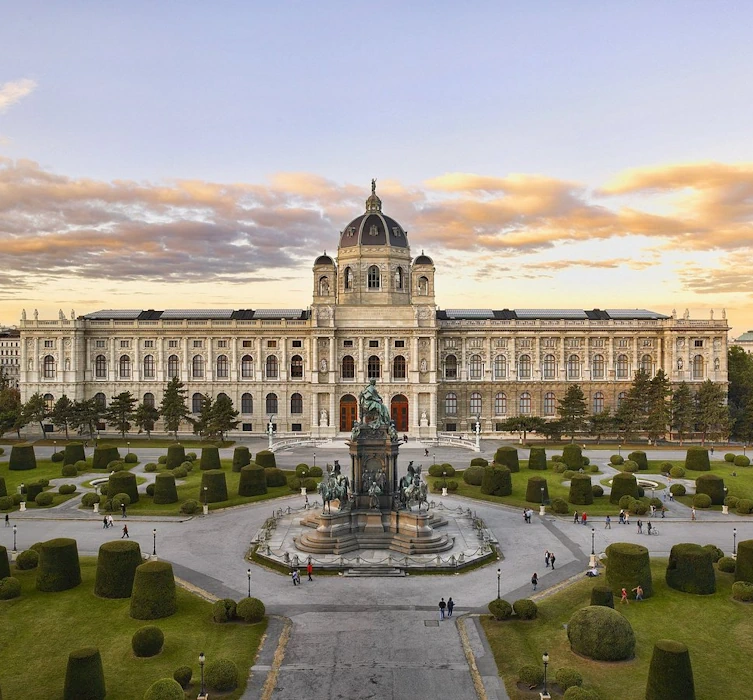
Located in the heart of Vienna, Austria, directly across from Maria-Theresien-Platz and rising as one of the most visible symbols of the Habsburgs' imperial legacy, the Kunsthistorisches Museum is more than just a museum; it is the most comprehensive and magnificent repository of centuries of European artistic heritage. Opened in 1891 by order of Emperor Franz Joseph I, the Museum of Art History has since maintained its unshakable position among the world's premier art institutions. With a collection exceeding eight million works, the museum houses not only the treasures amassed by the Habsburg family over centuries but also the most distinguished examples of human artistic genius. The building itself is a masterpiece; the Neo-Renaissance structure designed by Gottfried Semper and Carl von Hasenauer is positioned symmetrically with the Natural History Museum, together forming one of Vienna's most iconic urban compositions.
Where is the Kunsthistorisches Museum: Location and General Information
The Kunsthistorisches Museum is located in Vienna's 1st District, at Maria-Theresien-Platz. It is easily accessible by walking from the Volkstheater station, where the U2 and U3 metro lines intersect, or from the U2 Museumsquartier station. While the museum is open year-round, it is typically closed on Tuesdays. Situated near the MuseumsQuartier, the museum sits at the very heart of the city's cultural tourism alongside the Hofburg Palace and Kunsthalle. The interior of the building is as impressive as its exterior; marble columns, gilded ceilings, and a massive dome greet visitors with architectural wonder before they even see the art. Even sitting in the café in the entrance hall and gazing at the domed ceiling is an experience in itself.
The crown jewel of the collection is undoubtedly the gallery dedicated to the works of Pieter Bruegel the Elder. Housing the world's largest Bruegel collection, this area presents the artist's sharp insight into village life, seasonal cycles, and the human tragicomedy in all its richness. Additionally, works by the greatest masters of European painting, such as Vermeer, Raphael, Caravaggio, Titian, and Velázquez, are featured in the collection. The sections dedicated to Egyptian, Greek, and Roman antiquities offer a comprehensive panorama of civilizations, taking the museum far beyond being a mere picture gallery.
Depth of the Collection and the Visitor Experience
It is nearly impossible to see everything in the Kunsthistorisches Museum in a single visit; the sheer scale and density of the collection force visitors to prioritize. The picture gallery, the arms and armor collection, the coin collection, and the decorative arts department form the museum's various layers. In particular, the Ancient Egyptian and Near Eastern collection showcases the fruits of Austria's 19th-century archaeological activity. Audio guides and guided tours offer invaluable support for understanding the historical context of the works. As the museum's special events and temporary exhibitions regularly define Vienna's cultural agenda, it is recommended to check the schedule before visiting.
Significance for Tourism and Cultural Heritage
The Kunsthistorisches Museum is an indisputable pillar of Vienna's cultural tourism. Together with the Hofburg Palace, Schonbrunn, and St. Stephen's Cathedral, the museum forms the backbone of the route that makes Vienna one of the world's most important cultural capitals. For visitors interested in European art history, the Habsburg Empire, and Renaissance and Baroque painting, this museum offers an experience of quality and intensity that cannot be found anywhere else. Visiting Vienna and missing this museum means leaving without witnessing the true soul of the city.
Date Added: