King Hamad Statue - Bahrain Manama
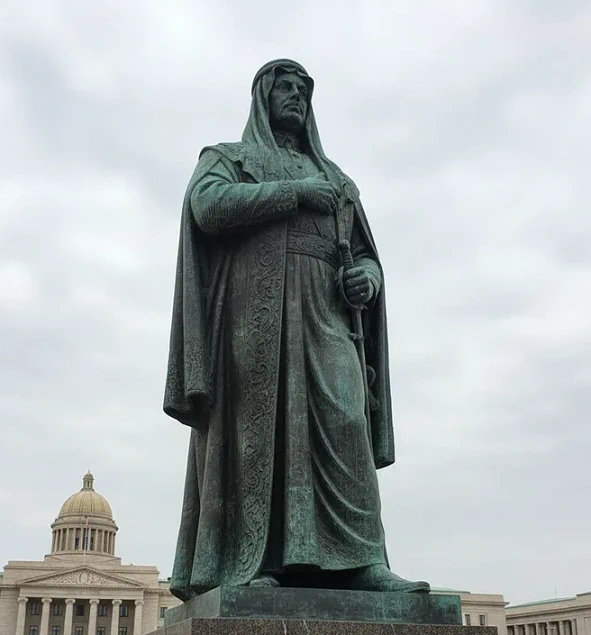
In the wide boulevards of Manama, Bahrain's capital, where the refreshing breezes of the Gulf blow and modern architecture intertwines with traditional structures, one of the country's most powerful symbols stands tall: the King Hamad Statue. This statue is not merely a figure cast in stone and bronze; it is the most visible expression of Bahrain's transformation in the 21st century, its will to modernize, and its national identity. King Hamad bin Isa Al Halife has steered Bahrain through a profound transformation in both domestic and foreign policy since ascending to the throne, and as a leader who has left his mark on the country's steps toward democratization, economic openings, and regional diplomacy, he has earned a special place in the hearts of his people. Standing at the heart of the city, his statue in Manama serves as one of the most powerful means of conveying this great legacy and transformative vision to future generations. The decisive role of King Hamad's vision in turning Bahrain — one of the smallest Gulf states — into one of the most active and dynamic countries in the region adds immeasurable meaning to what this statue represents.
King Hamad's Life and Contributions to Bahrain
King Hamad bin Isa Al Halife was born in Manama in 1950. Having completed his military education in England, Hamad was prepared for state governance from an early age. Following the death of his father in 1999, he first assumed the title of Emir, and then, with Bahrain's declaration as a kingdom in 2002, became King. From the early years of his reign, he was the architect of sweeping reforms in the country. The National Action Charter, drafted in 2001, went down in history as one of the most important documents in Bahrain's democratization process, and the fact that over ninety percent of the population approved it clearly demonstrated how broadly King Hamad's reformist identity was embraced. The release of political prisoners, steps toward press freedom, and the granting of political rights to women were among the defining developments of this period.
Under King Hamad's leadership, Bahrain also underwent a major economic transformation. Diversification policies aimed at reducing dependence on oil revenues transformed the finance sector, tourism, and the service industry into the country's new economic engines. Manama has today become one of the Gulf region's most important financial centers, drawing the attention of international investors. King Hamad's visionary leadership played a decisive role in this economic transformation. In foreign policy, Bahrain under King Hamad has consolidated its active position within the Gulf Cooperation Council and emerged as an actor contributing to regional stability.
The Statue's Location and Manama's Historic Fabric
The King Hamad Statue is situated at one of Manama's most prestigious and bustling points. This area, where the city's modern business districts intersect with its historic bazaars, showcases Bahrain's unique urban fabric that simultaneously holds past and future. With its proximity to Manama Fort and historic marketplaces, the statue engages in an organic dialogue with the city's historical memory. Located along the daily route of thousands of Bahrainis from the first light of morning to late at night, this area transforms the statue from a mere tourist attraction into a symbol deeply embedded in the collective memory of the city's people.
Manama is one of the most cosmopolitan and multi-layered capitals in the Gulf region. In this city where the narrow streets of old Arab neighborhoods coexist with glass skyscrapers, the King Hamad Statue also symbolically reinforces the bridge between traditional values and modern vision. The wide square surrounding the statue transforms in the evening hours into a vibrant gathering point for families, travelers, and locals alike.
Artistic and Symbolic Features of the Statue
The King Hamad Statue was brought to life with meticulous craftsmanship reflecting Bahrain's understanding of art and culture. The posture of the figure is designed in a balance that simultaneously conveys authority, dignity, and closeness to the people. Depicted in traditional Arab attire, King Hamad embodies both his devotion to cultural roots and his identity as a contemporary leader. The inscriptions on the base offer concise yet meaningful information about his place in Bahrain's history and the values he has brought to the country. The choice of materials and the overall design philosophy of the statue are conceived to foreground a sense of permanence and honor.
The symbolic power of the statue stems not only from its physical characteristics but also from King Hamad's resonance within Bahraini society. The reforms and modernization steps implemented during his reign elevate the statue far beyond an ordinary monument. To stand before this statue is to come face to face with Bahrain's transformation over the last quarter century.
Tourism and Regional Significance
Bahrain is rapidly advancing toward becoming one of the Gulf region's most distinctive tourism destinations. The tourism potential shaped by the Bahrain International Circuit, luxury hotels, historical ruins, and a vibrant nightlife draws millions of visitors to the island each year. The King Hamad Statue forms an important stop on this tourism route. Particularly for visitors interested in the political and cultural history of the Gulf states, the statue serves as a significant window into Bahrain's modern history.
Date Added: