Kathe Kollwitz - German Sculptor
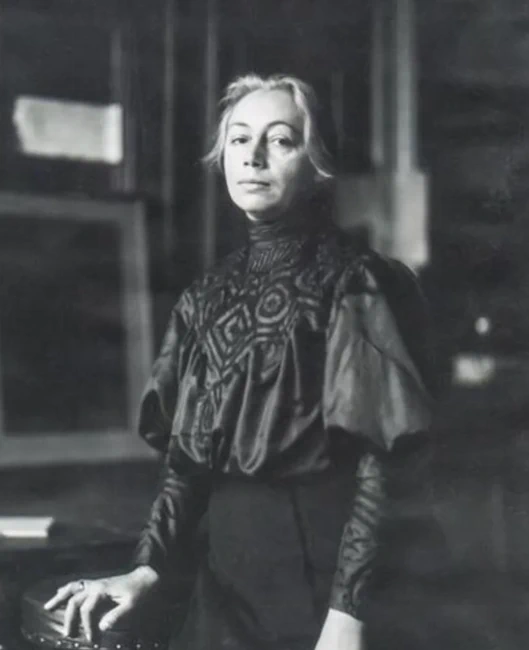
Käthe Kollwitz formed one of Germany's most powerful and consistent artistic voices throughout a life spanning from the late 19th century to the mid-20th century. Born in Konigsberg (now Kaliningrad) in 1867, Kollwitz earned an undisputed place among artists who depicted the deepest portraits of poverty, war, motherhood, and social suffering through her works in sculpture, printmaking, and drawing. Her art is never decorative; her works disturb, shake, and provoke the viewer. However, this discomfort is not produced to destroy, but to build. By placing the most vulnerable segments of society, the deepest pains, and the most human moments of solidarity at the center of her art, Kollwitz established a universal language that speaks both to her era and to all ages. One does not look for propaganda or political agitation in her work; what she does is far more profound: she shows what humans do to one another and how, in the face of it all, the human spirit remains standing.
Who is Käthe Kollwitz? Her Artistic Journey and Masterpieces
Käthe Kollwitz was an artist who lived in the working-class districts of Berlin and was in direct contact with the poor, thanks to her husband Karl Kollwitz’s work as a general practitioner. This contact allowed her to draw the raw material of her art directly from life. What she witnessed fed not an abstract empathy, but a concrete testimony. Her graphic series "The Weavers' Revolt" and "The Peasants' War" are among the most striking examples of social art from this period and are considered pioneering works of German Expressionism. Having lost her son Peter in World War I, Kollwitz processed this grief for years, eventually producing her most renowned sculptures. The "Grieving Parents" sculpture, placed in the Vladslo German War Cemetery in Belgium, consists of a mother and father kneeling at their son's grave. This work speaks not of abstract war statistics, but of the concrete and deep pain left behind by every death. Passing away in 1945 during the final days of World War II, Kollwitz continued to produce until her last breath.
Technical Mastery and Contribution to Sculptural Art
Kollwitz turned to sculpture later in her career compared to her other disciplines, yet this transition took place on the foundation of an exceptionally strong artistic maturity. The sensitivity to light and shadow she gained in her graphic works, combined with her meticulous approach to surface textures, created a unique sense of depth in her sculptures. The figures she produced using the bronze casting technique carry a sense of weight and introspection reminiscent of Barlach’s voluminous fabric masses. The faces are not idealized; they are loaded with lines and raw emotion. Works such as "Mother with Her Dead Son" or "The Embrace" convey the most fundamental human emotions—love, loss, and the need for protection—through the physical contact between figures. The "Mother with Her Dead Son" sculpture, an enlarged version of which is housed in Berlin’s Neue Wache memorial today, is one of the most recognized and debated public art pieces in Germany's modern history. The artistic philosophy Kollwitz left behind proves most powerfully that art does not have to be beautiful, but it must always be honest.
Date Added: