Julio González - Spanish Sculptor
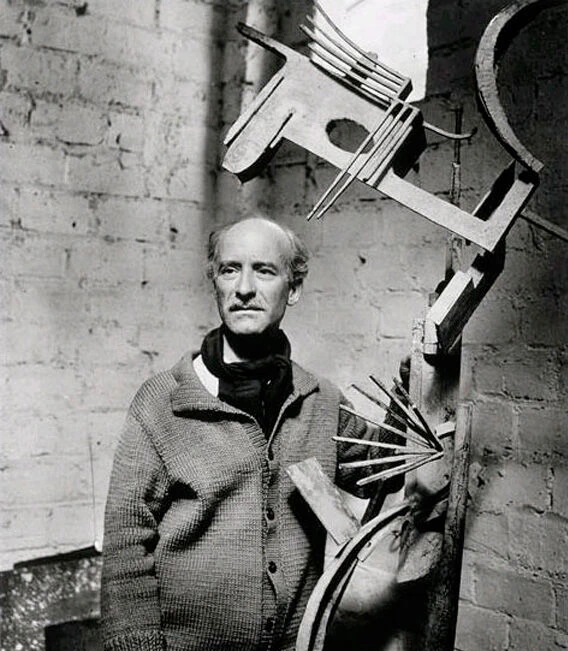
Julio González has gone down in sculpture history as the artist who provided metal sculpture with a truly modern artistic language and played the most decisive role in this transformation. Born in 1876 in Barcelona, Spain, as the child of a family of goldsmiths and blacksmiths, González developed his artistic identity by drawing nourishment from both traditional metal craftsmanship and the contemporary art scene in Paris. The close friendship and collaboration he established with Picasso became a critical turning point in González's artistic maturation. However, it is a great injustice to define him merely as an assistant in Picasso's shadow; González is one of the most original and influential metal sculptors of the 20th century in his own right.
Where is Julio González, Information About Him: A Metal Voice from Barcelona to Paris
The place where you can see González's works most intensely is the Reina Sofía National Art Center in Madrid. Located under the same roof as Picasso's Guernica, the González collection presents two giants of Spanish avant-garde art together. This proximity is no coincidence; the two artists were in a relationship that deeply influenced each other both personally and artistically. In addition, MACBA in Barcelona and various institutions in Valencia also host González's works. In Paris, the Pompidou Center and the Musée d'Art Moderne preserve his legacy in the French art world.
González's life was deeply affected by the political climate created by the Spanish Civil War. A consistent supporter of the Republican cause, González directly reflected the pain and anger of this period in his work titled "Montserrat." This sculpture, depicting a peasant woman holding a sickle and screaming, went down in art history as one of the most striking visual expressions of both individual and collective pain.
The Transformation of Metal Sculpture: González's Revolutionary Contribution
Before González, metal was mostly used in sculpture production through the casting method; that is, metal was poured into a mold and turned into a solid mass. González, however, discovered that metal could be processed directly through welding, bending, and cutting, and this discovery radically changed the history of sculpture. This method, which he defined as "drawing in space," allowed metal to function as both a material and a line. Instead of solid masses, thin metal rods and plates floating in space completely redefined the relationship between the sculpture and its surroundings. This innovation left a deep and lasting impact on all subsequent generations of metal sculptors.
The techniques developed during the period he worked with Picasso opened ways to carry the two-dimensional fragmented understanding of Cubism into three dimensions. This collaborative research deeply affected both Picasso's understanding of sculpture and González's maturation. But González stood out not only as the receiver but also as the giver in this relationship; much of the technical infrastructure in Picasso's metal sculptures was fed by González's craft and knowledge.
Contribution to Sculpture Art and His Legacy
Julio González passed away in 1942 in Paris. The legacy he left behind is extremely comprehensive in both technical and aesthetic terms. The most important metal sculptors of the 20th century, such as David Smith, Anthony Caro, and Richard Serra, are among the names following the path cleared by González. Turning metal sculpture from a craft practice into a conceptual language, and doing so without ever losing his loyalty to his own cultural roots, makes González an extremely integrated artist both technically and humanly.
Date Added: