Jomo Kenyatta Statue - Kenya Nairobi
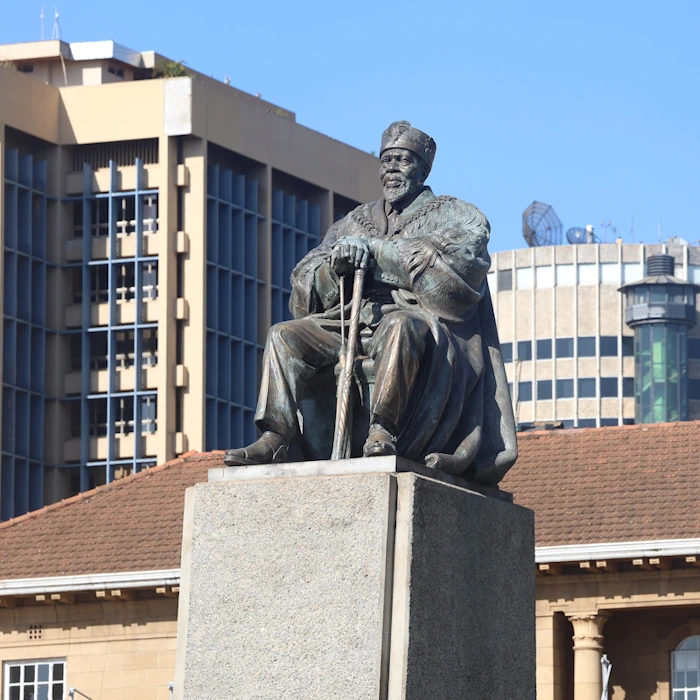
Nairobi, the capital of Kenya, one of East Africa's most developed and cosmopolitan cities, hosts a monument dedicated to the most important figure in the country's struggle for independence and its founding history. Jomo Kenyatta, Kenya's first president and known as the "father of the nation," was born around 1894; he became a symbol of the independence struggle against British colonial rule and governed his country from 1963 to 1978. Today, Nairobi hosts a magnificent monumental statue bearing his name and rising in the city center. This statue has become an indispensable stop for history enthusiasts and tourists visiting the region.
Construction and History of the Statue
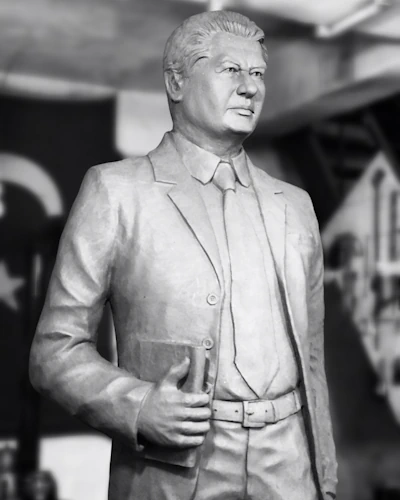
Jomo Kenyatta's statue in City Square was completed in 1969 by British sculptor James Butler; it was cast in England, shipped to Mombasa in a container, then transported by truck to Nairobi, and officially unveiled in 1973. This seated bronze statue, approximately 3.7 meters high (twice Kenyatta's actual size), stands out with its extremely fine details: even Kenyatta's birthmark on his face and his characteristic open-toed sandals are reflected in the statue. Butler left his job to become a full-time sculptor to create the statue; the work marked a turning point in his career. The statue has been granted Kenya National Monument status and is also featured on the back of Kenyan currency.
Features and Artistic Details of the Statue
The statue depicts Kenyatta in a university rector's gown, holding a "fimbo" (a walking stick that became his symbol), gazing at the horizon. The seated figure rises on a reinforced concrete plinth and, together with the surrounding 75-square-meter paved courtyard, forms a powerful urban focal point. The statue is located right in the middle of City Square, freely accessible from all directions. The visual composition it creates with the Kenyatta International Convention Centre (KICC) building rising in the background is considered one of Nairobi's most striking urban images.
City Square and Surroundings
The statue is located in City Square, right in the center of Nairobi, next to the High Court and the Kenyatta International Convention Centre (KICC). The square, built in the 1930s, was adorned with a statue of King George V during the colonial era; with independence, Kenyatta's statue became the new focal point of this symbolic area. Around it are important public buildings such as the High Court, KICC, and the Nairobi Law Courts. The KICC, another important structure named after Kenyatta, is also a recommended place to visit with its observation deck offering panoramic views of Nairobi.
Kenyatta's Legacy
Jomo Kenyatta's political journey, which began in his youth by advocating for Gikuyu traditions and land rights, continued with his education in England. He was associated with the Mau Mau rebellion and imprisoned by the British between 1952 and 1961; after his release, he quickly rose to become Kenya's most powerful political figure. On December 12, 1963, he declared Kenya's independence and subsequently became president. Kenyatta, who remained in office until his death in 1978, shaped Kenya's national identity with his "Harambee" (unity and solidarity) philosophy. Today, both his statue in City Square and the airport and convention center named after him keep his legacy alive.
Visitor Information
The Jomo Kenyatta Statue is located in City Square, within the KICC campus, in the center of Nairobi. It can be easily reached on foot or by taxi from any point in the city. As the statue is in a public area, it can be visited free of charge throughout the year. The square becomes lively during the December 12 Jamhuri Day (Kenya Republic Day) celebrations.
Date Added: