Jaume Plensa - Spanish Sculptor
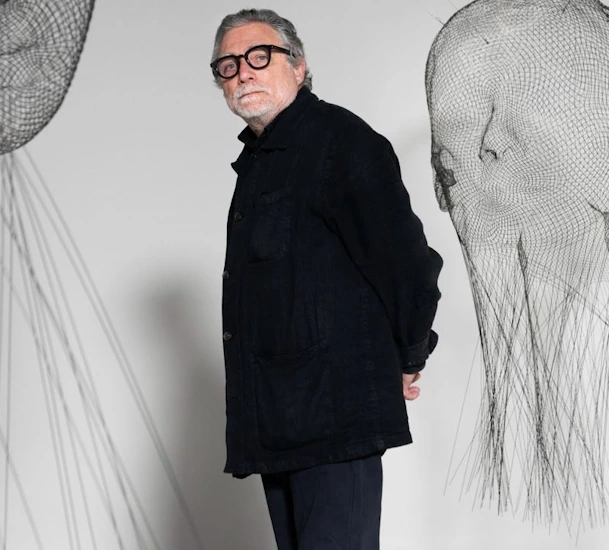
Jaume Plensa was born in Barcelona, Spain, in 1955 and is recognized today as one of the most prominent public sculptors in the international art world. It is nearly impossible to forget his works once you have seen them; because Plensa designs sculpture not merely as a physical object, but as a multi-layered experience where light, sound, language, and the human body melt together to produce new meaning. The Crown Fountain in Chicago has become one of the most photographed public artworks in the world, and the recognition of this piece has pulled Plensa into the center of discussions regarding sculpture in public spaces. However, defining him solely as the artist of the Crown Fountain would mean seriously ignoring the breadth and depth of his production.
Artistic Identity and Style
The most prominent recurring motif in Plensa's sculptures is the human head and face. However, these heads are not the products of portraiture in the traditional sense; they are abstracted, enlarged figures, sometimes composed of letters and text, and sometimes made transparent as cage structures. These figures are mostly depicted with closed eyes; this detail is intentional and full of meaning. Closed eyes symbolize introspection, silence, thought, and perhaps dreams. For Plensa, sculpture is not a face looking outward; it is a consciousness journeying inward.
Language and alphabets are another powerful element that we constantly encounter in his works. Figures formed from the letters and writing systems of different languages create both a visual poem and a conceptual question mark. Does language create the human, or does the human create language? This question lies silently beneath many of Plensa's works.
The Crown Fountain and His Place in Public Art
The Crown Fountain, opened in Chicago’s Millennium Park in 2004, is Plensa’s greatest public success. The faces of Chicago citizens projected onto two giant glass towers, with water spouting from these faces, transform the work into both an interactive playground and a profound portrait of the community. The way the work has been embraced by the public, attracting visitors year-round and integrating with the city, constitutes a major reference point for what public art can be. With this piece, Plensa solidified his place among the artists who redefine the understanding of public art.
Contribution to Sculptural Art
Plensa's most lasting contribution to sculptural art is his persistent stance on transforming public space from a mere exhibition area into a platform for experience and dialogue. Positioning the viewer as an active participant rather than a passive one makes his works some of the most accessible and inclusive sculptures of his era. With his closed eyes, his passion for language and text, and his skill in using light as a sculptural material, Plensa continues to be a unique voice that both expands and deepens the boundaries of contemporary sculpture.
Date Added: