Ismail Somoni Statue - Tajikistan Dushanbe
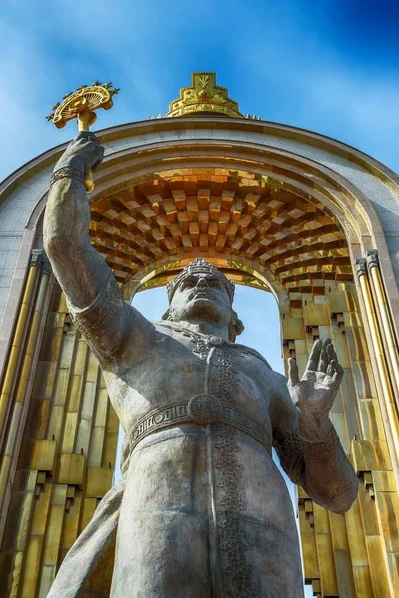
Dushanbe may be one of Central Asia's smallest capitals, but when you stand before the Ismoil Somoni Statue, you feel the weight of the history this city carries. Ismoil Somoni, whose name graces Tajikistan's national currency, its highest mountain peak, and dozens of streets and squares, is the historical foundation upon which modern Tajikistan has built itself. His statue is the most visible expression of that foundation.
Ismoil Somoni: The Founding Figure of Tajik Identity
Ismoil Somoni transformed the Samanid Dynasty into one of the most powerful political and cultural centers of Central Asia in the late 9th century. Under his leadership, Bukhara became one of the leading capitals of learning and art in the Islamic world. The golden age of Persian written literature flourished during this period, and poets such as Rudaki found patronage at his court. From the perspective of Tajik nationalism, Somoni is the most important reference point proving the historical legitimacy of Tajik ethnicity and language. This is why post-Soviet Tajikistan adopted him as a national symbol.
The Role of the Statue in Dushanbe
The Somoni Statue welcomes visitors at the monument grounds located on Dushanbe's Rudaki Avenue. Remarkable for its grand scale, the statue has become an emblem of the city. The surrounding Somoni Park is one of Dushanbe's most beloved open-air spaces, serving as a gathering point for locals and the easiest starting point for visitors seeking to grasp the city. The statue takes on a different character at night with its illumination, offering photographers exceptional compositions.
Historical Memory and Heritage in Tajikistan
For a Tajikistan still tending to the wounds of civil war, placing a figure like Somoni at the center was not merely a nostalgic choice. It also became a symbolic instrument of social healing and national unity. Somoni's legacy has permeated every sphere of Tajik public life, from language policy and educational curricula to the currency and sporting events. The statue in Dushanbe continues to be the most tangible and accessible expression of this far-reaching sense of ownership.
Date Added: