Ibn Battuta Statue - Morocco - Tangier
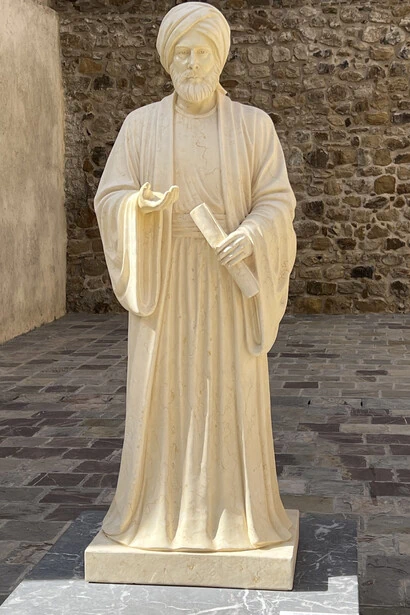
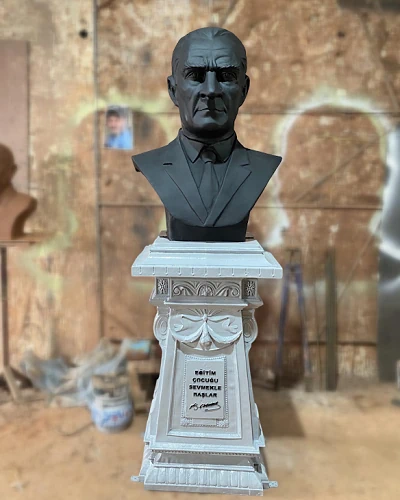
Located at the strategic point of the Strait of Gibraltar in northwestern Morocco, the city of Tangier has hosted different civilizations throughout history and served as a bridge between East and West. One of the greatest figures raised by this ancient city is undoubtedly the legendary 14th-century traveler Ibn Battuta. Tangier is not only Ibn Battuta's birthplace but also the starting point of his great journey that would last 29 years and take him all over the world. The city honors this great son with various monuments, museums, and public spaces. The Statue of Ibn Battuta is a concrete expression of Tangier's preservation of this unique heritage and its desire to pass it on to future generations.
Ibn Battuta's life began in Tangier in 1304 and took him across a vast geography stretching from North Africa to China, and from India to Andalusia. Setting out at the age of 21 to fulfill his pilgrimage duty, Ibn Battuta turned this journey into a lifelong adventure of discovery. His travels were not limited to geographical discoveries; they also provided invaluable information about the cultural, social, economic, and political structures of the places he visited. His travelogue, the Rihla, is a unique source offering a vivid panorama of the medieval Islamic world and beyond. The Statue of Ibn Battuta in Tangier symbolizes the courage, curiosity, and thirst for knowledge of this great traveler. The Statue stands in the heart of the city, amidst the hustle and bustle of modern life, as a touchstone reminding us of the great spirit of the past.
Ibn Battuta: The Greatest Traveler and Scientist of the Middle Ages
Abu Abdullah Muhammad Ibn Battuta, whose full name was Abu Abdullah Muhammad b. Abdullah b. Muhammad b. Ibrahim al-Lawati at-Tanji, was born in Tangier on February 24, 1304. Coming from a family belonging to the Berber Lawata tribe, Ibn Battuta received a good education and turned towards the profession of qadi (judge). However, his destiny was not limited to being just a qadi; it made him one of the world's greatest travelers. Setting out with the intention of pilgrimage in 1325, Ibn Battuta turned this holy journey into a world tour that lasted exactly 29 years. During this time, he covered a distance of approximately 117,000 kilometers, traveling across a wider geography than even Marco Polo. His travels covered more than 40 modern-day countries.
Ibn Battuta's travels are not just the memories of a traveler. Everywhere he went, he made observations, took notes, and examined different cultures, forms of government, social structures, and economic life in detail. He compiled these observations in his work titled Rihla, which he wrote upon his return. The Rihla is not just a travelogue, but also a book of history, geography, ethnography, and sociology. The work provides first-hand information about the political, religious, and cultural conditions of the medieval Islamic world and other civilizations. During these travels, Ibn Battuta met many different rulers, scholars, and common people, witnessing their lives. These experiences enriched his worldview and made him a universal thinker. The Statue of Ibn Battuta in Tangier is a symbol of this extraordinary life story and passion for knowledge.
The Legacy of Ibn Battuta in Tangier: Museum, Tomb, and Public Spaces
The city of Tangier preserves the legacy of Ibn Battuta with great care. There are many important buildings and monuments in the city bearing the name of this great traveler. Foremost among these is the Ibn Battuta Museum, which opened in the Tangier Kasbah area in 2022. This museum presents the traveler's life, travel routes, the cultures he encountered, and the importance of the Rihla to visitors through interactive exhibits. The museum offers an opportunity to journey into the world of Ibn Battuta, telling his legacy in a modern language. Through exhibits, maps, objects, and timelines, the museum reveals Ibn Battuta's 14th-century adventures.
The Tomb of Ibn Battuta, located in the Medina of Tangier (the old city), is a modest but spiritually significant place believed to be the traveler's final resting place. Located on Rue Ibn Batouta, this tomb offers visitors the chance to be close to the spirit of Ibn Battuta. The city's international airport also bears Ibn Battuta's name: Tangier Ibn Battouta Airport. It is likely that there are various visuals, busts, or small monuments honoring the traveler at the airport. Additionally, the Ibn Battuta Stadium, one of Tangier's major sports complexes, also bears his name. These structures show how important a figure Ibn Battuta is for Tangier and how much the city values his legacy. While the Statue of Ibn Battuta is just one part of this extensive heritage, it is one of its most visible and symbolic representations.
Date Added: