Ho Chi Minh Statue - Ho Chi Minh City, Vietnam
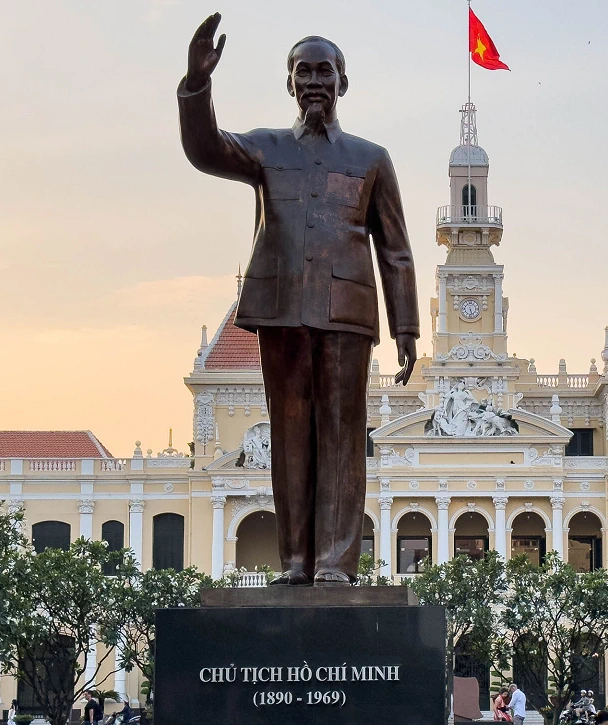
In Ho Chi Minh City—formerly Saigon—the most populous and dynamic metropolis in Vietnam, a figure rises beneath the tropical sun and the shadow of colonial-era landmarks: Ho Chi Minh. This statue is not merely a monument dedicated to the memory of a founding father; it is the most profound symbol of the Vietnamese people’s decades-long struggle for independence, anti-colonial resistance, and national identity building. As one of the most influential revolutionary leaders of the 20th century, Ho Chi Minh left an indelible mark on both Vietnamese history and the global political stage. From the fight against French colonial rule to the long and grueling conflict with the United States, his name appears on every page of this historical journey. Even for a visitor unfamiliar with the city, the statue of this legendary leader, for whom the city is named, carries an undeniable weight.
Who is Ho Chi Minh and the Struggle for Vietnamese Independence
Ho Chi Minh was born in 1890 in the Nghe An province of Vietnam. During his youth, he traveled first to France and then across the globe, encounters that introduced him to Marxist thought and fueled his anti-colonial consciousness. In 1930, he founded the Communist Party of Vietnam, bringing Vietnamese revolutionaries under a single banner. Following World War II, he declared the independence of the Democratic Republic of Vietnam in 1945; a historic proclamation famously inspired by the American Declaration of Independence.
The subsequent First Indochina War against France lasted eight years, ending in 1954 with the historic victory at Dien Bien Phu and the French withdrawal from Indochina. However, peace was short-lived. The division of the country into North and South, followed by the intervention of the United States, overshadowed the final years of his life. Ho Chi Minh passed away in 1969, before he could see a reunified Vietnam. Nevertheless, the unification achieved in 1975 was dedicated to his memory, and the city of Saigon was officially renamed Ho Chi Minh City in his honor.
Location and the City’s Historical Fabric
The Statue of Ho Chi Minh stands at the head of Nguyen Hue Boulevard, directly in front of the People’s Committee Building. The juxtaposition of the statue with the People's Committee Building—one of the finest examples of French colonial architecture—spatializes the deep tension between a colonial past and national liberation. This deliberate placement offers visitors a powerful experience, allowing them to feel different layers of history simultaneously.
Ho Chi Minh City is one of Southeast Asia's fastest-changing metropolises. In a city where millions of motorbikes flow through streets and skyscrapers compete with colonial structures, the Ho Chi Minh Statue stands as a constant anchor of the city’s identity. Particularly at night, the illuminated statue and its surrounding plaza become one of the most photographed landmarks in the country.
Construction, Features, and Sculptural Style
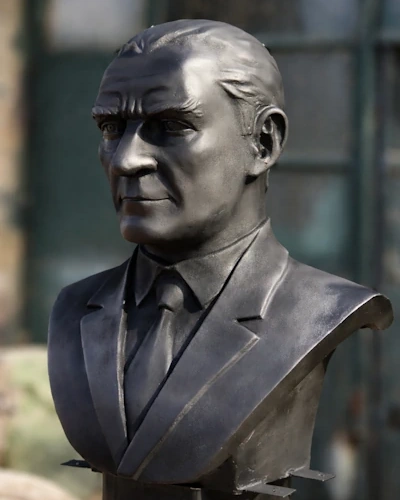
Cast in bronze, the statue depicts Ho Chi Minh with a warm, welcoming posture—arms slightly open and leaning forward. This stance symbolically reflects the leader's close and sincere relationship with his people, portraying a protective and embracing figure. Rather than being shown in ornate royal or military regalia, he is depicted in simple attire evocative of the working class, emphasizing his identity as a "man of the people" rather than a distant, hierarchical ruler. The inscriptions on the pedestal provide essential details regarding his life and the Vietnamese revolution.
Place in Vietnam’s National Memory and Impact on Tourism
Ho Chi Minh continues to be affectionately remembered in the collective memory of Vietnam as "Bac Ho," or Uncle Ho. This endearing nickname is the strongest indicator that he is perceived not just as a political authority, but as a member of the family. Every year, millions of domestic and international visitors stop by this statue in front of the People’s Committee Building. Together with the nearby Independence Palace, War Remnants Museum, and Ben Thanh Market, the statue serves as a central pillar of the city’s main tourist circuit.
Date Added: