Henry the Navigator Statue - Sagres Portugal
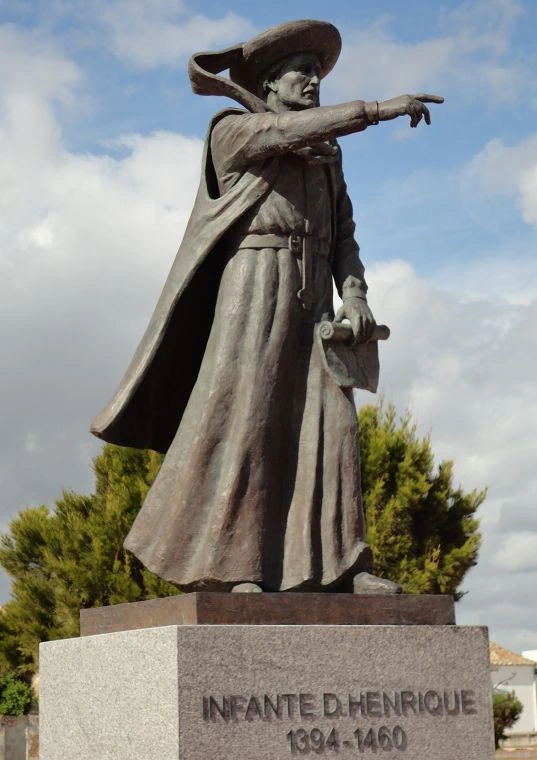
Among the most powerful symbols of Portugal, the Henry the Navigator Sculpture rises at Sagres Point on the southwestern tip of Europe, at the edge of the ocean. This monument, which immortalizes Prince Henry the man who changed the course of maritime history is not merely a sculpture; it is the great Age of Discovery, the era in which humanity first pushed open the door to the unknown, transformed into stone and bronze. Sagres, one of Portugal's most remote and most dramatic coastal points, is so deeply intertwined with Henry's life, his legend, and his maritime academy that stepping onto these lands feels like stepping into the very heart of history. The sculpture stands facing the Atlantic in this landscape where the wind never rests, offering visitors a profoundly historical experience.
Who Was Henry the Navigator? – The Name Behind the Sculpture
Prince Henry lived between 1394 and 1460 and went down in history as the architect of Portugal's Age of Discovery. Known in Portuguese as Infante Dom Henrique, he is recognized as the most important naval organizer, financier, and strategist of his era despite never having set sail himself. The maritime academy he is said to have established at Sagres brought together cartographers, sailors, astronomers, and mathematicians, producing the most advanced navigational knowledge of the time and establishing Portugal as the leading force of the Age of Exploration.
The expeditions sponsored by Henry resulted in the mapping of the African coastline, the discovery of the Azores and Madeira islands, and the charting of the routes that ultimately laid the groundwork for Vasco da Gama's voyage to India. Having dedicated his life to the science of navigation and exploration, Henry acquired the epithet "the Navigator" in the centuries following his death a name that has since become his most widely recognized identity. The sculpture at Sagres rises on the very land where the age of discovery began, as one of the most powerful symbols of that legacy.
The Sculpture's Characteristics and Artistic Structure
The Henry sculpture at Sagres commands attention with the figure's powerful and resolute stance. Depicted facing the sea or the horizon, Henry clearly reflects his maritime identity through the clothing of his era, his characteristic hat, and the gesture toward the map or compass in his hand. Considered together with its monumental scale and the atmosphere created by the landscape in which it is positioned, the sculpture offers a powerful experience that draws the viewer into history and deepens one's sense of time and place. The figure rising above the cliffs of Sagres Point forms a profoundly striking composition against the backdrop of the boundless ocean behind it.
Like many public monuments in Portugal, the Henry sculpture was produced using bronze. The deep patina bronze develops over time lends the sculpture both aesthetic depth and historical weight. The pedestal was constructed from stone worked to withstand the harsh weather conditions of the region, and its height gives the figure a monumental standing that is independent of the surrounding architectural fabric.
Other Henry Monuments in Portugal
Henry the Navigator has been honored with monuments not only in Sagres but at many different points across Portugal. The Monument to the Discoveries (Padrão dos Descobrimentos) in Lisbon depicts 33 important Portuguese explorers together, Henry among them. Rising on the banks of the Tagus River, this monument was built in 1960 to commemorate the 500th anniversary of Henry's death and has since become one of the most powerful symbols of Portugal's maritime heritage. In Porto, the city of Henry's birth, various monuments and spaces dedicated to him can also be found. Considered together, all of these structures make it abundantly clear just how deep and far-reaching Henry's place in Portuguese national identity truly is.
The Age of Discovery and the Art of Sculpture
Portugal's Age of Discovery is a period that changed the course of world history connecting continents and planting the seeds of modern globalization. The sculptures erected to make the architects of this era visible in public space are works of tremendous value: they keep historical memory alive, reinforce national identity, and carry the legacy of the past forward to future generations. In this context, the Henry the Navigator Sculpture is not merely an aesthetic object it is history, culture, and national pride transformed into stone and bronze.
Public sculpture art is the discipline that most concretely reveals how a society remembers itself, which values it chooses to foreground, and what legacy it wishes to leave for future generations. For this reason, studying the sculptures of a city or a country is one of the most direct paths to understanding that society's history, culture, and collective memory. At heykel.org, our mission is to introduce significant monumental sculptures from around the world and to provide a comprehensive source of knowledge for everyone with an interest in the art of sculpture.
Visitor Experience and Tourism
Sagres is located in Portugal's Algarve region and welcomes a great many visitors from both within the country and abroad. Sagres Fortress and Cape offer visitors an unforgettable experience through their walking trails, dramatic cliff views, and historic atmosphere. The Henry the Navigator Sculpture is one of the focal points of this experience and a location that offers extraordinary photographic opportunities. Particularly during sunset hours, when the light falls across the ocean, the sculpture and its surroundings form a visually breathtaking whole.
To learn more about the art of sculpture, to discover significant monuments from around the world, or to place a custom sculpture order, you are always welcome to reach us through the heykel.org contact page. With 22+ years of experience and over 600 completed projects, we produce sculpture at every scale and in every material.
Date Added: