Georg Kolbe - German Sculptor
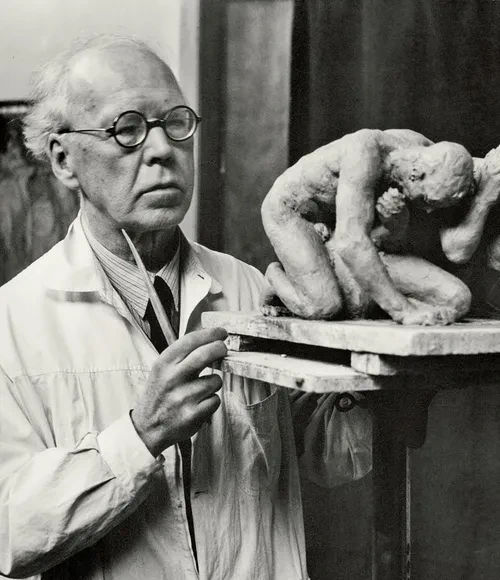
Georg Kolbe established himself in art history as one of the most powerful and renowned representatives of German sculpture in the first half of the 20th century. Born in 1877 in Waldheim, Saxony, Kolbe initially trained as a painter; however, his years in Paris and firsthand encounter with the works of Auguste Rodin pivoted his focus toward sculpture. This transition became the most defining turning point of his artistic life. Striving to capture the human figure in all its grace and naturalness, Kolbe became a prominent figure of German modernism and the Weimar Republic era, particularly through his bronze sculptures of dancing, reclining, and resting bodies. In his work, the human body is neither overly idealized nor intentionally distorted; it is profoundly human and vibrantly alive.
Who is Georg Kolbe? Famous Sculptures and Artworks
Georg Kolbe's most iconic masterpiece is the bronze sculpture "Dawn" (Der Morgen), created in 1929 for Mies van der Rohe’s Barcelona Pavilion. Standing by the pool within that pavilion—widely considered one of the purest architectural expressions of modernism—this elegant female figure represents a rare moment where architecture and sculpture engage in such a harmonious dialogue. This collaboration between Kolbe and Mies van der Rohe remains one of the most striking examples in 20th-century art history, demonstrating how two artistic disciplines can seamlessly complement one another. The Georg Kolbe Museum in Berlin houses the artist's most comprehensive collection and is an essential destination for those wishing to explore his life, creative process, and various eras in depth. This space, the artist’s former studio turned into a famous museum, preserves both his works and his original living environment with authentic integrity.
Dance figures hold a special place in Kolbe’s repertoire. These works, which freeze the moment of movement in bronze, masterfully resolve the tension between dynamism and permanence. Capturing the most fleeting, weightless moment of a dancer in a heavy and lasting material is not just a technical achievement but the product of deep philosophical intuition. With these pieces, Kolbe pays homage to Rodin’s anatomical depth and the fluid elegance of Art Nouveau while constructing his own unique and recognizable artistic language.
Artistic Legacy and Position in German Sculpture
Kolbe's legacy presents a complex picture intertwined with Germany's 20th-century political transformations. While his relationship with the Nazi era continues to be examined by sculpture historians, the quality and integrity of his artistic output remain indisputable. Approaching the human body with both scientific and poetic observation, Kolbe produced the most refined examples of figurative German sculpture. Passing away in Berlin in 1947, Kolbe’s works are now featured in many major collections worldwide and are considered among the most valuable artistic witnesses of German modernism.
Date Added: