Gamal Abdul Nasser Statue - Egypt Cairo
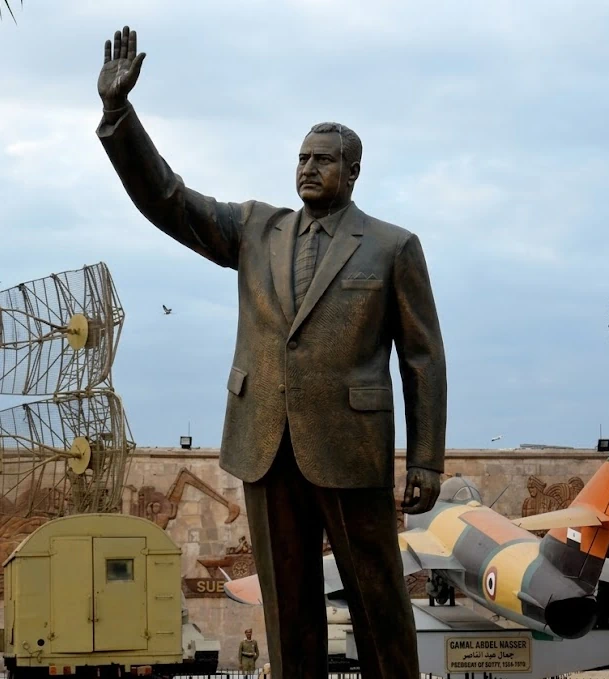
In Cairo, the capital of Egypt—situated along the banks of the Nile and at the historic heart of the Arab world’s largest and most populous city—stands the monument of the most influential Arab leader of the 20th century: Gamal Abdel Nasser. Remembered as the "Icon of Arab Nationalism," Nasser was a transformative figure who profoundly influenced the political destiny of the entire Arab world. By nationalizing the Suez Canal and raising a powerful voice against imperialism, he left an indelible mark on global dynamics. His statue in Cairo serves as a monumental anchor, preserving this multi-layered legacy in the heart of millions of Egyptians.
Who is Gamal Abdel Nasser: Life and Impact on the Arab World
Gamal Abdel Nasser was born in 1918 in Alexandria, Egypt. A career military officer, Nasser participated in the 1948 Arab-Israeli War, an experience that became the catalyst for his political transformation. In 1952, he led the Free Officers Movement to overthrow King Farouk. While initially working behind the scenes, he quickly emerged as the undisputed leader of Egypt and a hero of the decolonization movement.
Nasser’s boldest stroke was the nationalization of the Suez Canal in 1956. By repelling the combined assault of Britain, France, and Israel through international diplomatic pressure, he achieved legendary status across the Arab world. His vision of Pan-Arab unity led to the formation of the United Arab Republic with Syria in 1958. Despite the heavy blow of the 1967 War, his death in 1970 saw millions of Egyptians take to the streets in unprecedented grief, a testament to his unique bond with the people.
The Historical Context: Cairo and the Nile
The Nasser Statue is situated in one of Cairo’s most symbolic districts, maintaining a dialogue with the city's rich political and cultural memory. Cairo, as a cradle of civilization, carries thousands of years of history in every stone, and the statue functions as a modern historical bridge connecting 20th-century Arab identity with the contemporary city.
- Urban Fabric: Located near the administrative heart of the city, the monument stands in an area that has witnessed the most significant social and political events in modern Egyptian history.
- Cultural Pulse: As the cultural capital of the Arab world, Cairo provides a backdrop where Nasser’s legacy is still felt in music, literature, and the collective consciousness.
Artistic Analysis: Symbolism and Monumental Craftsmanship
From an artistic and industrial perspective, the statue is a definitive example of Egyptian figurative sculpture:
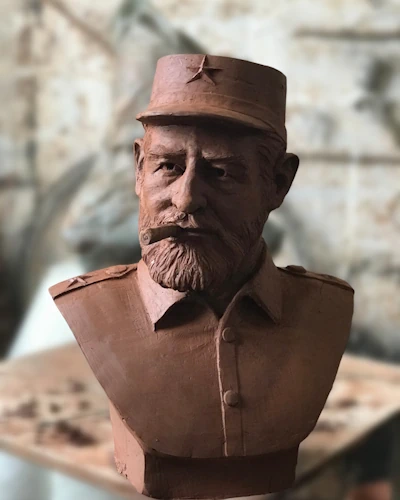
- Military Regalia: Depicted in his military uniform with a charismatic stance, the figure symbolizes both his leadership of the Free Officers and the strength of the Egyptian state.
- Dynamic Expression: The sculptor meticulously captured a sense of determination and defiance against imperialism, reflecting the "Nasserist" energy that defined an era.
- Technical Mastery: For sculpture professionals, this bronze work demonstrates how a leader’s public persona can be immortalized through precise anatomical detail and symbolic posture.
- Pedestal Inscriptions: The base provides a concise summary of the turning points in his life, offering an educational narrative for the public.
Global Tourism and Cultural Heritage Impact
Alongside world-renowned landmarks like the Giza Pyramids and the Egyptian Museum, the Gamal Abdel Nasser Statue is an essential stop for visitors interested in Middle Eastern political history and the Cold War era. It offers a thought-provoking experience, inviting travelers to reflect on the post-colonial transformation of the region. For your **sculpture workshop portfolio**, this monument is a premier example of how public art remains a living part of a city's soul rather than just a static remnant of the past.
Date Added: