Francisco de Miranda Statue - Venezuela Caracas
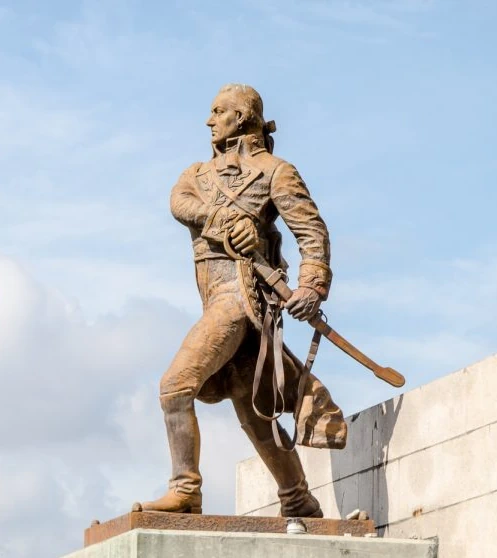
In Caracas, the capital of Venezuela, at a point not far from the statue of Simón Bolívar, rises the statue of one of the least recognized but most decisive figures in the history of Latin American independence: Francisco de Miranda. Known to history by the nickname "El Precursor" or "The Precursor," Miranda is a figure who formed the intellectual infrastructure that inspired Latin American independence movements, tried to organize this struggle from Europe, and whose name has often not been written in the pages of history as much as he deserved. His statue in Caracas holds a special place in the city's identity as a powerful symbol that brings this little-known but extremely important legacy to Venezuelan and world history.
The Life of Francisco de Miranda and His Contribution to Latin American Independence Movements
Francisco de Miranda was born in 1750 in Caracas as the child of a middle-class family. Miranda, who received military training in Spain, had the opportunity to closely observe freedom struggles by participating in the American Revolutionary War. Later, he experienced revolutionary ideals firsthand by being in France during the most enthusiastic years of the French Revolution; he even rose to the rank of general in the French army. These two major revolutionary experiences transformed Miranda's dreams of independence for Latin America into a concrete political program.
Miranda made diplomatic overtures seeking support from England and the United States for Latin American independence; however, these efforts did not yield the results he expected. An attempt to land in Venezuela with a small force in 1806 ended in failure. Despite this, Miranda's most important contribution was introducing the idea of Latin American independence in Europe and influencing a generation of revolutionaries, especially the young Bolívar. After Venezuela declared independence in 1811, Miranda remained in power for a short time but was surrendered to the Spaniards by Bolívar in 1812 after a defeat against Spanish forces, accused of betrayal. He died in 1816 while imprisoned in Spain. This tragic end remains one of the most important elements that still makes the historical evaluation of Miranda difficult today.
The Location of the Statue and Its Symbolic Importance in Caracas
The Francisco de Miranda Statue rises in one of Caracas's most central and symbolic public spaces. With its location close to the Bolívar Statue, the two statues bring together two complementary figures of Latin American independence history within the same urban fabric. The fact that Miranda represents the intellectual foundation that preceded and was built upon by Bolívar makes the coexistence of these two statues highly meaningful. By embracing these two figures together, Caracas weaves a holistic narrative of Venezuela's independence history into the city's public spaces.
Miranda's presence in Caracas also gains deep meaning through his tragic life story. Having dedicated his life to the struggle for independence and dying while imprisoned within that struggle, Miranda stands tall on the streets of Caracas as if defying his own fate. The area around the statue transforms into a vibrant gathering place, especially on Venezuela's national days and during historical commemoration ceremonies.
Artistic and Symbolic Features of the Statue
The Francisco de Miranda Statue is one of the most thought-provoking and meaningful examples of Venezuelan sculpture. Depicted in the European military attire of the period, Miranda simultaneously symbolizes both a transcontinental experience and a deep commitment to Latin America. The posture of the figure carries a powerful expression that conveys a belief in intellectual freedom, the determination of a visionary pioneer, and the weight of a historical mission. The inscriptions on the pedestal summarize the critical turning points of his life and his contribution to the Latin American independence movement.
Miranda's nickname, "The Precursor," summarizes the meaning of the statue in the most concise way. He is the representative not of those who won the victory, but of those who paved the way. Standing before this statue reminds one that history is the work not only of the victors but also of those who fell along the way without being able to turn their dreams into reality. This deep and melancholic layer of meaning makes the Miranda Statue one of Caracas's most thought-provoking monuments.
Importance in Terms of Tourism and Cultural Heritage
The Francisco de Miranda Statue constitutes an important stop on Caracas's historical tourism route. When considered together with the Bolívar Statue and Plaza Bolívar, these two monuments offer the most comprehensive window into Venezuela's independence history. Especially for visitors who want to gain in-depth knowledge about Latin American independence movements, the Enlightenment period, and 19th-century political history, the Miranda Statue offers a highly meaningful and thought-provoking experience. Miranda State, named after him, and various institutions in Caracas remind people every day of his lasting trace in the cultural and political life of Venezuela.
Date Added: