El Cid Sculpture - Burgos, Spain
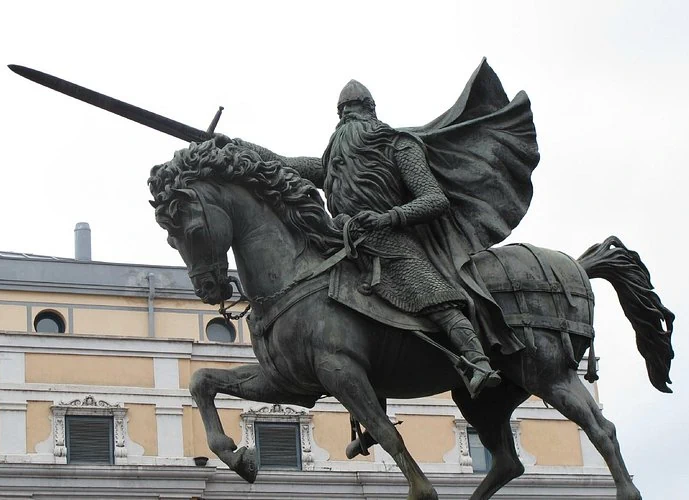
In the north of Spain, in the city of Burgos one of the significant provinces of the Castilla y León region stands an important work. The legendary warrior of the Middle Ages, Rodrigo Díaz de Vivar, known to the entire world as El Cid, stands atop his horse; his sword raised toward the sky, his gaze lost on the horizon. This sculpture is not merely a symbol of a city; it is one of the most powerful expressions of Spanish identity, honor, and historical memory. Every visitor who sets foot in Burgos finds themselves right in the middle of history before this monumental bronze work.
Who Is El Cid?
El Cid was a real Spanish warrior and commander who lived in the 11th century. This historical figure, whose real name was Rodrigo Díaz de Vivar, was born in 1043 in the village of Vivar near Burgos. Serving the Kingdom of Castile, El Cid demonstrated extraordinary military genius by forging alliances with both Christian and Muslim forces amid the most complex political environment of the era. At the peak of his career, he conquered Valencia and governed this city until his death. The nickname El Cid comes from the Arabic word "sayyid," meaning "lord" a fact that alone reveals the degree of respect he commanded across different cultures. After his death, he became the subject of El Cantar de Mio Cid, the most important epic in Spanish literature, and was thus immortalized.
Who Made the Sculpture?
The El Cid Sculpture was created by American sculptor Anna Hyatt Huntington. Completed in 1922, the sculpture is regarded as one of the artist's most important works. Anna Hyatt Huntington is a sculptor particularly known for her equestrian and cavalry figures, and this expertise is clearly felt in the El Cid work. The tension in the horse's muscles, the determination in El Cid's stance, and the dynamism of the sword stretching upward into the air are all part of a masterful composition that bears Huntington's hand. Original copies of the sculpture are found today in different cities around the world, with New York, San Francisco, and Seville leading among them. The sculpture in Burgos was gifted to the city in 1955.
Features and Design of the Sculpture
The El Cid Sculpture is a truly monumental work. Cast in bronze and displaying a commanding appearance with the patina color it has acquired over time, the sculpture forms an impressively tall whole together with its pedestal. El Cid is depicted seated atop his war horse, arms spread to either side, sword raised toward the sky. This pose speaks in the universal language of victory and determination. The slight lifting of the horse's front hooves from the ground adds movement and dynamism to the composition. This sculpture, interwoven with Burgos's historic walls and medieval architecture, also presents an exceptionally successful example of spatial harmony in terms of its placement.
Where Is the Sculpture Located?
The El Cid Sculpture is located in the historic center of Burgos, on the Paseo del Espolón boulevard along the banks of the Arlanzón River. This boulevard, one of the city's busiest and most beautiful walking routes, provides a perfect stage for the sculpture. The surrounding trees, the sound of the river, and the silhouette of the medieval walls combine with El Cid's bronze figure to create an unforgettable atmosphere for visitors. This spot, also within walking distance of Burgos Cathedral, has become a stop that everyone visiting the city makes a point of seeing. Considering that the remains of El Cid and his wife Jimena also rest in Burgos Cathedral, this geographical proximity takes on an additional layer of meaning.
Cultural and Tourist Significance
The El Cid Sculpture is one of the most photographed spots in Burgos. Every tourist who comes to the city considers it a necessity to have their photograph taken before this bronze sculpture. However, the significance of the sculpture goes far beyond being a mere tourist attraction. This sculpture plays a critical role in keeping El Cid alive one of the cornerstones of Spanish national identity and in passing his struggle and values on to future generations. During the medieval festivals and cultural events held every year, the area around the sculpture transforms into something of a stage. When considered alongside Burgos Cathedral, which is on the UNESCO World Heritage list, the El Cid Sculpture stands out as an inseparable part of the city's cultural fabric.
An Epic Written in Stone and Bronze
Throughout history, societies have chosen different paths to keep their heroes alive. Some wrote poetry, some sang folk songs, and some turned to stone and bronze. For El Cid, all three paths were taken; yet El Cid in bronze is perhaps the most enduring of them all. Even as centuries pass, he stands upright on that boulevard in Burgos, defying the wind, the rain, and time itself. Everyone who sees him looks at that frozen frame the moment the sword reaches up into the air and something stirs within them. This is precisely the power of art; where words fall short, bronze speaks, and will continue to speak.
Date Added: