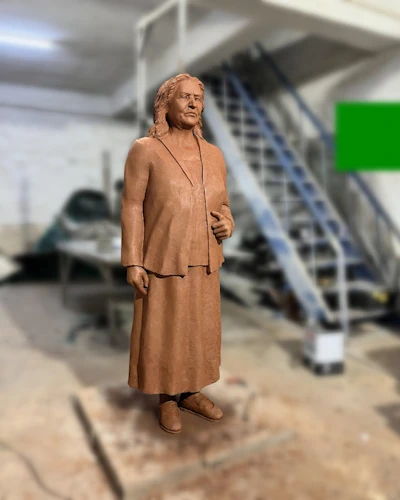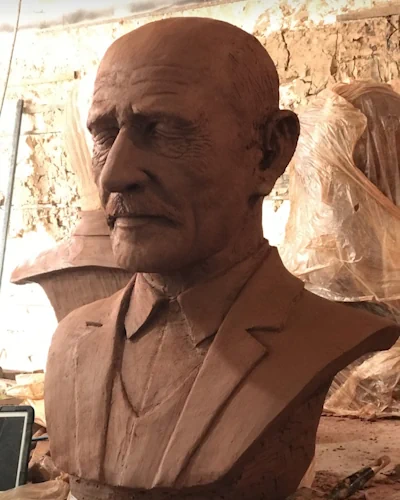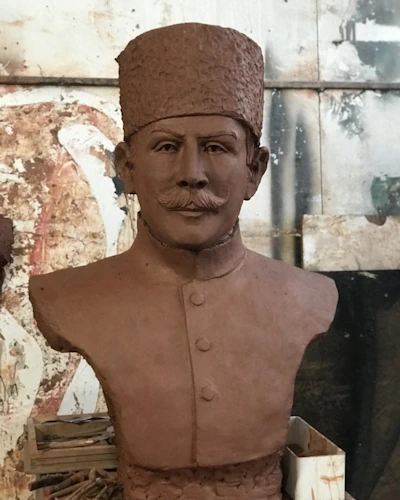
Don Quixote Statue - Spain - Madrid
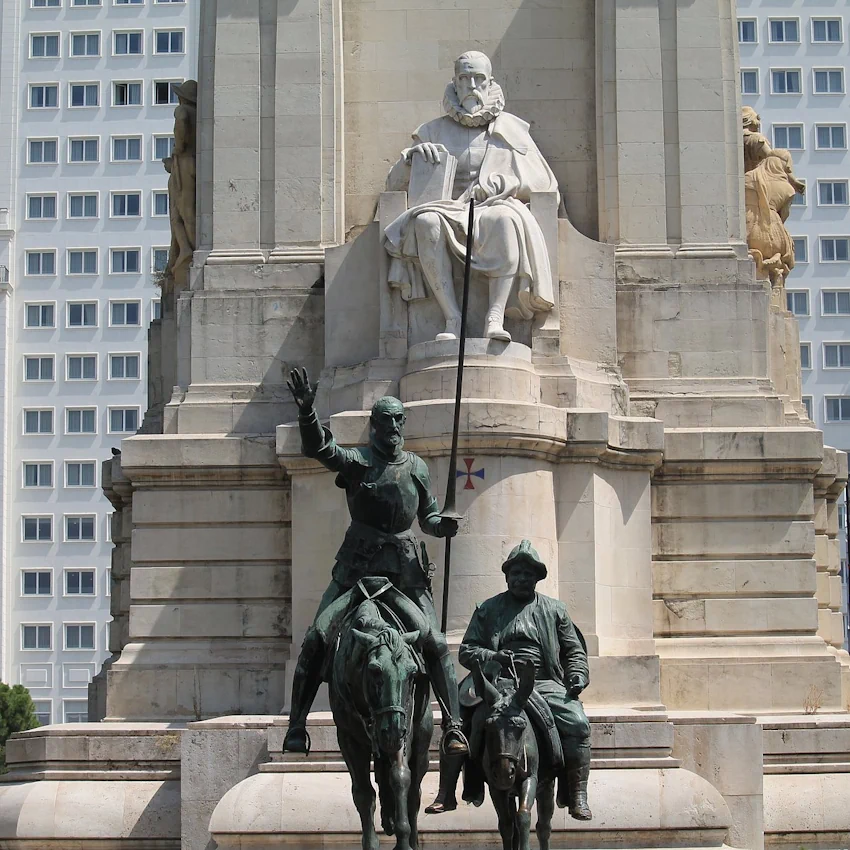
The Don Quixote Statue is located in Plaza de España, one of Madrid's most beloved squares, in the heart of the Spanish capital. The square sits at the western end of Gran Via and is flanked by iconic landmarks such as the Torre de Madrid and the Edificio España. The statue is positioned at the front of the Monument to Cervantes (Monumento a Cervantes), which rises at the very center of Plaza de España, in the form of bronze equestrian figures. The monument's coordinates are 40°25′24″ north latitude and 3°42′45″ west longitude. A must-visit stop for anyone traveling to Madrid, the site is set within a spacious public park complete with landscaped gardens and pedestrian walkways.
Who Created the Don Quixote Statue?
The statue was created by Spanish sculptor Lorenzo Coullaut Valera. Born in 1876 in Marchena, Seville, Coullaut Valera joined the project after winning the national competition announced in 1915. The architectural design of the monument was prepared by Rafael Martinez Zapatero and Pedro Muguruza. Lorenzo Coullaut Valera passed away in 1932 before the monument was completed, and his son Federico Coullaut-Valera Mendigutia finished the work between 1956 and 1957. The figures of Aldonza Lorenzo and Dulcinea del Toboso, as well as the Rinconete y Cortadillo and La Gitanilla groups added in 1960, are also the work of Federico. As a result of this family effort spanning generations, the monument stands as a shared achievement of father and son.
When Was the Don Quixote Monument Built?
The national competition for the monument was announced in 1915, one year before the 300th anniversary of writer Miguel de Cervantes's death. Construction began in 1925, with most of the work completed by 1930. The monument was ceremonially inaugurated on October 13, 1929, even though it was not yet finished, and continued to receive additions for many years afterward. With the final figures completed by Federico Coullaut-Valera between 1956 and 1957, the monument reached its present-day appearance. Spanning a construction period of roughly thirty years in total, this work has entered history as a lasting expression of Spain's deep respect for its literary and cultural heritage.
What Does the Don Quixote Monument Look Like?
Standing 34 meters tall, the monument is the most prominent structure in Plaza de España. At its center, a seated stone figure of Cervantes rests on a pedestal, holding a manuscript in his hand. In front of him stand the monument's most iconic elements — the bronze statues of Don Quixote and Sancho Panza. Don Quixote is depicted as a knight on horseback, gripping his lance atop his horse Rocinante, while Sancho Panza rides his donkey as a loyal companion by his side. On the flanks of the monument are the figures of Aldonza Lorenzo and Dulcinea del Toboso, along with relief carvings depicting scenes from the novel. At the rear, a fountain bearing the coats of arms of Latin American countries and allegorical figures representing the five continents complete the composition. The donkey statue carrying Sancho Panza is one of the most charming and eye-catching elements of the group, and has become the most popular spot among visitors looking to take a photograph.
Who Is Don Quixote?
Don Quixote is the main character of a novel written by Spanish author Miguel de Cervantes, widely regarded as one of the greatest masterpieces in world literature. The novel was published in two parts, in 1605 and 1615. Its full title is "The Ingenious Gentleman Don Quixote of La Mancha." The story follows Alonso Quijano, a nobleman from La Mancha who loses his mind from reading too many chivalric romances and declares himself a knight under the name Don Quixote, setting off on a series of adventures. He takes a simple farmer, Sancho Panza, along as his squire and companion. Charging at windmills he mistakes for giants and seeing an ordinary village girl as a princess, Don Quixote has become the most powerful symbol in literature of the endless conflict between imagination and reality.
The Symbolic Meaning of the Cervantes Monument
The monument is dedicated not only to a fictional character, but to one of the cornerstones of Western literature and the writer who stands as a symbol of Spain's national identity. Miguel de Cervantes (1547–1616) is the creator of Don Quixote, widely regarded as the greatest work ever written in the Spanish language, and one of the most important names in world literature. Many literary historians describe Don Quixote as "the first modern novel." The presence of Latin American coats of arms on the fountain at the rear of the monument is a powerful reference to the profound influence of Cervantes and the Spanish language across that continent. The allegory of "Fame" or "Victory" placed at the summit symbolizes the universal literary legacy of Cervantes. The sculptor's dance statue work is also among his well-known pieces.
How to Visit the Don Quixote Statue
Plaza de España is easily accessible from the center of Madrid. The nearest metro station is Plaza de España, served by lines 3 and 10. The square is open to visitors free of charge, 24 hours a day, seven days a week. The parks and walkways surrounding the monument make for a pleasant and leisurely visit. The monument looks its best in the early morning hours or in the evening under artificial lighting, making it an ideal spot for photography. Gran Via, the Royal Palace, and the Temple of Debod are all within walking distance, making this square an unmissable stop on any Madrid city tour.
Date Added: