Cornelia Parker - British Sculptor
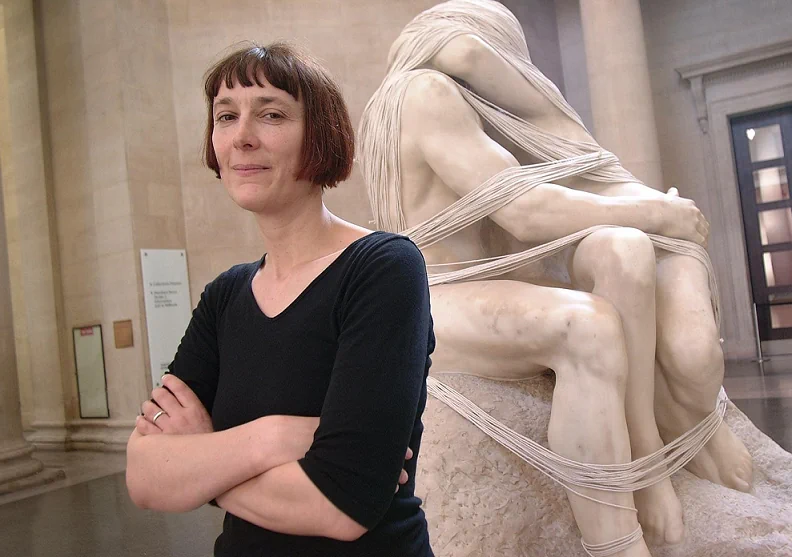
Cornelia Parker is a British sculptor and conceptual art master born in 1956 in Cheshire, England, who has left a profound mark on the contemporary art world. Parker laid the foundations of her artistic career through her education at Wolverhampton Polytechnic and Gloucestershire College of Art and Design, and today she is regarded as one of the most recognized and respected British artists worldwide. Her works question universal themes such as death, transformation, destruction, and rebirth, creating pieces that both provoke thought and deeply move the viewer.
An Approach That Transforms Destruction Into Art
The most distinguishing feature of Cornelia Parker's art is her ability to subject ordinary objects to an extraordinary process of transformation. Parker frequently uses damaged, burned, crushed, or exploded objects in her works. These objects are not merely materials; they are carriers of the past, memory, and meaning. Destruction and transformation form the two fundamental pillars of her artistic language. For Parker, destroying an object simultaneously means bringing it back into existence.
Cold Dark Matter: An Explosion That Entered Art History
Parker's most well-known and widely discussed work is undoubtedly her 1991 installation titled Cold Dark Matter. For this piece, the artist arranged for the British Army to blow up a garden shed, then collected the scattered fragments and suspended them around a single light bulb. The result is a moment of explosion seemingly frozen in time. The wooden, metal, and glass fragments radiating outward from the light source became a symbol of both destruction and creation. This work is considered a turning point in the history of contemporary sculpture.
Thirty Pieces of Silver: A Meaningful Act of Flattening
Produced between 1988 and 1989, Thirty Pieces of Silver is one of Parker's other iconic works. In this installation, the artist flattened numerous silver-plated objects including plates, teapots, medals, and musical instruments using a steamroller, then suspended the crushed pieces close to the ground from the ceiling using thin wires. The title's reference to Judas in the Bible adds a profound layer of meaning to the work. The tension between value and destruction is felt with remarkable power in this piece.
The Identity of a Political and Social Artist
Cornelia Parker does not view her art merely as an aesthetic pursuit. She frequently addresses political and social issues in her works. The embroidered piece titled Magna Carta, which she hung outside the Tate Modern in London in 2017, deals with British constitutional history and human rights. In addition, topics such as gun policy, violence, and collective memory hold an important place in Parker's artistic agenda. Through conceptual sculpture, the artist continues to invite society to question itself and viewers to think.
International Recognition and Prestigious Awards
Cornelia Parker holds a very strong position on the international art scene. Her nomination for the Turner Prize in 1997 marked one of the significant milestones of her career. The artist is also a distinguished member of the Royal Academy of Arts. Her works are exhibited in the collections of the world's most prestigious museums, including Tate Modern, the Museum of Modern Art New York, and the Victoria and Albert Museum. Parker's CBE title is a formal recognition of her contributions to the British art world.
A New Language in Sculpture
Cornelia Parker is an artist who fundamentally questions the traditional understanding of sculpture. For her, sculpture is not the product of an artist who carves stone or casts bronze, but of a mind that produces, transforms, and reconstructs meaning. Parker, who explores the deep bond between object and meaning, carries the viewer beyond conventional perspectives in every work. No matter how ordinary the materials she uses, the resulting pieces always carry extraordinary depth.
Cornelia Parker and the Future of Sculpture
Cornelia Parker, now approaching her eighties, continues to maintain her productivity and artistic curiosity. The dialogue she establishes with objects that carry traces of the past makes her art timeless. Her place within contemporary British art is indisputable; she continues to inspire young artists while remaining a subject of discussion among art critics. Parker, who pushes the boundaries of sculpture a little further with each passing day, continues to be a reference point in this field.
Date Added: