Camoes Sculpture – Portugal Lisbon
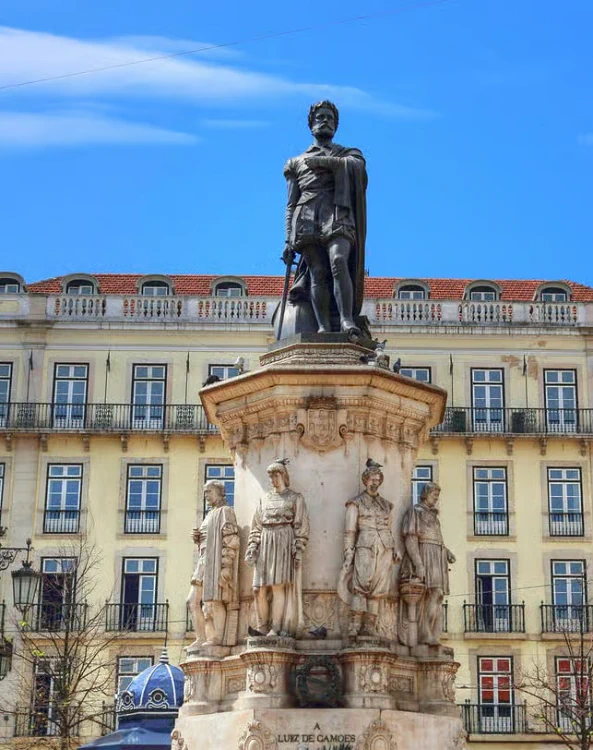
Among the works that carry the soul of Portugal and the cultural memory of Lisbon, the Camões Sculpture is undoubtedly one of the most significant. Rising in the historic Chiado district of Lisbon, in the square that bears his name, this monument immortalizes Luís de Camões widely regarded as the greatest figure in the Portuguese language and literature. Unveiled in 1867, the sculpture is not merely a monument dedicated to a literary figure; it represents Portugal's greatness during the age of navigation, the spread of its language across the world, and the most powerful point where national identity meets art. This square and sculpture an unmissable stop for every visitor to Lisbon is one of those rare spaces where architecture, history, and literature converge in a single place.
Who Was Luís Vaz de Camões? – The Name Behind the Sculpture
Luís Vaz de Camões lived between 1524 and 1580, and went down in history as the undisputed greatest poet of Portuguese literature. His place in Portuguese culture is comparable to that of Shakespeare for the English or Dante for the Italians. Camões's most important work, Os Lusíadas (The Lusiads), is an epic poem recounting the story of Portuguese sailors rounding the coast of Africa to reach India. Centered on the voyage of Vasco da Gama, this work is recognized as the greatest literary achievement written in the Portuguese language and continues to hold its place among the masterpieces of world literature.
Camões's life was every bit as dramatic as his work. The poet lost an eye in battle during his years as a soldier, spent long periods in India, Mozambique, and Macao, was imprisoned, and lived in great poverty. Despite all of these hardships, his commitment to pouring the Portuguese language and spirit onto the page made him not only a literary figure but a national hero. The sculpture in Lisbon is the product of an effort to translate this many-layered personality into stone.
The History and Making of the Sculpture
The Camões Sculpture was designed by Portuguese sculptor Victor Bastos and unveiled to the public in 1867. The making of the sculpture is of great significance in that it reflects the artistic sensibility of the era and the efforts to build a national identity. The rising tide of nationalism that swept across Europe in the second half of the 19th century brought with it the need for every country to make its national heroes visible in public space. Portugal chose Camões as its most powerful symbol in this process and selected Chiado one of Lisbon's busiest and most prestigious districts as the site for this monument.
Victor Bastos designed the sculpture in the neo-classical style. Camões is depicted standing, in semi-armored dress, holding the manuscript of Os Lusíadas in his hand. The laurel wreath on his head evokes the poet and hero symbolism drawn from ancient Greek and Roman tradition. On all four sides of the pedestal are reliefs depicting important historical figures from Camões's work. This detail lifts the sculpture beyond a straightforward portrait monument and transforms it into a literary and historical narrative tool.
Praça do Chiado and Its Urban Setting
The Praça do Chiado, from which the sculpture rises, sits at the heart of one of Lisbon's most culturally rich and vibrant districts. Throughout its history, Chiado has been a meeting point for writers, poets, intellectuals, and artists, and is recognized as the place where the heart of Portuguese cultural life beats. Figures such as Fernando Pessoa have also shared a deep connection with this neighborhood. This cultural atmosphere elevates the Camões Sculpture beyond a mere physical structure, making it the symbolic focal point of the city's intellectual memory.
With its cafés and restaurants, historic buildings, bookshops, and museums, the square continues to be one of Lisbon's most visited urban spaces. The height of the sculpture and the open space surrounding it make it distinctly visible in the city's skyline, ensuring it features regularly in the iconic frames of Lisbon's tourism photography. The sculpture takes on different appearances under the shifting light conditions throughout the day shrouded in mist in the early morning hours, then bathed in golden afternoon light, creating an entirely different atmosphere each time.
The Material and Artistic Qualities of the Sculpture
The Camões Sculpture was produced using bronze through the casting technique. Bronze has retained its status as the most classic material of public monumental sculpture for centuries, owing to its permanence, resistance to weather conditions, and the patina it develops over time. The surface of the sculpture has taken on an appearance that is both aesthetically valuable and marked by the traces of history, through the greenish bronze oxidation that has formed over the years. This patina brings the sculpture into harmony with the surrounding stone textures while simultaneously making its age and deep roots visible.
The pedestal was constructed using cut stone and finished with relief sculpture carvings. The height of the pedestal sets the sculpture apart from the surrounding architectural fabric and offers the viewer an upward-looking perspective, lending the figure a sense of monumental grandeur. The pose in which Camões is depicted conveys an impression of strength, determination, and intellectual authority a choice that aligns perfectly with the public sculpture sensibility of the period.
Its Place Within World Sculpture
The Camões Sculpture is regarded by art historians as one of the most successful examples of 19th-century European public sculpture. During this period, similar national hero monuments were erected in many European capitals; yet the Camões Sculpture holds a privileged place within this group, owing to the relief details on its pedestal and the narrative power of the figure's posture. This work by Victor Bastos is recognized as one of the milestones of Portuguese sculpture history and is studied as a frequently referenced work in art education.
For those interested in the art of sculpture, those researching Portuguese history, or those wishing to explore Lisbon, the Camões Sculpture is far more than a tourist attraction it is a work rich in layers of meaning that reveals new details with every visit. At heykel.org, our mission is to introduce significant sculptural works and monuments from around the world, and to provide a comprehensive source of knowledge for everyone with an interest in the art of sculpture. To learn more about sculpture or to place a custom sculpture order, you are always welcome to reach us through our contact page.
Date Added: