Camille Claudel - French Sculptor
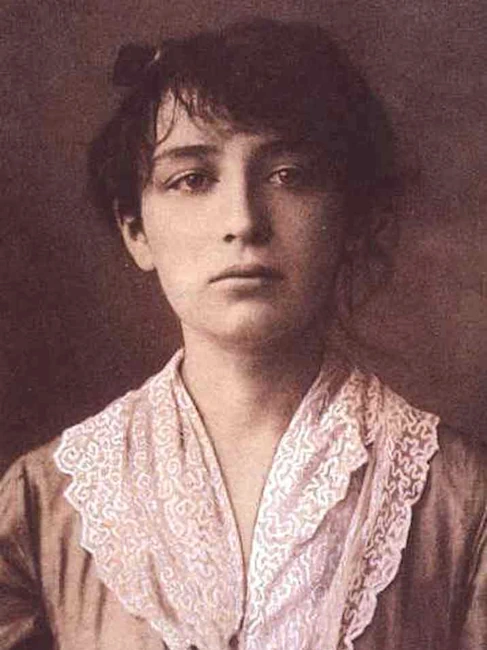
Camille Claudel stands as one of the most striking figures of both art history and gender history in 19th-century France. Born in Fère-en-Tardenois in 1864, Claudel was not only a gifted female sculptor in a male-dominated art world but also spent years in a shadow that obscured her artistic identity due to her professional and romantic involvement with Auguste Rodin. However, re-evaluations since the late 20th century have clearly shown that Claudel was far more than Rodin’s student or lover; she was his peer and, at times, his pioneer. Her works are the embodiment of emotion, pain, the longing for freedom, and the depth of human relationships carved into marble and bronze. Claudel did not merely engage in sculpture production; with every piece, she molded her own life, her struggle, and her demand for liberty.
Who is Camille Claudel? Her Artistic Journey and Masterpieces
From an early age, Camille Claudel demonstrated a clear passion for sculpture. Upon moving to Paris, she began working in the studios of Alfred Boucher and, subsequently, Auguste Rodin. Her relationship with Rodin took on a complex and destructive dimension on both artistic and personal levels, yet Claudel never abandoned her unique artistic voice. Masterpieces such as "La Valse" (The Waltz), "L'Âge Mûr" (The Age of Maturity), and "Les Causeuses" (The Gossips) display a narrative power and technical mastery that distinguish her work significantly from Rodin’s style. "L'Âge Mûr," in particular—a composition featuring an older man being led away by an older woman while a young woman is left behind—is highly open to autobiographical interpretation and is considered one of the most powerful works symbolizing the tragic end of the relationship between Claudel and Rodin. Committed to a psychiatric hospital in 1913 by the decision of her brother Paul Claudel, she passed away in the institution in 1943, leaving behind both a grand artistic legacy and a profound history of injustice.
Technical Mastery and Contribution to Sculptural Art
Camille Claudel’s technical skill was easily on par with the most prominent sculptors of her time. Her precision in marble work, anatomical accuracy in bronze casting, and her capacity to balance the interplay between figures within a composition set her apart not just from Rodin’s circle, but from all contemporary sculptors. While the movement in her figures carries a dynamism similar to Rodin’s, her emotional focus is much more introspective and personal. Today, Claudel’s works are exhibited at the Musée Rodin in Paris and especially at the Musée Camille Claudel in Nogent-sur-Seine, reaching a wider audience every year. Her story was also brought to the masses through the 2013 feature film starring Juliette Binoche, significantly contributing to the renewed recognition of her place in art history.
Date Added: