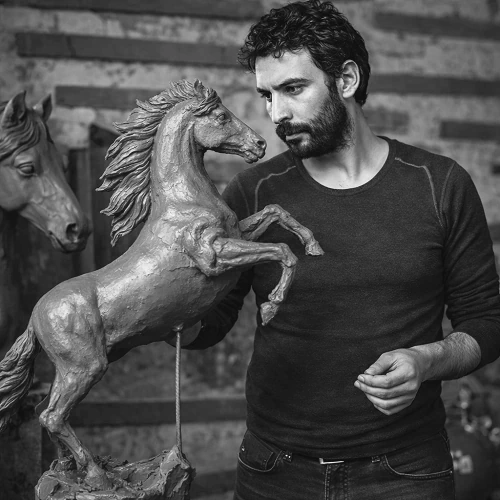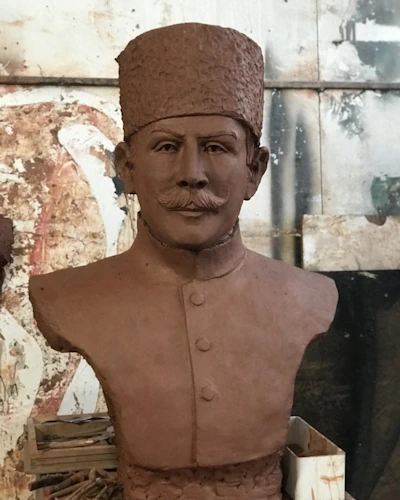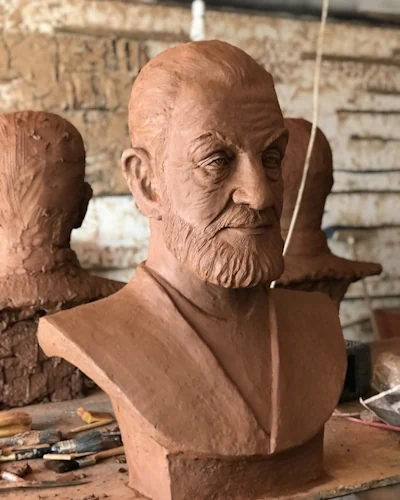
B.R. Ambedkar Statue - India - New Delhi
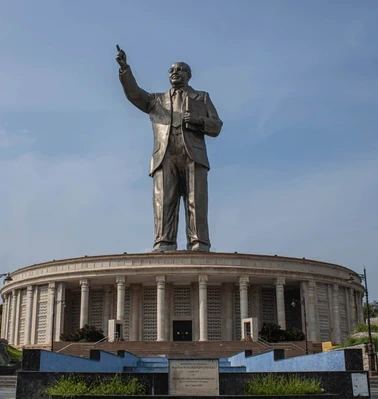
In the history of India, there are names that shape not only the destiny of the era they lived in, but also the generations that came after them. B.R. Ambedkar is precisely such a name. Born on 14 April 1891 in the town of Mhow in present-day Madhya Pradesh, Bhimrao Ramji Ambedkar came into the world as a member of the Mahar caste a community classified as "untouchable" under India's rigid caste hierarchy. From the very first years of his life, he was forced to confront discrimination, exclusion and humiliation. Yet rather than breaking him, these conditions only made him stronger. Setting out from one of the most difficult starting points in history, Ambedkar became the man who drafted the constitution of the world's largest democracy.
Ambedkar's educational journey is, given the conditions of the era, a story of achieving the near impossible. In a society where caste discrimination closed every door, he pried open each one, door by door. After graduating from the University of Bombay, he went first to Columbia University in New York on a scholarship from the Maharaja of Baroda, and then on to London. Having earned multiple doctoral degrees in economics, law and political science, Ambedkar became one of the most highly educated Indians of his time. This intellectual accumulation ensured that he was not merely a personal triumph, but a beacon of hope for millions of the oppressed.
The Architect of the Constitution
The name of B.R. Ambedkar is most prominently associated in history books with his role as the architect of the Indian Constitution. When India gained independence in 1947, Ambedkar was appointed to chair the drafting committee tasked with preparing the new state's constitution. This choice was no coincidence; for Ambedkar was the most fitting person for this role, both in terms of his legal expertise and his deep commitment to social justice. The constitution he prepared came into being as a comprehensive document guaranteeing fundamental rights, the principle of equality, freedom of expression and the prohibition of discrimination.
Ambedkar did not content himself with merely drawing a legal framework for the constitution; he also embedded within it the mechanisms that would break centuries of caste oppression. The articles protecting the rights of the "untouchables" known today as Dalits were among the areas to which he attached the greatest importance and for which he fought most fiercely. For Ambedkar, the constitution was not merely a state document but the embodiment of millions of people's struggle for freedom and dignity.
The Historic Struggle Against the Caste System
At the center of Ambedkar's lifelong struggle stood the abolition of the caste system. In his view, the caste system was India's greatest social malaise, and no political independence could acquire its true meaning without this disease being cured. This conviction brought him into conflict at times with other great leaders of the era even with Gandhi himself. Ambedkar found Gandhi's approach to the caste system insufficient; he demanded a fundamental structural transformation that went beyond symbolic gestures.
One of the greatest decisions he made in the final period of his life, in 1956, was to convert to Buddhism along with hundreds of thousands of his followers. This decision was not merely a religious choice but an open act of defiance against the Hindu social order based on the caste system. For Ambedkar, Buddhism was a philosophy of life that foregrounded equality, reason and human liberation. This mass conversion went down in history as one of the most remarkable social transformations in Indian history.
Where Is the B.R. Ambedkar Statue?
India's capital New Delhi keeps Ambedkar's legacy alive at numerous points throughout the city. The best known and most impressive Ambedkar memorial in Delhi is the Ambedkar National Memorial, which bears his name. The statue rising within this memorial complex depicts Ambedkar in a resolute and dignified posture, holding the Indian Constitution in his hand. This appearance symbolizes both his legal legacy and his struggle for social justice.
The birthday celebrations held every year on 14 April are greeted with great enthusiasm in Delhi and across all of India. The ceremonies performed before the statue, the commemorative events where Dalit communities gather, and the speeches all reveal how vibrant and relevant Ambedkar's legacy remains. For history and culture enthusiasts visiting Delhi, this statue is not merely a monument but one of the most powerful symbols of India's pursuit of equality and justice.
What Does His Legacy Mean Today?
B.R. Ambedkar passed away in New Delhi on 6 December 1956. Yet the legacy he left behind has become so deeply embedded in the social and political fabric of India that it is impossible to overlook. Modern India's egalitarian constitutional order, affirmative action policies and the Dalit rights movement are the trees growing today of the seeds Ambedkar planted.
Referred to in India today by the title "Father of the Constitution," Ambedkar is one of the rare figures claimed by different segments of the political spectrum. In every struggle waged against caste discrimination, social inequality and any practice that violates human dignity, his name resurfaces again and again as a source of inspiration. His statue in New Delhi is the most visible and most powerful reminder of this legacy. That statue is the silent yet enduring cry cast in stone and metal of a leader who placed justice, equality and human dignity above all else.
Date Added: