Bertel Thorvaldsen - Danish Sculptor
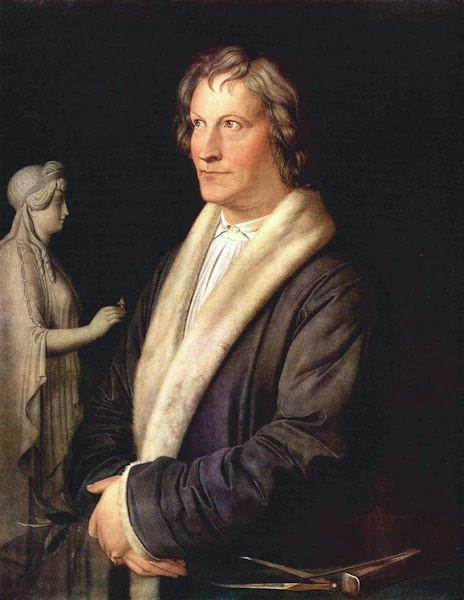
Bertel Thorvaldsen was not only Denmark’s greatest pride but also one of the preeminent masters of European Neoclassical sculpture—perhaps one of the most significant figures whose global recognition still trails behind his immense talent. Born in Copenhagen in 1770 as the son of a woodcarver, Thorvaldsen traveled to Rome in 1797 following his education at the Royal Danish Academy of Fine Arts. This journey to Rome became the defining milestone of his artistic career and personal history. He arrived as a young, virtually unknown artist; he returned hailed as one of the most famous sculptors in all of Europe. Remaining in Rome for forty years, Thorvaldsen developed a unique Neoclassical language that drew inspiration from ancient Greek and Roman art without merely imitating it.
Who is Bertel Thorvaldsen? Famous Sculptures and Works
The masterpiece that first brought Thorvaldsen international acclaim was "Jason with the Golden Fleece," completed in 1803. This work embodies the Neoclassical ideal in its purest form; the ideal human body meets mythological narrative with both strength and grace. The exhibition of this piece in Rome transformed Thorvaldsen’s life overnight; by the next morning, he was the most talked-about sculptor in Europe. The Thorvaldsen Museum in Copenhagen is a unique institution, being one of the oldest artist-specific museums in the world, a project the artist himself witnessed during his lifetime. Its colorful facade and inner courtyard turn the museum itself into a work of art. Thorvaldsen’s grave is also located in the courtyard of this very museum.
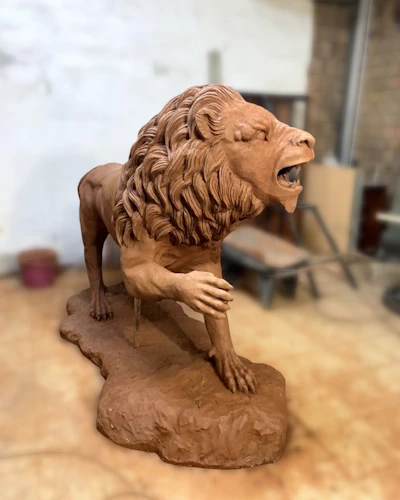
Thorvaldsen’s creative output encompasses incredible variety and productivity. Religious figures, mythological scenes, portrait busts, and monumental figures represent the different dimensions of his artistic spectrum. His works for St. Peter’s Basilica in the Vatican, the series of Christian figures in Copenhagen Cathedral, and the monuments in Warsaw, Poland, are prime examples of his legacy spread across Europe. The "Lion Monument" in Lucerne is a lesser-known but profoundly moving Thorvaldsen masterpiece; this rock-cut sculpture, dedicated to the Swiss Guards who lost their lives protecting Napoleon, evokes a simultaneous sense of grandeur and melancholy.
Neoclassical Sculpture and the Significance of His Legacy
Thorvaldsen is often evaluated alongside Canova as one of the two pillars of 19th-century Neoclassical sculpture. While Canova is known for his sensory warmth, Thorvaldsen’s cooler and more intellectual stance makes the two masters both contrasting and complementary. Passing away in Copenhagen in 1844, Thorvaldsen left behind a massive collection and the purest examples of the Neoclassical ideal. Today, while he remains one of Denmark’s greatest cultural prides, Thorvaldsen often stays in the shadows of global art history; yet for those who discover him, the experience is a true revelation.
Date Added: