Ataturk Statue - Ankara, Turkey
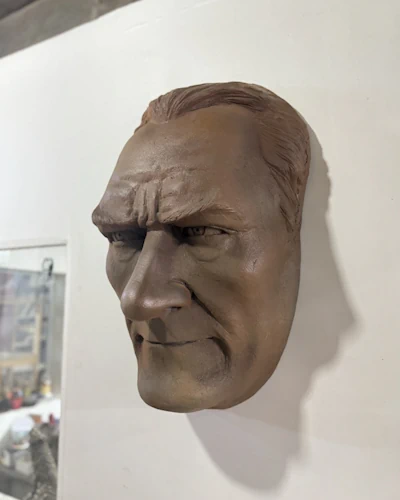
In Ankara, the capital of Turkey and the heart of Anatolia, stands the greatest monument to the founder of the nation: Anitkabir. Yet, the numerous statues and busts of Ataturk scattered throughout the city are equally powerful symbols, carrying his vast legacy into every corner of the capital. Following the defeat of World War I and the collapse of the Ottoman Empire, Mustafa Kemal Ataturk authored one of history’s most striking stories of national rebirth through a liberation movement born in occupied Anatolia. Beyond merely founding a state, Ataturk fundamentally transformed its cultural, legal, educational, and social foundations, and today, his presence continues to be felt in every city, school, and government institution across Turkey.
The Life of Ataturk and the Turkish War of Independence
Mustafa Kemal was born in 1881 in Thessaloniki. After a brilliant education in Ottoman military schools, he gained national and international fame for his extraordinary command during the Battle of Gallipoli in 1915. By repelling the Allied forces' landing on the peninsula, Mustafa Kemal earned the title of the Ottoman Empire’s last great military hero.
The Armistice of Mudros and the Treaty of Sèvres, signed after World War I, left much of Anatolia open to Greek, Armenian, French, and Italian occupation. Rather than submitting to these unacceptable terms, Mustafa Kemal landed in Samsun in 1919 to launch the War of Independence. This movement, centered in Ankara, dismantled both the occupying forces and the Istanbul government within four years, culminating in the proclamation of the Republic of Turkey in 1923. His identity as a military genius and political master during this period earned him the surname Ataturk, meaning "Father of the Turks."
Following the declaration of the Republic, Ataturk rapidly implemented reforms that would fundamentally transform Turkish society. Key among these were the alphabet reform, secularism, the granting of voting and elective rights to women, the civil code, dress reform, the adoption of the Gregorian calendar, and the expansion of modern education. This comprehensive transformation provided Turkey with a modern social structure in a remarkably short period.
Ataturk Statues in Ankara and Anitkabir
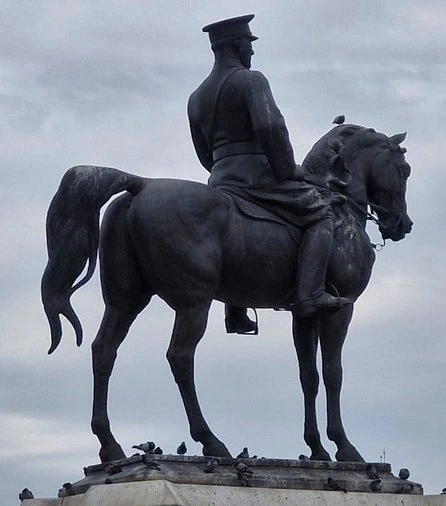
In Ankara, Ataturk’s presence is felt at every turn. The equestrian Ataturk Monument in Ulus Square is the city’s first and most historic statue of the leader. Crafted in 1927 by the Italian sculptor Pietro Canonica, this bronze equestrian statue depicts Ataturk in his role as the Commander-in-Chief of the War of Independence. The reliefs on its pedestal narrate key scenes of the war and the Turkish nation's journey toward sovereignty.
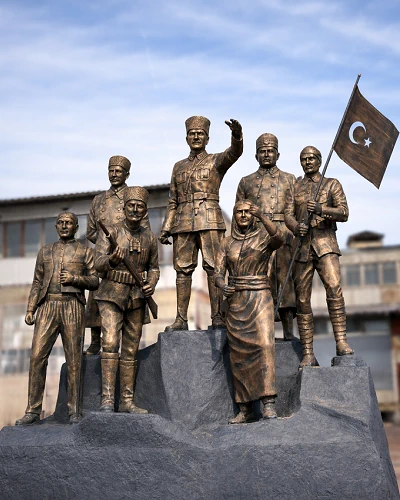
Furthermore, statues of Ataturk in various districts of Ankara highlight different facets of his identity: state reformer, teacher, soldier, and founder. However, the grandest and most comprehensive monument to Ataturk in Ankara is undoubtedly Anitkabir. Completed in 1953, this mausoleum complex is regarded as one of the world’s most impressive monumental structures due to its architecture, scale, and immense symbolic weight.
Artistic Features and the Sculptors
The primary Ataturk Monument in Ulus Square was designed by Italian sculptor Pietro Canonica and completed in 1927. Canonica, the creator of several Ataturk statues in Turkey, developed a unique artistic language that blended contemporary European sculptural styles with Turkish iconography. The bronze equestrian figure portrays Ataturk in military uniform with a posture reflecting total leadership authority. The meticulous anatomical detail and the dynamic stance of the horse imbue the statue with a powerful sense of motion and energy.
Symbolic Weight in Turkish Identity and Contribution to Tourism
Ataturk remains the undisputedly central and most respected historical figure in the collective memory of Turkish society. Every year on November 10th at 09:05 AM, the exact moment of his passing, the entire nation observes a moment of silence; this ritual is the most potent indicator of his unique place in Turkish identity. Every domestic and international visitor to Ankara makes it a point to visit Anitkabir and the Ataturk Monument in Ulus Square. These two sites consistently rank among the most visited historical and cultural landmarks in Turkey each year.
Date Added: