Aristide Maillol - French Sculptor
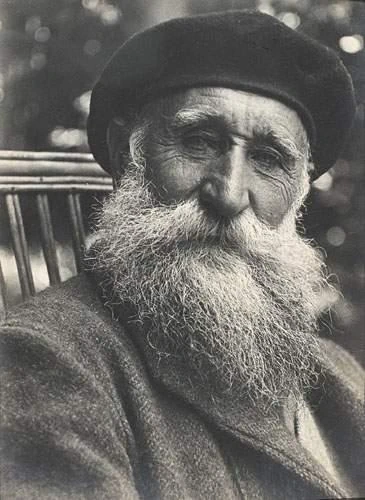
Aristide Maillol was a unique sculptor who profoundly transformed French sculpture from the late 19th to the mid-20th century, reinterpreting Ancient Greek idealism with a contemporary sensibility and becoming synonymous with the female figure. Born in 1861 in Banyuls-sur-Mer, Southern France, Maillol began his artistic career as a painter and weaver, only finding his true identity in sculpture in his 40s. This late start granted his art a distinctive perspective shaped by maturity and depth. There is no sense of restless searching in Maillol's sculptures; instead, they possess the calm and certainty of an artist who has reached his destination. In contrast to the dramatic and turbulent narratives of Rodin—the dominant figure of his time—Maillol embraced stillness, balance, and pure beauty in form. This choice liberated him from Rodin's shadow and established him as the architect of an entirely different path in 20th-century sculpture.
Who is Maillol? His Artistic Journey and Masterpieces
Maillol trained at the École des Beaux-Arts in Paris and was influenced by Gauguin and the Nabis movement, yet he forged his artistic identity by drawing from these influences while remaining independent of them. Upon transitioning to sculpture, his focus settled on a single subject: the female figure. However, Maillol's female figures were largely stripped of ornate mythological frames, the idealized romanticism of the academic tradition, and narrative content. His sculptures are often unnamed or bear titles referring to abstract concepts such as "La Méditerranée," "L'Air," or "La Rivière." This was a conscious choice: for Maillol, what mattered was not individual identity, but universal form and the pure plastic power it carried. The heavy, rounded, and serene structure of his figures reflects a deep respect for the classical ideals of Ancient Greek sculpture without being blindly bound to them. Maillol created an original synthesis that absorbed the classical heritage but reconstructed it with a modern sensitivity. His works, still on display today in the Tuileries Garden in Paris, serve as the finest public examples of this synthesis, meeting thousands of visitors daily.
Technical Mastery and Contribution to Sculptural Art
Maillol's technical choices were in perfect harmony with his artistic vision. While marble, bronze, and lead were his primary materials, he never turned them into a tool for technical display. The sense of simplicity and weight emanating from the form is born not from the material itself, but from the design of the form. Maillol's surface work is smooth and tranquil; unlike the deliberately rough surfaces of Rodin, every centimeter is crafted with measured care. His works do not disturb, shake, or provoke the viewer. Instead, they offer a silence that one wishes to linger in—a silence that is pleasurable to observe and speaks more over time. Maillol, who passed away following a traffic accident in 1944, left an indelible mark on the art of sculpture through his body of work and the foundation that preserves his studio in Banyuls-sur-Mer.
Date Added: