African Renaissance Statue - Senegal Dakar
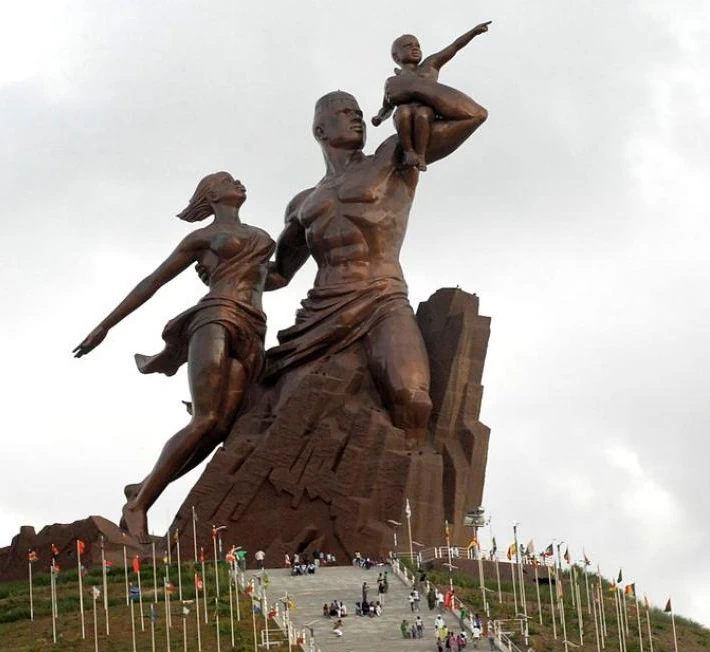
Dakar, one of West Africa's most vibrant metropolises, hosts one of the continent's most striking and controversial monumental structures. Rising atop one of two hills overlooking the Atlantic Ocean, the African Renaissance Monument (Monument de la Renaissance Africaine) symbolizes Africa's awakening and rebirth from its colonial past. This colossal structure, standing at 50 meters, holds the title of Africa's tallest statue and has become the first stop for local and foreign tourists visiting Dakar.
Construction and History of the Monument
The idea for the project was put forward by then-Senegalese President Abdoulaye Wade; Senegalese architect Pierre Goudiaby Atepa undertook the design. Construction began in 2006, the bronze statue started to take shape in 2008, and while it was planned to be completed in December 2009, delays occurred. The monument was inaugurated on April 3, 2010, on the 50th anniversary of Senegal's independence from France and the 30th edition of the World Festival of Black Arts, with a magnificent ceremony attended by 19 African heads of state. It sparked significant controversy due to its cost of approximately 27 million dollars and its construction by the North Korean firm Mansudae Overseas Projects.
Features and Artistic Details of the Monument
The 50-meter-high bronze monument consists of a composition featuring a strong man lifting a child into the air with one hand while extending his other arm sideways, with a female figure placed beside him. These three figures represent the unity of African nations, their forward-looking hope, and the hope given to the new generation. The monument is situated on one of the Mamelles hills, approximately 100 meters high, a location that gives the structure additional height and visual impact. The interior of the monument is accessible and houses exhibition halls, the Royal Hall, and frescoes. From its terrace, visitors can enjoy a unique panorama of Dakar city and the Atlantic Ocean.
Mamelles Hills and Surroundings
The monument is located in Dakar's Ouakam district, atop one of the twin Mamelles hills. The Mamelles Lighthouse, situated right next to it, offers visitors an additional historical atmosphere. The area around the monument is surrounded by landscaped gardens and a large square, making it the most iconic point dominating the city's skyline with its night illumination. It can be reached from the city center by car or taxi and is open daily from 09:00 to 18:45.
A Controversial Legacy
Since its inauguration, the African Renaissance Monument has been at the center of intense debate from many perspectives. Critics vehemently criticized its 27 million dollar cost, Wade's demand for 35 percent of the royalties, and the fact that a project meant to honor African heritage was built by North Korean workers. World-renowned Senegalese sculptor Ousmane Sow withdrew from the project for this reason. On the opening day, tens of thousands protested Wade's government. Nevertheless, President Wade's words, "This monument belongs not to Senegal, but to all African people," summarize the emphasis on the monument's Pan-African symbolism. Today, the monument is one of Africa's most important tourist destinations, attracting hundreds of thousands of visitors annually.
Visitor Information
The African Renaissance Monument is located in Dakar's Ouakam district, on the Mamelles Hills. Open daily from 09:00 to 18:45, admission to the monument is charged; a combined ticket is available for the exhibitions, film, and terrace inside. It can be reached from the city center by car or taxi in approximately 20 minutes. Visiting in the early morning or late afternoon is recommended to avoid crowds and capture the best light for photography.
Date Added: