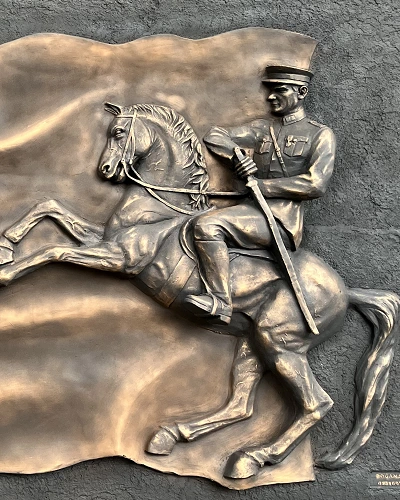
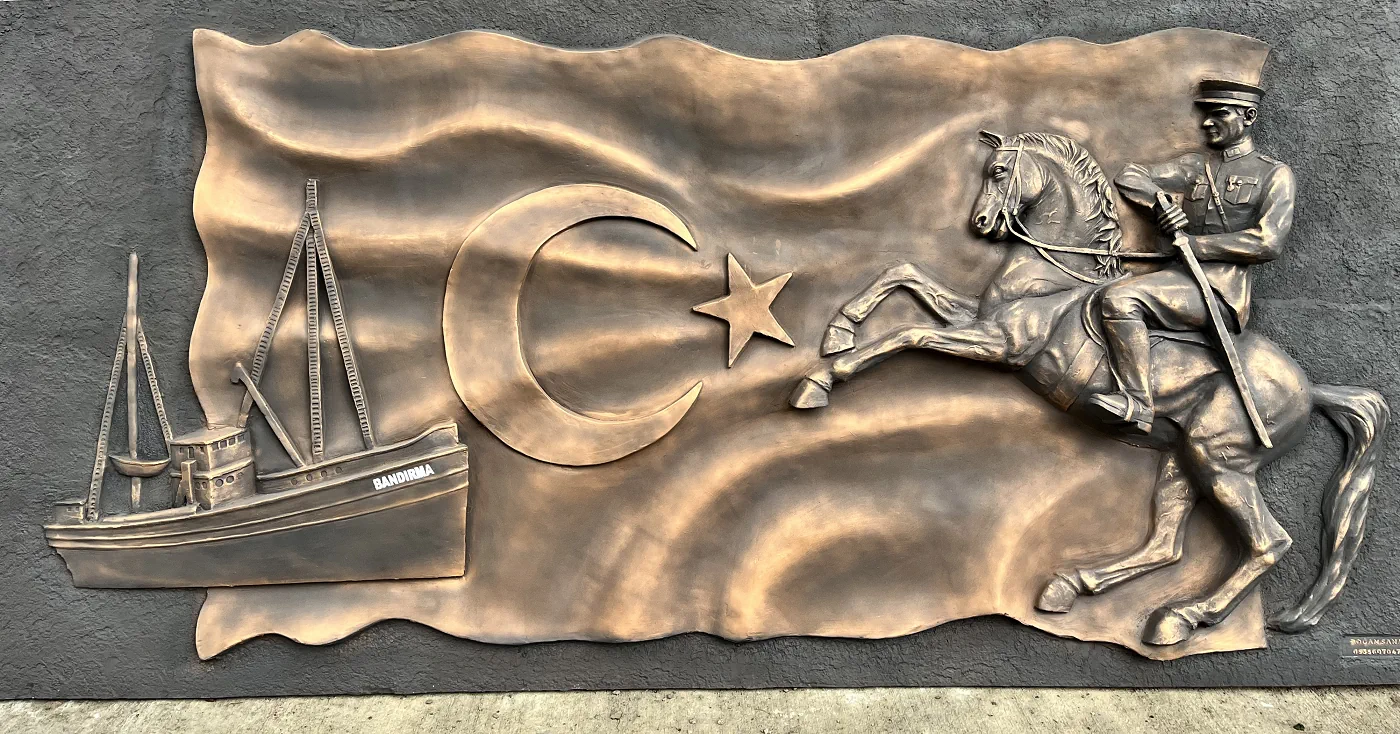
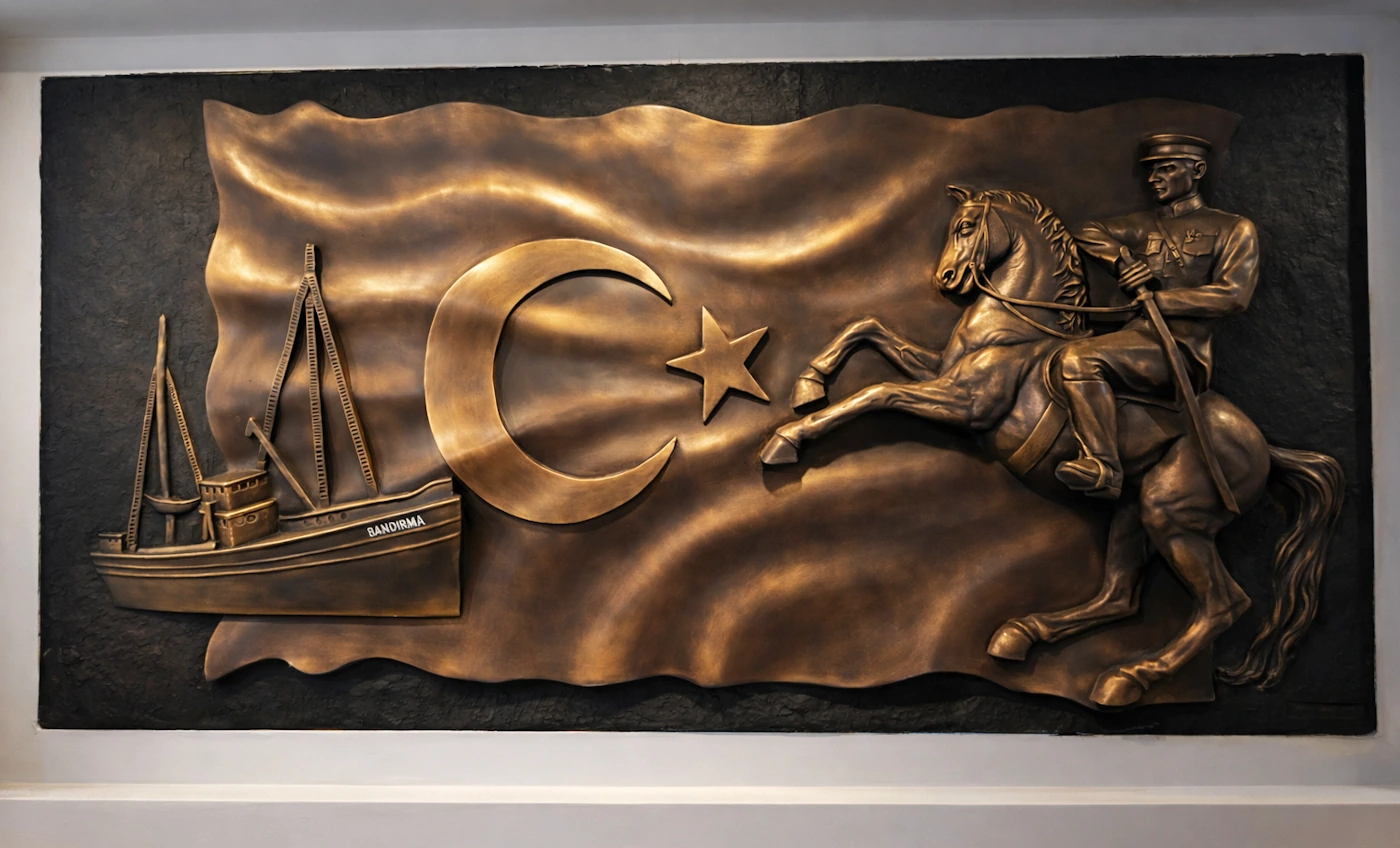
Atatürk’s arrival in Samsun on May 19, 1919 stands as the most powerful symbol of a nation rising from its ashes and the moment when the torch of independence was lit. This special relief sculpture powerfully reflects the determination, resolve, and belief in freedom carried by Mustafa Kemal Atatürk and his comrades as they step ashore from the Bandırma Ferry. Bringing the spirit of the National Struggle into your spaces, this artwork is not merely a decorative element, but also a meaningful tribute of respect.
Features of the Relief Sculpture
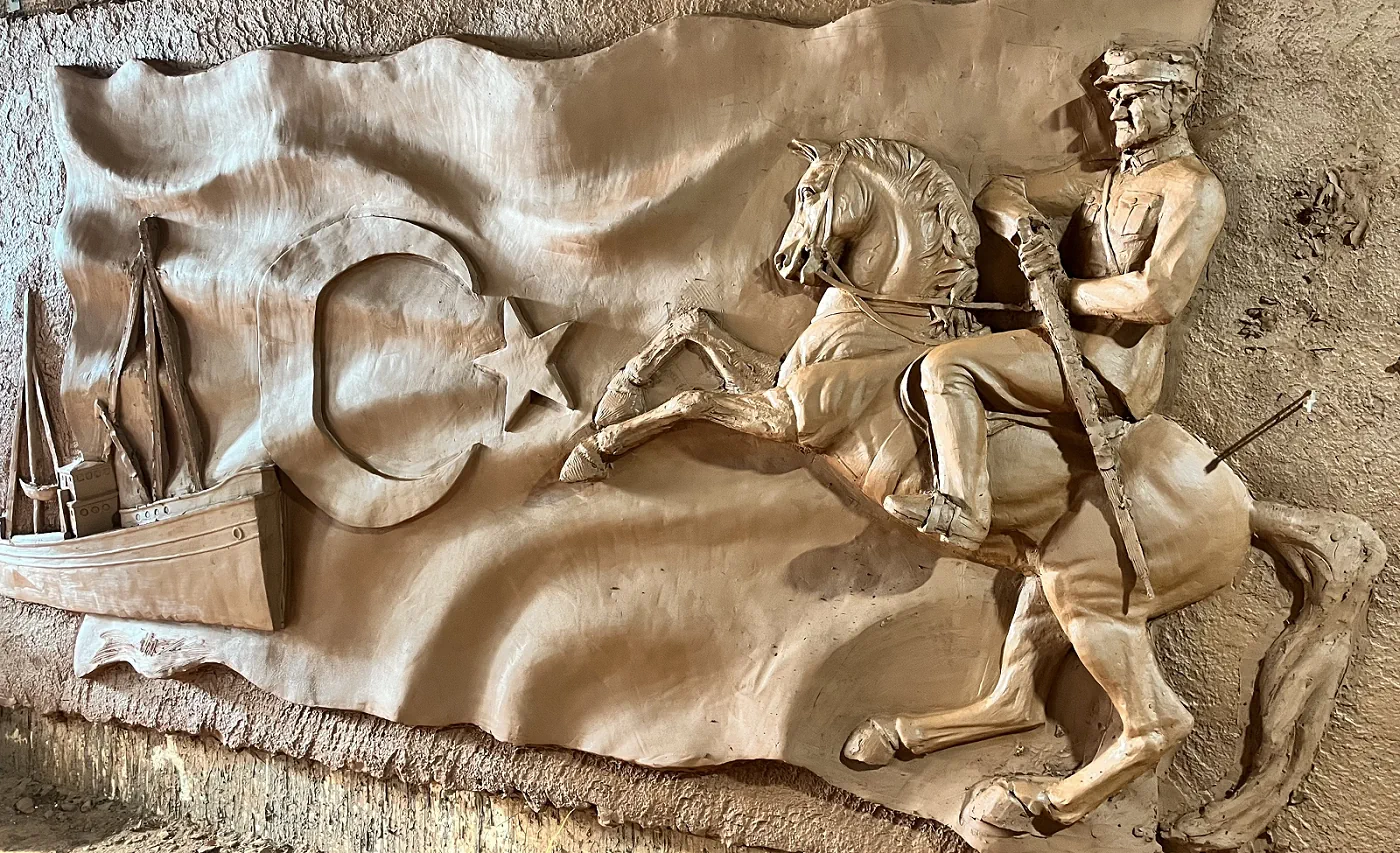
Produced from high-quality fiberglass (polyester) material, this monumental relief sculpture is highly resistant to outdoor conditions, sunlight, and seasonal weather changes. Thanks to its detailed craftsmanship, it conveys Atatürk’s distinctive features and the atmosphere of the era down to the finest details. With the ability to be produced in custom dimensions, it adapts seamlessly to all types of architectural projects.
Areas of Use
It is an ideal choice for municipal buildings, governor’s offices, schools, and military facilities, as well as museum entrances, cultural centers, and public squares. This artwork creates a strong focal point in ceremonial areas and during national celebrations, symbolizing institutional historical awareness and commitment to national values. It offers a prestigious visual solution for all institutions wishing to pass on the heritage of the Republic to future generations.
Date Added: | Last Updated:
Relief 360 cm 90 cm 20 cm Fiberglass Custom Made 160 kg
The Bandırma Steamer Relief is a historical artwork depicting Mustafa Kemal Atatürk's departure from Istanbul aboard the Bandırma Steamer on May 19, 1919, and his arrival in Samsun, marking the beginning of the Turkish War of Independence. This event is considered the first step in the Turkish nation's struggle for independence. The relief immortalizes the moment when Atatürk and his comrades set out for the homeland. May 19 is celebrated as Youth and Sports Day in Turkey.
In the relief, Atatürk is depicted with determination and leadership qualities. He is typically portrayed in military uniform, looking forward with a resolute stance. The artist has carefully reflected Atatürk's confidence in his nation and his vision for the future in his facial expression. The relief shows Atatürk not only as a soldier but also as a savior and leader. The composition usually includes his comrades-in-arms and steamer details, ensuring the completeness of this historical moment.
The Bandırma Steamer Relief is one of the important examples of Turkish sculpture art. The work demonstrates success in bringing a historical moment to life three-dimensionally. The artist's figure anatomy, compositional balance, and use of depth enhance the artistic quality of the work. The relief technique presents the scene with plastic expression on the wall surface. The attention to detail and realistic depiction create an emotional impact on the viewer. The work is an example of both monumental art and historical documentation, holding a special place in Turkish art history.
The Bandırma Relief holds great cultural significance as a symbol of the Turkish nation's struggle for independence. The work is an important tool for instilling historical consciousness in young generations and transmitting national values. It strengthens May 19's place in collective memory and contributes to the construction of collective identity. The relief embodies values such as patriotism, courage, and freedom. This work, which must be preserved as cultural heritage, is also a reflection of Turkey's modernization process and reinforces social unity.
The most famous examples of the Bandırma Steamer Relief are located in Samsun. These reliefs can be found particularly around the Samsun Atatürk Monument and in various public spaces depicting May 19. Similar works are also displayed at tourist points such as Samsun Coastal Park and Atatürk Boulevard. Additionally, relief works addressing this subject exist in museums and monuments in different cities of Turkey. Each created by different artists, they interpret the historical moment from different perspectives.
Mustafa Kemal Atatürk was sent to Samsun with an official duty as the 9th Army Inspector. This duty assigned by the Ottoman Government was to restore order in the Black Sea region and collect weapons. However, Atatürk transformed this official duty into an opportunity to initiate the Turkish nation's independence struggle. His arrival in Samsun on May 19, 1919, actually became the first step of the War of Independence. This strategic move constitutes one of the most important turning points in Turkish history.