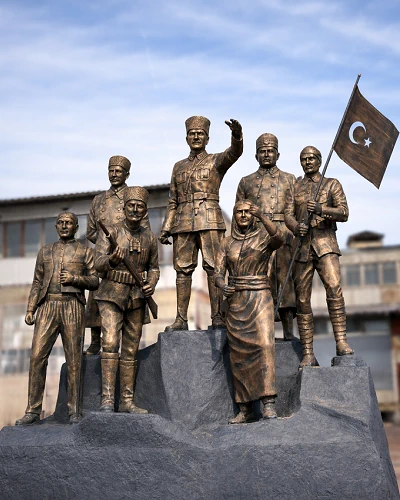
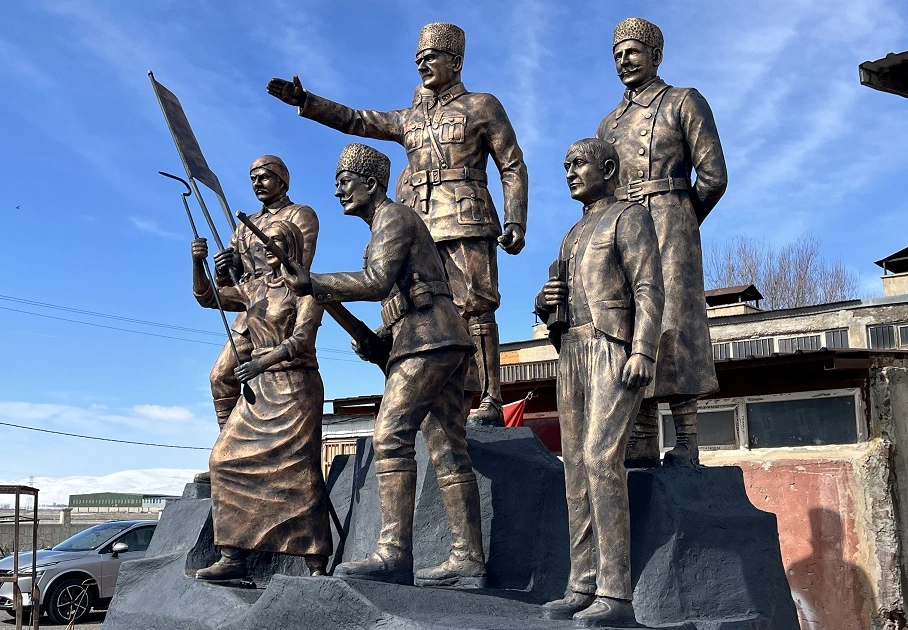
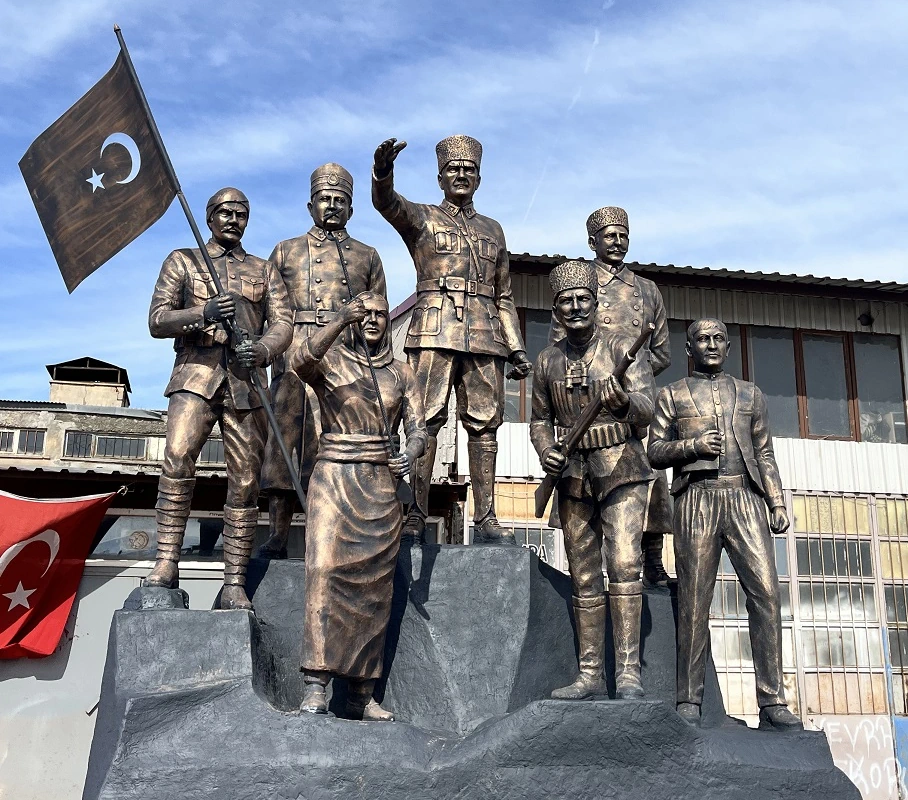
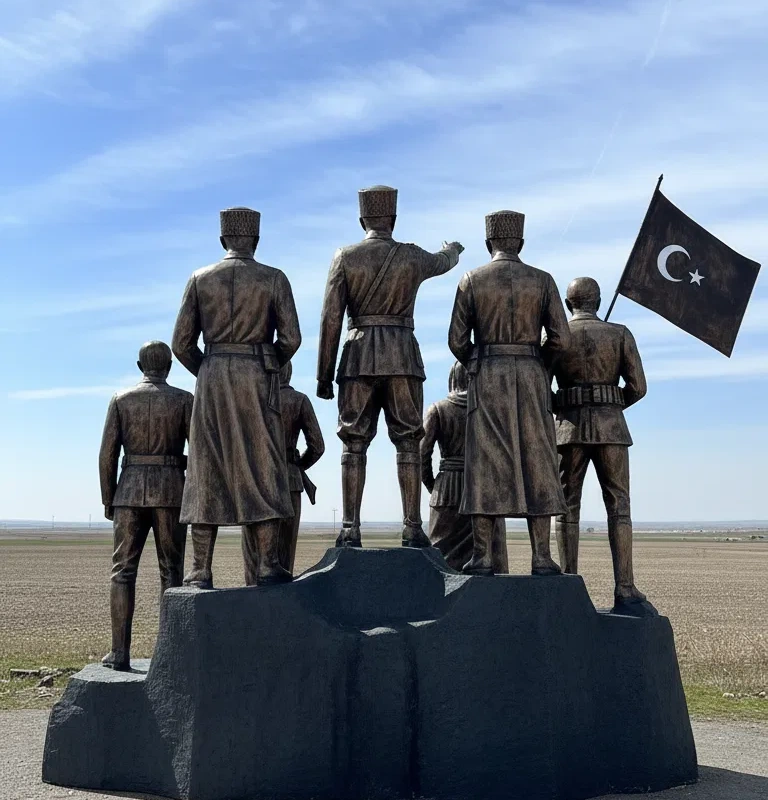
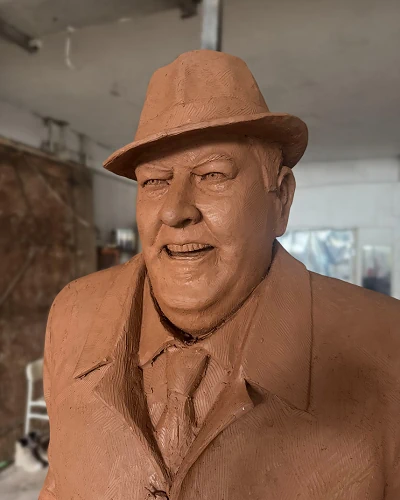
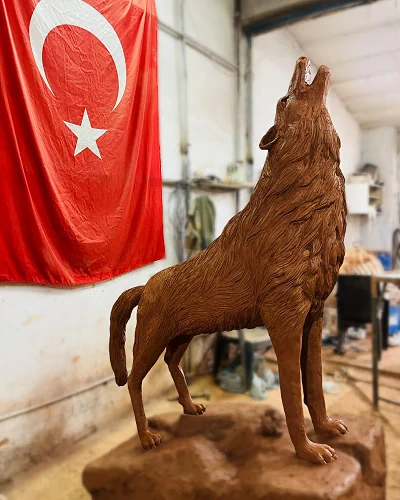
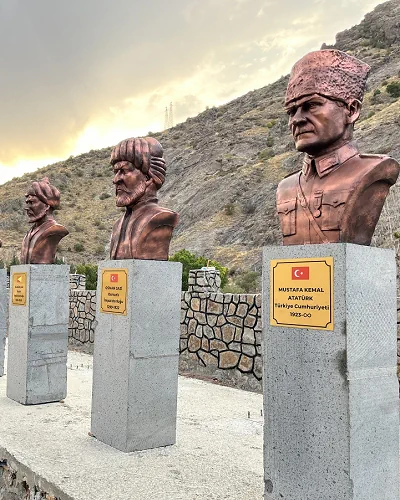
The unique courage and sacrifice shown by the Turkish nation in the struggle for independence constitute the most honorable pages of our history. The Kars Province National Struggle Monument is a monumental work representing the heroes who served in the defense of the homeland during the War of Independence, all male and female comrades in arms, and the spirit of national unity. This sculpture group immortalizes the determination and faith of the heroes who sacrificed their lives for the homeland under the shadow of our crescent and star flag.
Statue Features
Produced from high-quality fiberglass material, this monumental sculpture group stands out with its seven-figure composition. Each figure is modeled with detailed craftsmanship, and the military uniforms, civilian clothing, and weapon details of the period are processed in accordance with historical accuracy. Mounted on a granite or marble base, the work is protected with bronze patina coating resistant to outdoor conditions. The crescent and star flag detail enhances the power of the composition. Custom production can be made in different sizes and figure arrangements.
Usage Areas
It is an ideal monument statue for municipal squares, city parks, cultural centers, military facilities, and institutions that emphasize national values. It is a powerful symbol that creates historical consciousness especially for cities, museums, and educational institutions connected to the War of Independence. It brings the values of patriotism, courage, and national unity to your spaces. This work, which inspires young generations, strengthens collective memory and keeps cultural heritage alive.
Date Added: | Last Updated:
Monument 360 cm 560 cm 230 cm Fiberglass Ready Mold 1300 kg
So, creating such a magnificent monument by using 7 large human statue pieces together is quite a difficult process. As someone who loves and follows the art of sculpture, I can say that among the recently made monumental sculptures, this is the best work I have seen. The fact that it reflects the meaning of that day and consists of people whose names have gone down in history in the region where it is displayed creates a separate art of meaning. I will continue to follow you. Take care.
War Memorial Sculpture
You can watch the production process in the workshop and different angles of the War Memorial Sculpture in our video. Click for video details.
The seven figures in this monument statue represent heroes from different segments who served in the defense of the homeland during the Turkish War of Independence. By bringing together soldier, civilian, woman and child figures, it is emphasized that the national struggle encompassed the entire society. The commander figure at the front symbolizes leadership, the soldiers beside him represent the struggle at the front, and the woman figure symbolizes women's heroism at the front and behind the lines. Each figure is a carrier of the values of patriotism, courage and sacrifice. The composition reflects the spirit of national unity and solidarity.
The costumes of the figures in the monument statue belong to the Turkish War of Independence period between 1919-1923. Military figures carry the Turkish army uniforms of the period, kalpak and coats in detail. Civilian figures reflect the traditional costumes of Anatolian people. The headscarf and dress of the female figure show the daily clothing of Anatolian women of the period. Weapon and equipment details are also inspired by real equipment from the same period. All costume and equipment details are designed in accordance with historical sources.
Yes, the weapon and equipment details in the monument statue are designed in accordance with historical facts. The rifles carried by the figures represent Mauser and similar weapons used during the War of Independence. Military equipment, cartridge belts, belts and other gear are compatible with the standard equipment of the period. Flag pole, banner and other symbolic elements are based on historical sources. Artists created the details using period photographs, archival documents and museum collections. This care increases both the artistic and educational value of the monument.
The National Struggle Monument is a meaningful work for all cities of Turkey, but it holds great value especially for cities that played an important role in the War of Independence. It is ideal for struggle centers such as Ankara, Izmir, Samsun, Erzurum, Sivas, Afyon, Kutahya, Maras and Antep. It is also suitable for border cities and regions with military garrisons. It is preferred for municipal squares, next to martyrs' monuments, cultural centers and museums. Each city can customize by adding its own local heroes to the composition. It is a meaningful choice for all cities that preserve national values.
This war monument is an example of multi-figure monumental composition in artistic terms and has dramatic narrative power. The positioning of figures at different heights creates hierarchy and movement dynamics. Symbolically, it emphasizes that the entire society struggled together; it shows that everyone participated in homeland defense without distinction of soldier-civilian, woman-man, young-old. The flag-raising movement is a symbol of victory and independence. The feeling of unity and solidarity in the composition strengthens national identity. The work transfers historical consciousness and responsibility to new generations by building a bridge from the past to the future.
The crescent and star Turkish flag in the monument is the most powerful symbol of the struggle for independence and represents the moment of victory. The waving of the flag at the highest point of the composition symbolizes that the struggle ultimately achieved success. The female figure emphasizes that not only men but also women played an active role in the War of Independence. Anatolian women carried ammunition at the front, cared for the wounded and continued production behind the lines. This detail makes visible the social dimension of the national struggle and women's heroism. Both symbols tell the universality of patriotism and sacrifice.