

No reviews yet. Share your thoughts openly!
Metal Sculpture Making Video
Transformation of Metal: An Eagle Rising from Idle Fragments
Sculpture art is the art of mastering the nature of the material and breathing a new life into it; however, when it comes to metal sculpture, this process turns into a struggle for existence within fire and hardness. In the Heykel.org workshop, idle iron pieces and small metal scraps that have completed their lifespan are seen not just as waste, but as the potential cells of a work of art. The eagle sculpture, approximately one meter tall, brought to life in the hands of our sculptor, is the most concrete proof of how industrial coldness can transform into art. In this video, you will watch step-by-step the transformation of metal and how rusty irons bow to the nobility of a predator.
Fire, Welding, and Steel: The Construction of Form
Metal sculpture making is not just about joining parts, but a discipline of creating balance and volume in space. Our sculptor meticulously selects each idle metal piece while establishing the anatomical structure of the eagle and seals these pieces together with the help of a welding machine. The structural strength of the body, the grip of the talons, and the air-catching angle of the wings turn into a physical reality through the power of the welding arc. Every spark you see in the video is like a heartbeat struck into the skeleton of the sculpture; in this process, the metal becomes docile, and the sculptor's vision evolves into an unshakable whole.
Mastery in Details: Feather Curves from Thin Metal
The most critical point that distinguishes an eagle sculpture from an ordinary metal mass is its sense of "vitality." One of the most impressive sequences of the video, the head, neck, and feather details, reveals our sculptor's patience and artistic intuition. Thin and long metal rods are bent with fire and transformed into those characteristic feather layers on the eagle's neck and curves that give the feeling of fluttering in the wind. Each metal strip is meticulously positioned to imitate the form and texture of a real feather. This is not like a bust making; it is a work that also inspires artists for recycling.
Heykel.org Workshop: The Meeting Point of Art and Craft
Towards the end of the video, while witnessing the moment of creation of this magnificent one-meter-tall eagle sculpture, you will also take a short journey to other corners of the Heykel.org workshop. Different artistic works continuing in the workshop offer a panorama showing how creativity and labor diversify. Each work, just like in this eagle sculpture, is completed with years of accumulated craftsmanship, anatomical knowledge, and artistic passion. For Heykel.org, metal is not just a material, but a form of expression. This video is a professional documentary of the process of a work of art transforming from an idle piece into a noble figure.
Date Added: | Last Updated:
User Reviews
Write a ReviewProfessional Sculpture Production Examples
-
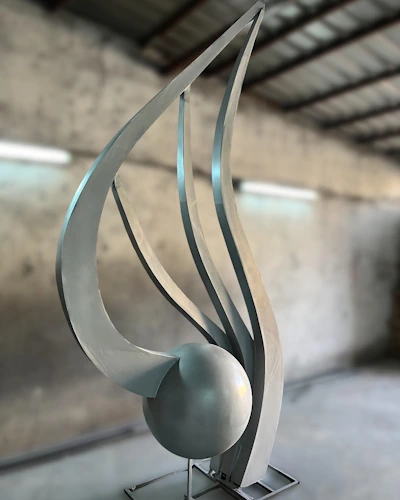
Stainless steel metal sculpture with modern flame form design Metal Sculpture
-
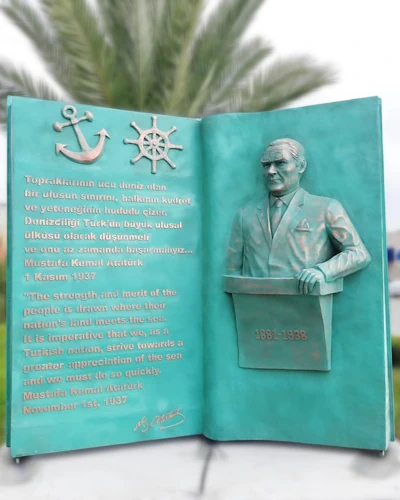
Turquoise open book monument with Ataturk relief and maritime motifs Ataturk Maritime Book Monument Sculpture
-
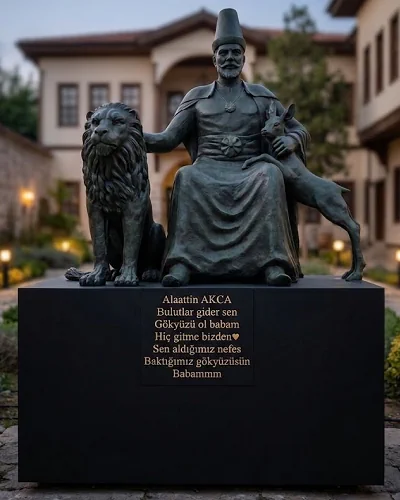
Haci Bektas-i Veli seated on throne with lion and gazelle, symbol of tolerance Haci Bektas-i Veli Statue
-
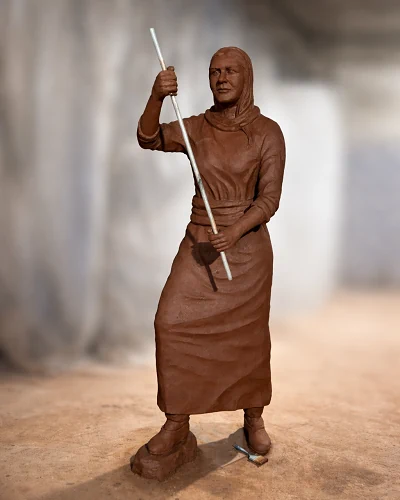
Kars's brave woman who defied occupation with a staff Lady Muhibe Sculpture
-
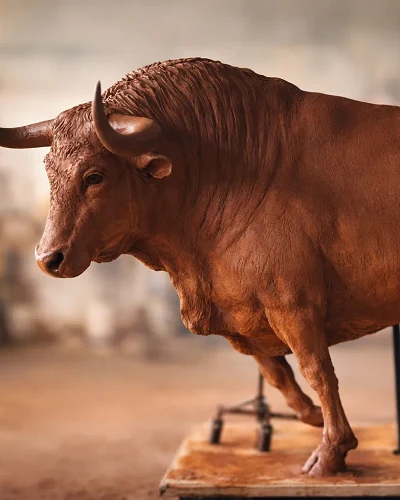
Handcrafted bull sculpture with powerful anatomy Bull Sculpture
-
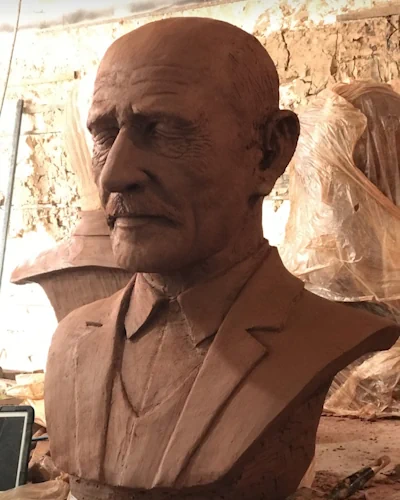
The deep gaze and weathered face of folk poet Asik Veysel, immortalized in clay Asik Veysel Bust Sculpture
Metal Sculpture Making Video SSS
The process of transforming idle metals into works of art is not just a recycling effort, but a meeting of creative vision and technical mastery. In our workshop, decommissioned iron pieces, screws, pipes, and various scrap metals are meticulously sorted and selected to form the skeleton of the design. Our artist brings these cold and rough pieces together using the high heat of the welding machine to give them form. Each piece is placed to contribute to the anatomical integrity of the sculpture. Consequently, industrial wastes gain aesthetic value and transform into unique sculptural figures that have a soul, tell a story, and defy time, thereby acquiring an artistic identity.
Feather details in a metal eagle sculpture are the most critical stage that adds vitality and dynamism to the work. To capture this realism, our artist processes thin and long metal strips individually. Each metal piece undergoes heat treatment and is bent to match the natural curve of a feather. These wires, starting from the head and neck area and spreading across the body, are welded in a layered structure. Thanks to this meticulous craftsmanship, the hard and rough structure of the metal is broken, creating a soft texture that feels like it is fluttering in the wind. The reflection of light on the surface, through these fine curves, ensures that the sculpture looks like a living being from every angle, elevating the artistic depth.
Metal sculptures are an excellent choice for outdoor use and garden decoration as they are inherently extremely durable. Materials such as iron and steel show high resistance to natural conditions; however, special processes are applied during the production stage for this durability to be permanent. To ensure our sculptures maintain their form against rain, sun, and humidity outdoors, their surfaces are coated with special protective layers. A metal sculpture prepared with the right techniques can maintain its first-day glory for decades in parks, gardens, or outdoor exhibitions. The natural patina that metal acquires over time adds an antique atmosphere to the work, further strengthening its aesthetic harmony with the environment and providing decorative value.
The scrap metals we use in our art are generally sourced from leftover parts of industrial production, decommissioned machine components, and local recycling centers. Since our workshop adopts the philosophy of "upcycling," every type of idle metal piece is a valuable candidate for raw material. Construction residues, old vehicle parts, or non-shavings parts from industrial plants are meticulously scanned. Metals collected from these sources are first cleared of rust and dirt, then categorized according to their artistic potential. This sustainable approach both helps reduce environmental pollution and ensures that each sculpture has a completely original structure containing different stories from the past.
We follow a multi-stage protection process to extend the life of metal sculptures and prevent corrosion. After the welding and shaping processes are finished, the entire surface of the sculpture is cleaned using sandblasting or brushing methods to prepare it for oxidation. Then, professional primers or industrial varnishes are applied, which completely cut off the metal's contact with air and moisture. If the natural rusty (patina) appearance of the sculpture is to be preserved, the rusting process is stopped in a controlled manner and a transparent fixing layer is applied over it. These protective applications prevent damage to the internal structure of the metal, allowing the sculpture to be exhibited for generations in both indoor and harsh outdoor environments without deteriorating or losing its artistic details.
The welding process is a completely safe production stage when professional equipment and correct occupational safety procedures are implemented. In the Heykel.org workshop, our artists use special masks, heat-resistant gloves, and protective clothing to guard against high heat and intense light. Ventilation systems are actively operated in our workspace to prevent the inhalation of metal fumes. During the use of the welding machine, maximum attention is paid to electrical safety and fire precautions. In long-term and detailed works like sculpture making, these safety measures allow the artist to focus and produce flawless craftsmanship. In short, when combined with technical knowledge and safety awareness, welding is one of the most powerful and reliable shaping methods of art.