
No reviews yet. Share your thoughts openly!
Face Making Video
The Face of Sculpture: Hands That Touch the Finest Point of Art
The most expressive part of any sculptural figure is, without doubt, the face. The depth of the eyes, the posture of the brows, the form of the cheeks, the anatomical precision of the ear when all these details come together, a surface of stone or bronze transforms into a breathing presence. At Heykel.org, face-making is approached not merely as a technical process but as an artistic responsibility. Our sculptor addresses every region that constitutes the face from the depth of the eye sockets to the arc of the brows, from the height of the cheekbones to the curve of the ear helix with individual care and precision. The work you will witness in this video is a testament to exactly that refinement: the final shaping of the facial region on the monumental statue of Bülent Ecevit, brought to life by our sculptor's hands.
Eyes, Brows, Cheeks, Ears: Every Detail Has Its Own Language
Facial anatomy constitutes one of the most challenging and rewarding domains in the art of sculpture. The eyes reveal the soul of the figure; when iris depth, eyelid thickness, or gaze angle is miscalculated, the entire expression collapses. The brows determine the emotional tone of the face even a slight difference in curvature can profoundly alter the meaning a figure carries. The cheekbones govern the distribution of light and shadow across the face; when modeled correctly, the figure appears alive under any lighting condition. The ears, though often overlooked, contain details such as the helix, antihelix, and tragus that are indispensable to anatomical integrity. Heykel.org's sculptor treats each of these regions as an independent field of work, carefully preserving the proportional harmony between them. In the video, you can watch a live cross-section of this process.
Facial Work on the Bülent Ecevit Monument: A Process That Leaves Its Mark on History
Bülent Ecevit is the owner of one of the most powerful and recognizable faces in Turkish political history. Transposing that face into sculpture demands more than anatomical accuracy it requires capturing the essence of a character, the resolve and simplicity embedded in that person's gaze. Heykel.org's sculptor works in full awareness of this responsibility. Every proportion drawn from archival photographs, the brow line unique to Ecevit, his deep and contemplative expression, the distinctive structure of his face all are rendered into the material through hands and traditional tools. This is not merely an exercise in likeness; it is an act of art that reinforces a political leader's place in collective memory and pays tribute to his legacy. As you watch our sculptor's final touches on the facial region in the video, you will feel the weight of that responsibility.
Face-Making at Heykel.org: A Precision That Cannot Be Left to Machines
Many stages of sculptural production can be supported by technological tools; however, the final phase of facial modeling takes place at that critical point where no machine can replace the human hand. At Heykel.org, facial work is completed through craftsmanship that demands anatomical knowledge and artistic intuition built over years of experience. With every touch, our sculptor simultaneously weighs the resistance of the material, the behavior of light across the surface, and the visual relationship the viewer will form with the figure. This holistic approach ensures that Heykel.org works endure not only visually but emotionally. The face of a monumental sculpture will meet the gaze of thousands across generations and for that gaze to carry meaning, every moment of the making must have been lived with that awareness.
Date Added: | Last Updated:
User Reviews
Write a ReviewProfessional Sculpture Production Examples
-
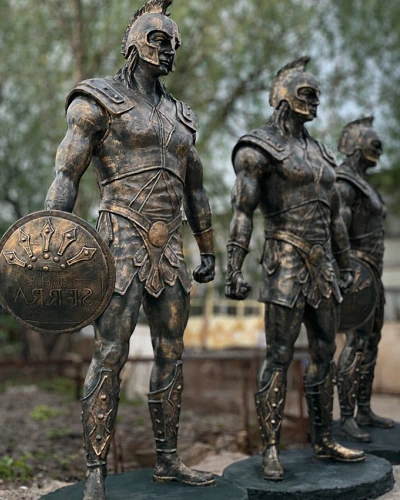
Ancient Greek Warriors Sparta Sculpture
-
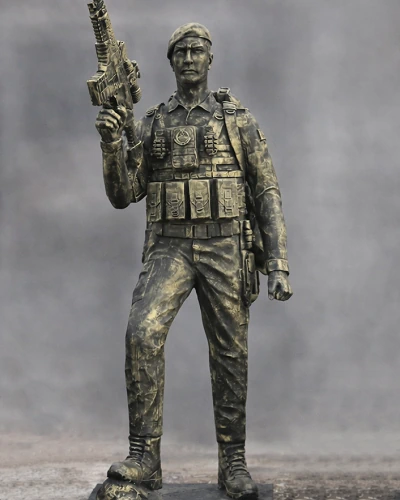
A commando statue with weapon in hand, symbol of courage and sacrifice Commando Statue
-
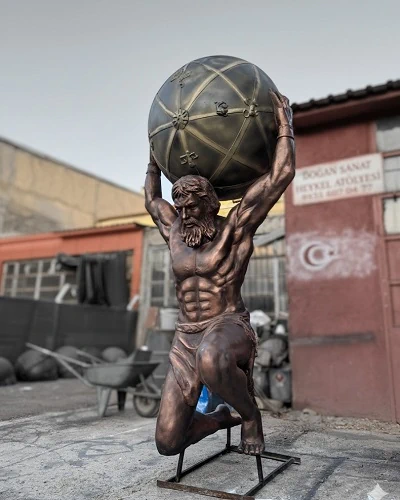
Atlas Titan of Greek Mythology Sculpture of Atlas
-
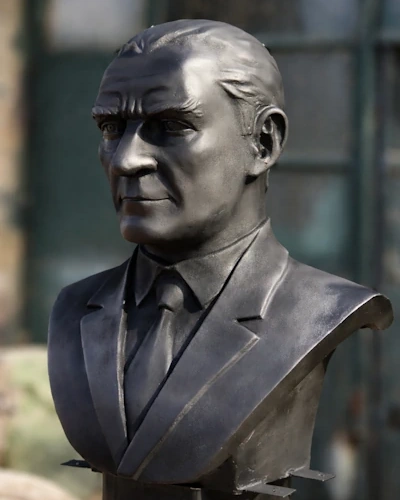
Uniquely designed bust in the style of Atatürk statues found in schools Bust of Ataturk
-
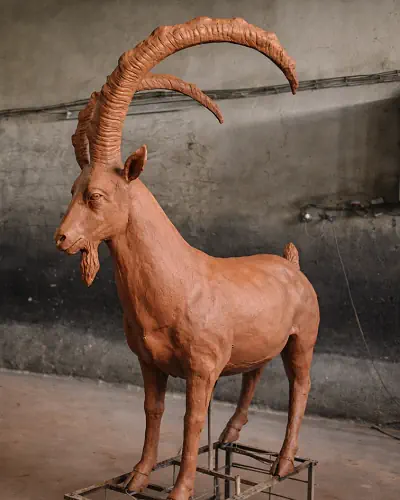
Bronze statue group of three ibex goats with large horns Goat Statue
-
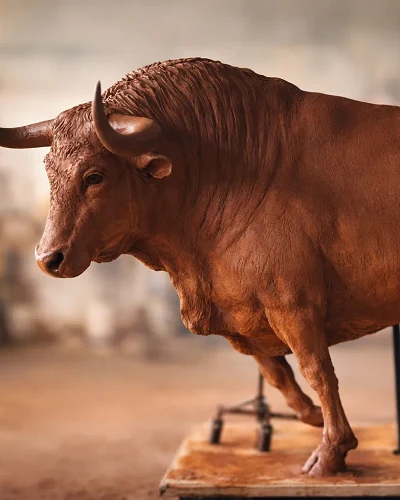
Handcrafted bull sculpture with powerful anatomy Bull Sculpture
Face Making Video SSS
In sculpture, the eye area is the most expressive and technically demanding part of the face. The sculptor first establishes the depth and proportions of the eye socket, then carefully shapes the eyelid thickness, iris recess, and direction of the gaze. A single angular or proportional error can collapse the entire facial expression. Eye modeling therefore demands not only anatomical knowledge but also artistic intuition.
The brow line is one of the most critical elements that directly defines the emotional language of the face. The sculptor marks the starting point, the height curve, and the ending angle of the brow based on anatomical references. In portrait sculptures, archival photographs serve as the primary reference for accurately transferring brow structure. Even a slight difference in curvature can fundamentally alter the figure's expression.
The cheekbone form is the fundamental anatomical structure that governs the distribution of light and shadow across the face. The sculptor first establishes the zygomatic projection in rough form, then gradually refines the surface to reach the final proportion. Correctly modeled cheekbones ensure that the figure appears alive and realistic under any lighting condition. This detail is especially critical for monuments intended for outdoor display.
Transferring the face of a recognized figure like Bülent Ecevit into sculpture demands a responsibility that goes beyond anatomical accuracy. Using references drawn from archival photographs and documentary footage, the sculptor renders Ecevit's distinctive brow structure, eye depth, and facial proportions into the material. The goal is not merely likeness it is to engrave into stone or metal the resolve and simplicity that defined that face.
The facial region of the Ecevit statue is shaped through a multi-stage process in which every anatomical detail eyes, brows, cheeks, and ears is addressed individually. The sculptor first establishes the overall facial form in rough outline, then works each region independently, and in the final stage connects all details proportionally to one another. This process demands both technical expertise and a profound artistic sensibility.
In this video, the facial region of Bülent Ecevit is shaped over a base form built on industrial polyurethane foam. Hand tools used include rasps, files, spatulas, carving chisels, and sandpaper. These tools allow surface refinement at a level of precision no machine can replicate. This hand-crafted approach is the fundamental artistic principle applied by Heykel.org in every monumental project.