

No reviews yet. Share your thoughts openly!
Bust Making - How It's Made
The Birth of a Bust Sculpture: A Journey from Raw Material to Art
Bust making is a perfect blend of patience and craftsmanship shaped by an artist's hands. In this video, you can observe how a bust sculpture comes to life in our workshop, the techniques used at each stage, and the meticulous care applied throughout the entire process. This transformation of raw material through the artist's touch reveals the magic of sculptural art in all its reality.
Techniques and Materials Used in Bust Making
Bust sculpture production begins with a carefully considered material selection that directly determines the character of the work. Different materials such as fiberglass, resin, plaster, or metal alloys are meticulously chosen according to the requirements of the design. Each material has its own unique processing technique, and the craftsman's experience plays a decisive role at this point. Traditional methods adopted in our workshop are blended with modern techniques to give each bust a distinctive identity.
The Power of Handcraft: Bust Making - How Is a Bust Made?
Bust production at the Heykel.org workshop is a process carried out entirely by hand from start to finish. Every carving, every detail work, and every surface finishing stage is performed directly by the artist's own hands. This approach transfers not only a physical form to the work but also the artist's soul and energy. This authenticity, which mechanized production can never achieve, transforms each bust into a unique work of art with collectible value.
Bust Orders: Transform Personal Moments into Lasting Art
Bust sculptures are the most lasting and meaningful gift you can give to your loved ones, your institution, or yourself. From portrait busts to corporate representation sculptures, from memorial busts to decorative sculptures, every request is realized with care and in line with customer expectations. Our expert team guides you one-on-one from the design stage through to delivery. You imagine it, we make it permanent. To bring your envisioned design to life and place an order, please get in touch with us.
Date Added: | Last Updated:
User Reviews
Write a ReviewProfessional Sculpture Production Examples
-
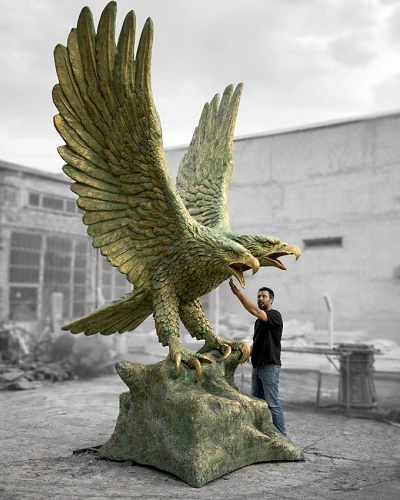
Symbol of Seljuk Art Double-Headed Eagle Sculpture
-
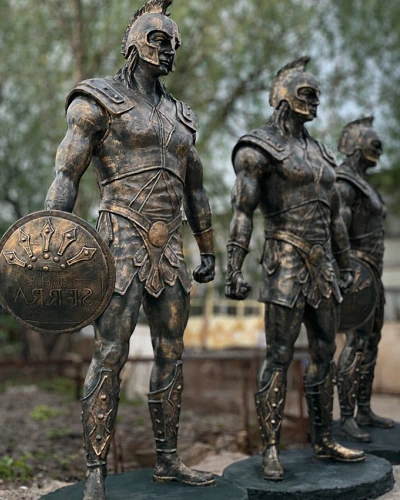
Ancient Greek Warriors Sparta Sculpture
-

Bronze patina fiberglass sculpture of a Turkish soldier holding his flag Flag Bearing Soldier Sculpture
-

Mustafa Kemal with His Rearing Horse Equestrian Ataturk Monument
-
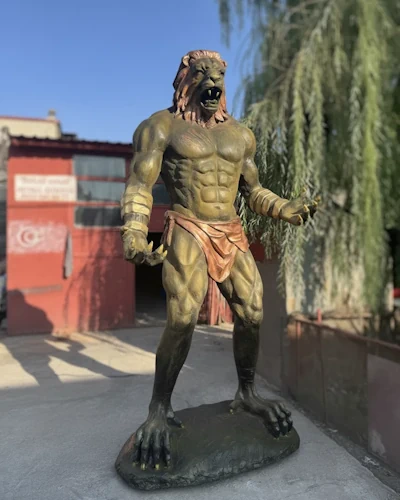
Mythological lion-headed warrior statue, fiberglass, suitable for outdoor use Lion Head Statue
-
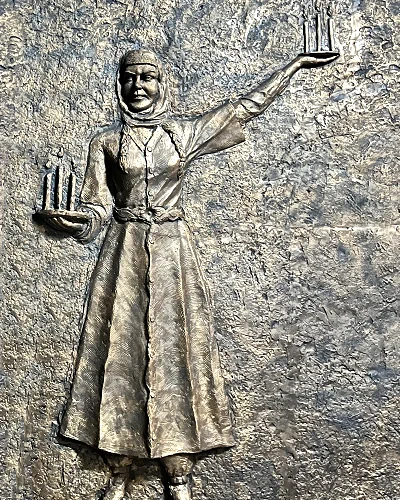
Handcrafted decorative wall relief that adds depth to your space Relief Wall Sculpture
Bust Making - How It's Made SSS
A bust is generally completed through five main stages. In the first stage, measurements are taken from reference photographs or a live model and the skeletal structure is formed. In the second stage, the form is shaped using clay or similar modeling materials. In the third stage, fine details requiring meticulous craftsmanship such as facial features, hair, and clothing are carefully worked. In the fourth stage, a mold is taken and the work is cast in the final material. In the last stage, the piece is completed with surface treatments, patina, or paint application.
The most challenging stage in bust making is undoubtedly the crafting of facial details. Elements such as the eyes, nose, lips, and jawline require millimetric precision as they directly reflect the identity of the person. Especially in portrait busts, capturing the character and expression of the individual demands not only technical skill but also a deep sense of observation and intuition. A wrong proportion or a slight asymmetry can compromise the authenticity of the entire work. For this reason, experienced sculptors dedicate the most time and effort to the facial stage.
Yes, the use of molds in bust making varies depending on the production method. A mold may not be used when producing a single original piece; however, if casting is to be done in materials such as fiberglass, resin, or bronze, a mold must be prepared. Molds are generally made from silicone or plaster and transfer all the details of the original model without loss. When multiple productions are involved, more than one piece can be obtained from the same mold. The quality of the mold directly affects the detail precision of the final work.
Fiberglass and bronze busts differ significantly from each other in terms of both the production process and aesthetic outcome. Fiberglass busts are produced by casting into molds, are lightweight, and are suitable for outdoor use. They offer a wide range of color and texture options along with a price advantage. Bronze busts, on the other hand, are hand-finished after casting, are heavy and durable, and offer timeless prestige. Bronze is a traditional material particularly preferred for memorial and institutional busts. Both materials retain their value for many years with proper care.
Both methods have their own unique advantages. A live model allows the sculptor to directly observe the volume of the person's face, skin texture, and expression, which enhances the realism of the work. Working from photographs becomes a necessary method for busts of people who live far away or have passed away. Professional sculptors can produce successful results in both cases. The most ideal approach is a combination of live sessions supported by high-quality multi-angle photographs.
A bust is traditionally a type of sculpture covering the head, neck, and shoulder area of a person. Portrait sculpture is a broader concept that encompasses not only the face but also works reflecting the entire body lines or distinctive features of a person. While busts are generally used for memorial, institutional representation, and collection purposes, portrait sculptures lay the groundwork for more comprehensive figurative works. Both types aim to immortalize the identity and character of a person, but differ from each other in terms of scope and scale.