Ram Statue Price and Sales
The ram statue is among the special types of statues that have deep roots in Anatolia's thousands of years of cultural heritage and still maintain their artistic and symbolic value today. The ram figure, which has historically symbolized strength, abundance, leadership and courage, has found its place in many areas from tombstones to temple decorations, from city squares to institutional entrances. This type of statue, which is still in demand today, is frequently ordered especially by institutions dealing with animal husbandry, municipalities and private collectors.
Historical and Cultural Significance of the Ram
The ram has been accepted as a symbol of strength and honor for centuries across the vast geography stretching from Central Asia to Anatolia. The ram-figured tombstones that spread throughout Anatolia during the Seljuk and Ottoman periods reveal the cultural importance of this animal. Ram-shaped tombstones found especially in Eastern and Southeastern Anatolia were made to reflect the strength, nobility and social status of the deceased.
In addition, the ram figure held a sacred place in pre-Islamic Turkish beliefs. Seen as a symbol of abundance and fertility, the ram also has a deep connection with the tradition of ceremonial sacrifice. All this historical and cultural background elevates the ram statue from among ordinary animal statues and makes it a much more meaningful work of art.
Where Is the Ram Statue Used?
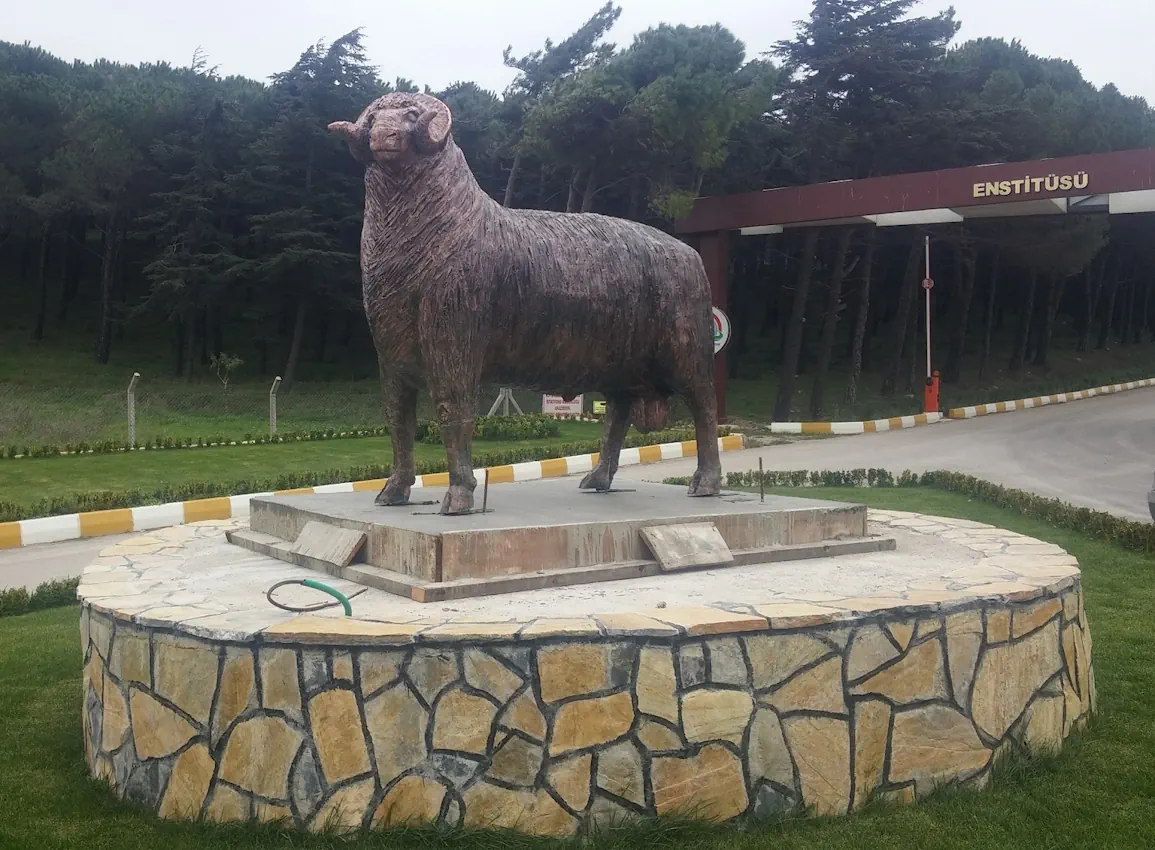
The areas of use of ram statues are quite wide. Institutions such as animal husbandry institutes, agricultural research centers and veterinary faculties, as seen in the image, place ram statues at their entry points to emphasize their identity and field of activity. Having a large, pedestal-mounted ram statue at the entrance of such institutions both strengthens the corporate identity and leaves a strong first impression on visitors.
In addition, municipal squares, park areas and city entrances are also spaces where ram statues are widely preferred. Especially for cities and districts that have built their regional identity on animal husbandry, the ram statue becomes a powerful element symbolizing the spirit and history of the city. Ram statue orders are also quite common for private gardens, farms and collections.
Materials Used in Ram Statue Production
The material used in ram statue production varies depending on the purpose of the work and the space where it will be placed. Bronze is one of the most preferred materials for this type of statue. With its durability, the patina it acquires over time and its magnificent appearance, bronze ram statues can stand for decades without requiring maintenance. Bronze is an extremely suitable option for outdoor spaces.
Polyester and resin offer a more economical and lightweight alternative. These materials, preferred especially for indoor spaces or applications requiring portability, provide great flexibility in painting and surface finishing. Polyester ram statues with special painting techniques that mimic the appearance of bronze can also produce quite impressive results.
Stone and concrete are ideal options for those looking for a more massive and permanent appearance. Used together with stone pedestals especially for monumental ram statues to be placed in large squares or institutional entrances, these materials add an extremely powerful and lasting effect to the space.
Ram Statue Dimensions and Design Process
Size selection in ram statues should be proportional to the space where the work will be placed. Production can be carried out across a wide range, from small decorative sizes to real scale and from there to monumental dimensions. While real scale or larger sizes are generally preferred for institutional entrances, smaller sizes may be sufficient for garden and indoor applications.
Anatomical accuracy is of great importance in the design process. A good ram statue should not just be a general animal silhouette; it should realistically reflect the wool texture, muscle structure, horn shape and naturalness of the posture. This level of detail can only come from the hands of an experienced sculptor who specializes in this type of animal statue.
About Ram Statue Prices
Ram statue prices vary significantly depending on the material used, the size of the statue and the level of artistic detail. Every project is unique and it is not the right approach to present a standard price list. The price difference between a small polyester ram figure and a large bronze cast monumental work can span quite a wide range. For this reason, the best approach is to share your project details and receive a personalized price quote. You can use the form below to place a ram statue order or get pricing information.
Registration Date:
Rate:
4.8
4 Vote