Japanese Sculpture Price and Sales
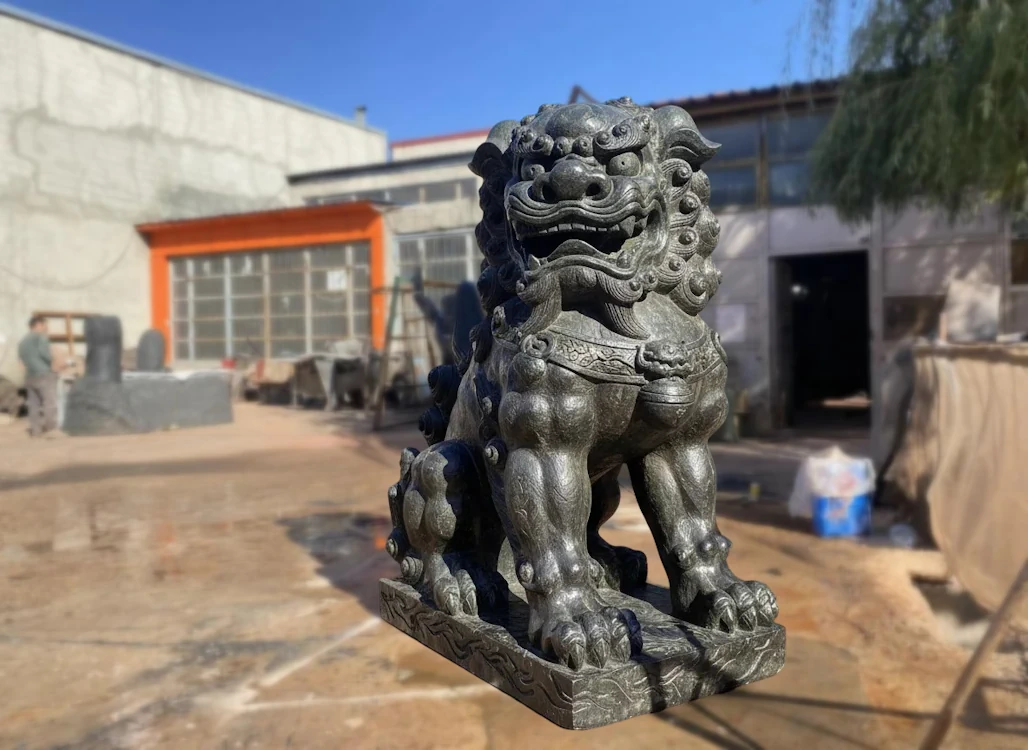
One of the most enduring protective symbols of Japanese culture, the stone lion sculpture is a tradition spanning thousands of years, carried forward into the present day. The piece you see in the photograph is an original Japanese lion sculpture crafted entirely by hand, reflecting the characteristic qualities of Far Eastern art. Carved from dark granite, the figure stands out as both a protective symbol and a powerful architectural element with its surface texture, flowing mane, and refined base. These kinds of works, each completed individually and far removed from mass production, are a perfect fit for garden arrangements, institutional buildings, and decorative spaces.
About the Figure – Japanese Lion Sculpture Details
This sculpture depicts the legendary guardian lion figure known in East Asian culture as the "Foo Dog" or "Shishi." Traditionally placed in pairs at the entrances of temples, palaces, and important structures across Japan, China, and Korea, these figures are considered sacred symbols believed to ward off evil spirits and protect the spaces they guard. The sculpture in the photograph carries all the iconographic elements of this tradition the expressive face, the round and prominent eyes, the half-open mouth, and the swirling horn-like protrusions on the head.
Material and Stone Craftsmanship
The sculpture was produced from high-density granite distinguished by its deep green-black tones. Granite is one of nature's most durable stones, offering outstanding resistance to frost, moisture, UV rays, and mechanical impact. These qualities make the sculpture exceptionally well-suited for both interior and exterior use. The combination of polished and matte surface areas adds visual depth and richness to the figure. The stone's natural veining creates a one-of-a-kind pattern across the sculpture, ensuring that each piece has its own unique appearance.
The sculpture production process covers everything from stone selection through rough carving, fine detail work, and surface finishing. The sharpness and clarity of the facial curves and the base motifs in particular are a direct reflection of the quality of the granite used and the technical mastery of the craftsman.
Pose and Symbolic Meaning
The figure is depicted in a seated position with its front paws firmly planted on the ground, head held upright, and body oriented slightly forward. This posture simultaneously conveys strength, vigilance, and guardianship. In traditional use, these sculptures are ordered in pairs: the male figure on the right holds a sphere beneath his paw, while the female figure on the left protects her cub. As a single piece, the sculpture already creates a strong decorative impact but when ordered as a pair, it lends the entrance of any space a sense of commanding, symmetrical authority.
Applications and Display Recommendations
This guardian lion sculpture, inspired by Japanese and Far Eastern culture, can be placed to striking effect in a wide variety of settings. Positioned at the entrance of a villa, mansion, or upscale residence, it lends the building prestige and a distinctive identity. In hotel, restaurant, or shopping center lobbies, it functions as a symbol of institutional strength. It can serve as a focal point in Japanese gardens, Zen gardens, or Far Eastern-themed landscape designs. In spiritual spaces such as temples, meditation centers, or yoga studios, its symbolic significance naturally comes to the fore. Thanks to granite's outstanding resistance to weather conditions, it can be used outdoors for years without requiring maintenance.
Registration Date:
Rate:
5
1 Vote