Baglama Sculpture: The voice of Anatolia and the heart of folk culture
The Baglama is the indispensable symbol of Turkish folk music and the auditory memory of Anatolian culture spanning thousands of years. Expressing sorrows in the hands of bards, carrying joy at weddings, and sharing grief in mourning ceremonies, this deep-rooted instrument is far more than just a musical tool; it is a carrier of identity and culture. As a link in a vast cultural chain extending from Pir Sultan Abdal to Asik Veysel, Neset Ertas, and today's bards, the baglama has carried the joy, sadness, rebellion, and hope of the Anatolian people across generations. Located at the heart of the Turkish folk music tradition recognized by UNESCO, this instrument is one of the most powerful symbols of collective memory and cultural identity. Bringing the baglama to life as a sculpture in public spaces means making this profound cultural heritage visible, keeping it alive, and passing it on to future generations.
Design and Artistic Features of the Baglama Saz Sculpture
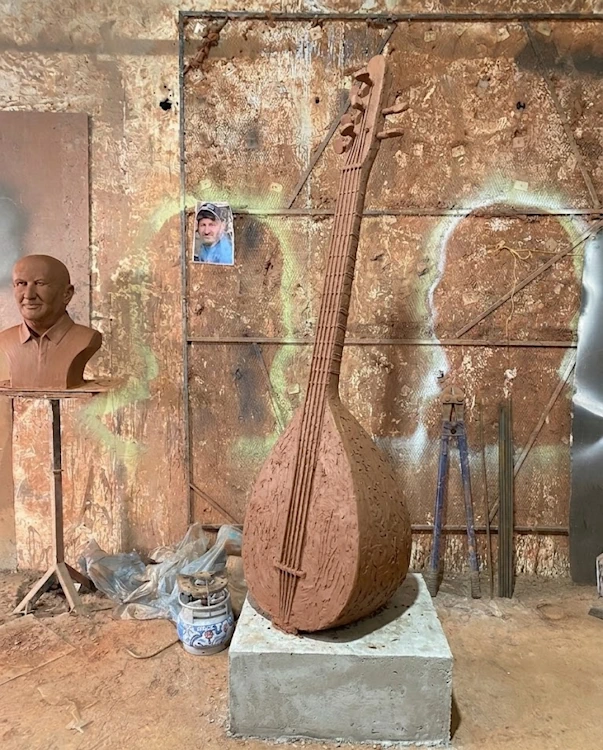
The baglama saz sculpture, brought to life in our workshop using the clay modeling technique, is an original work that masterfully reflects all the anatomical and aesthetic features of this deep-rooted instrument on a large scale. The bowl, neck, tuning pegs, frets, and strings have each been modeled with separate precision, and the sculpture as a whole carries all the plastic characteristics of a real baglama. The impression of wooden texture in the oval form of the bowl, the long and slender structure of the neck, and the turned details of the tuning pegs were realistically crafted during the clay stage. The simple concrete form of the pedestal was included in the composition as a minimal base that highlights the sculpture itself. Following the clay phase, this work—which can be transferred to permanent materials with bronze casting or fiberglass coating options—can be produced for both indoor and outdoor use. The baglama sculpture serves as a powerful symbol of cultural identity for cultural centers, municipal squares, music schools, and folk music associations. As one of the most effective ways to make Anatolian music and the bard tradition visible in the public sphere, this work adds both aesthetics and meaning to its location.
Who Is It Suitable For?
The baglama saz sculpture is a meaningful work of art for municipalities, cultural centers, public education centers, music schools, conservatories, folk music associations, and all institutions wishing to highlight Anatolian culture. Such permanent works placed in public spaces for the sake of keeping Turkish folk music and the bard tradition alive are of great importance for the preservation and transmission of cultural heritage. The sculpture can be custom-produced for your space with different size, material, and coating options.
Contact Us to Order a Baglama Saz Sculpture
With over 22 years of experience and more than 600 completed sculpture projects, we serve as one of Turkey's leading sculpture workshops in cultural identity sculptures, object sculptures, and public space monuments. You can contact us via phone, WhatsApp, or our contact form for your baglama saz sculpture and similar cultural theme projects. Let’s design and produce the work that will most powerfully reflect the voice and spirit of Anatolia together.
The baglama statue is a powerful cultural symbol that makes the thousands of years of auditory memory of Anatolian culture and the minstrel tradition visible in public space. It is not merely a musical instrument but an identity and culture carrier that has borne the joy, sorrow, rebellion, and hope of the Anatolian people for generations. This statue representing the vast cultural chain stretching from Pir Sultan Abdal to Asik Veysel keeps collective memory alive and passes cultural heritage to future generations.
The baglama statue is a powerful cultural identity symbol for municipalities, cultural centers, and public education centers. Music schools, conservatories, and folk music associations can also prefer this work to strengthen their institutional identity. This work, which carries meaning for all institutions wishing to bring Anatolian culture to the forefront, adds both aesthetic and cultural value to public spaces. It is also a powerful regional identity element for city and district municipalities identified with Turkish folk music.
The preference is shaped according to the intended use and location. Bronze casting is the most prestigious option and adds a deep and lasting appearance to the work with the patina it develops over time. Bronze, which increases in value in the long term, is ideal for monumental and institutional projects. Fiberglass stands out for both its lightness and durability; it shows high resistance to outdoor conditions and offers an appearance close to real bronze with bronze coating. When budget and installation ease are considered, fiberglass is the most practical and economical solution for most projects.
The baglama is at the center of a deep-rooted cultural chain stretching from Pir Sultan Abdal to Asik Veysel, from Neset Ertas to today's minstrels. This instrument that expresses sorrows in the hands of minstrels, carries joy at weddings, and shares in grief at mourning ceremonies is one of the most powerful carriers of collective memory. The baglama, the indispensable symbol of the Turkish folk music tradition recognized by UNESCO, has conveyed the identity, lifestyle, and collective emotions of the Anatolian people through sound for generations.
Yes, in addition to the baglama, different folk music instruments can also be produced as statues. Deep-rooted Anatolian instruments such as kemane, drum, zurna, kaval, and oud can be transformed into large-scale sculptural forms. The unique anatomical details of each instrument are meticulously crafted during the clay modeling phase to achieve a realistic and impressive result. The selection of the most suitable instrument for the institution's identity and the spirit of the space is determined together during the ordering phase.
The baglama statue makes the cultural identity and musical heritage of the city visible to visitors by rising in public space. In a city identified with Turkish folk music, this statue summarizes the spirit and history of the city in a single powerful form. It transforms into a memorable focal point that differentiates the space from its surroundings, also serving as a tourist attraction center. While reinforcing the emotional bond that local people establish with their city, it carries a lasting heritage value that passes cultural memory to future generations.