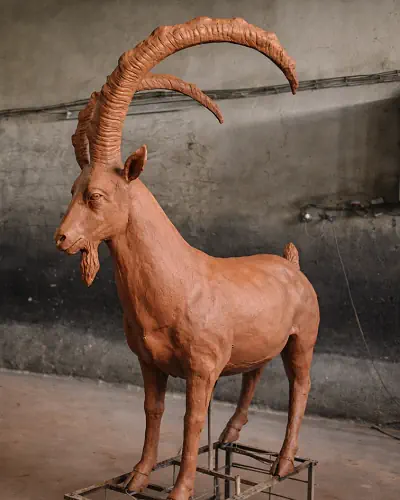
What Is a Sculpture Base? How to Choose the Right Pedestal?
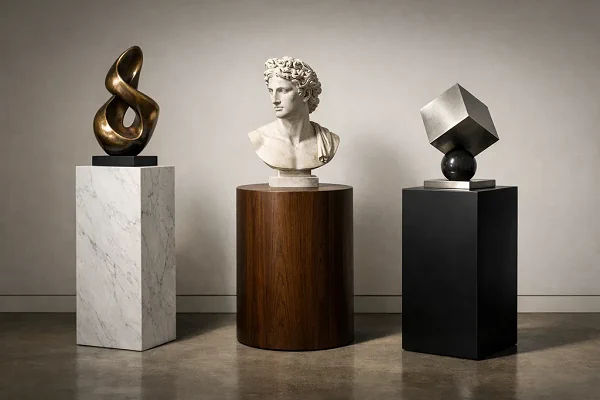
One of the most important elements that completes a sculpture is, in fact, its base - something that is often overlooked. Even a beautifully crafted piece can lose all its impact when placed on the wrong base. We frequently see the opposite as well; a simple but well-chosen base can make even an average work truly striking. So what exactly does a sculpture base do, and how do you choose the right one?
What Is a Sculpture Base?
A sculpture base is the supporting structure on which a work is placed. It does more than just hold the sculpture; it presents it to the viewer, establishes its relationship with the space, and becomes part of the overall composition. Since ancient Greek and Roman times, artists have consciously used the base to shape how a work is perceived. That has not changed today.
The base separates the sculpture from the ground and elevates it beyond an ordinary object. This distinction creates both a visual and psychological effect. When you place a work on a base, you give it a frame - you are telling the viewer, "look, this matters."
Types of Sculpture Bases
Wooden bases are among the most popular choices thanks to their warm appearance and workability. Hardwoods such as oak, walnut, and beech are both durable and offer a beautiful surface texture. They pair exceptionally well with organically shaped sculptures in earthy tones.
Stone and marble bases provide a heavier, more permanent feel. They look stunning alongside classical works. For outdoor sculptures, options like granite and basalt are highly durable.
Metal bases are particularly well-suited to contemporary and abstract pieces. Stainless steel, iron, or bronze can be used. Their clean, geometric forms create a minimalist effect in any space.
Concrete and ceramic bases have gained increasing attention in recent years. With its raw texture, concrete gives a modern, industrial feel, while colorful ceramic bases are a lovely option for small-scale decorative sculptures.
How to Choose the Right Base?
Size and proportion: The ratio of the base to the sculpture is perhaps the most critical factor. The base should be sturdy enough to support the sculpture's weight while remaining visually unobtrusive. A base that is too large makes the sculpture look small; one that is too small creates a sense of imbalance.
Material compatibility: The base should speak to the materials used in the sculpture. For a bronze piece, a dark wood or metal base creates a strong sense of unity. For a white marble sculpture, a light-toned stone or simple metal works well.
Relationship with the space: Where will the work be placed? Gallery settings call for clean lines and neutral tones, while home environments allow for warmer and more personal choices. For outdoor placement, durability above all else should come first.
Height: The height at which a sculpture stands directly affects how it is read. The general principle is that the viewer's eye level should meet the most important point of the work.
The Aesthetic Role of the Base
No matter how simple a base may be, it is a design object in its own right. Surface texture, corner details, color, and form choices all come together with the sculpture to form a whole. For this reason, the base should never be considered separately from the piece itself.
Some artists prefer to work without a base, placing the sculpture directly on the ground. This too is a conscious aesthetic choice that can create a powerful effect by integrating the work into its surroundings. But this approach does not suit every piece. Particularly for small-scale or delicately crafted works, the base also serves a protective function.
Custom Order Base Options
Standard bases do not always get the job done. For sculptures with unusual dimensions or forms, a custom-made base is often a far better solution. This ensures a base that fully meets the needs of the work - the right height, the right material.
Works produced by Heykel.org are fitted with a base when needed. The weight, dimensions, and posture of the commissioned sculpture determine whether a base is required - and more importantly, the artistic and aesthetic stance of the piece is the most significant factor in that decision. Our company assesses the base requirements during the ordering process and informs you accordingly.
Date Added: | Last Updated: