How to Take, Make, and Remove a Sculpture Mold
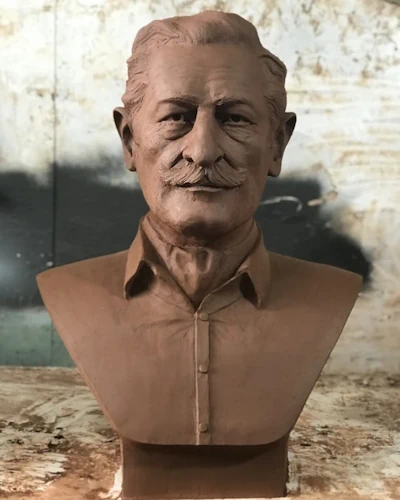
Sculpture art is an interdisciplinary field that encompasses not only the creation of form but also the process of making that form permanent. The sculpture mold-making process comes into play when an artist's original work produced in clay or plaster needs to be reproduced or transferred to a more durable material. Mold-making is the process of extracting a negative copy of an object; this negative cavity is then filled with casting material to obtain a positive copy of the work.
Although plaster and clay molds were widely used in traditional methods, silicone molds have come to the forefront in contemporary sculpture due to their flexibility and detail precision. The flexible structure of silicone allows even the finest textures on a sculpture to be transferred to the mold flawlessly. Especially in undercut forms, silicone's ability to flex away from the model unlike rigid molds offers the artist a great ease of application.
Sculpture Molds: A Journey from Negative to Positive
The most important factor to consider when taking a mold of a sculpture is the geometric structure of the model. While single-piece molds may suffice for simple forms, multi-piece molds must be designed for complex figures. Correctly determining the seam lines minimizes the cleaning and retouching work required after casting. Release agents used during the mold-making process prevent the model from sticking to the mold, protecting both the model and the mold.
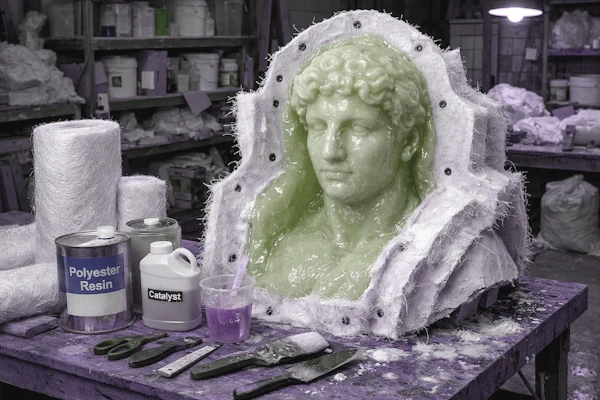
During the mold preparation stage, the use of a mother mold is also critically important. Flexible silicone molds can deform under the weight of the casting material. To prevent this deformation, a rigid support shell made of plaster or fiberglass is built around the silicone. This ensures that the original proportions and form of the sculpture are fully preserved during casting.
Advantages of Polyester Casting and Composite Materials
One of the most preferred materials in sculpture casting is polyester resin. Polyester is a polymer that is poured into the mold in liquid form and hardens through a chemical reaction triggered by a hardener (MEK peroxide) and an accelerator (cobalt) added to the mixture. The reason polyester is so popular in sculpture is that it is economical and can be mixed with various fillers (marble powder, metal powders, pigments) to achieve different appearances.
The most critical point when casting with polyester is the mixing ratios. Unbalanced use of the accelerator and hardener can cause the material to overheat (exothermic reaction), crack, or fail to fully cure. It should also be kept in mind that polyester will shrink slightly during the curing process. This must be taken into account at the design stage for precision work.
Fiberglass Applications: Durability and Lightness
For large-scale sculptures or outdoor applications, polyester alone may not provide sufficient strength. This is where fiberglass (glass fiber) reinforcement comes in. Fiberglass is a composite structure formed by combining polyester resin with layers of glass fiber. Sculptures produced this way are as strong as steel but lighter than plastic.
Fiberglass application is generally done using the hand lay-up method. First, a layer of gelcoat a high-quality resin that will form the outer surface of the sculpture is applied to the inner surface of the mold. Once the gelcoat has slightly hardened, layers of glass fiber saturated with polyester resin are laid over it. This layered structure makes the sculpture extraordinarily resistant to impacts, weather conditions, and corrosion. Especially in monumental sculptures, the use of fiberglass provides a great advantage in terms of transportation and installation.
Safety and Tips During the Application Process
Occupational health and safety must never be neglected when working with polyester and fiberglass. These materials emit strong chemical fumes; therefore, the working environment must be well ventilated, and active carbon filter masks, gloves, and protective goggles must be used. If resin comes into contact with skin, it must be immediately removed with appropriate cleaners without delay.
Date Added: | Last Updated: