Garden Sculpture Care
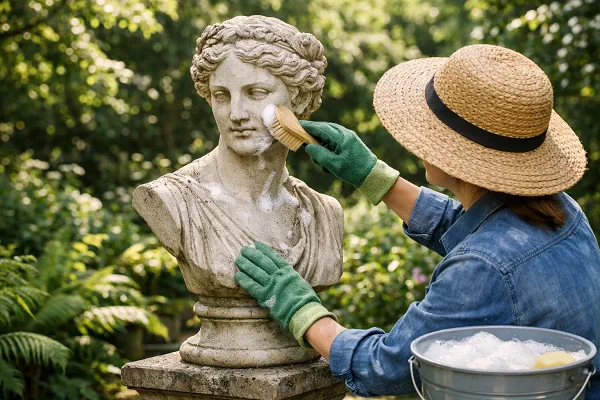
Before getting into garden sculpture care, you need to correctly identify what material your piece is made from. Because what works well for stone can actually be harmful for bronze. The most common materials you'll come across are: natural stone (granite, marble, limestone), concrete, ceramic, bronze, copper, iron, and resin/polyester. Each one has a different porosity and reacts differently to heat and water. So the idea of a one-size-fits-all "general maintenance" routine isn't really realistic - you have to approach each material on its own terms.
Caring for Stone and Concrete Sculptures
Stone and concrete are among the most widely used materials in garden sculptures. Their sturdy appearance can be misleading, though, because they're actually the surfaces that tend to wear down the most over time. Their porous structure allows moisture to seep in, and when that moisture freezes in winter, it expands and causes surface cracks.
For cleaning, warm water and a soft brush are usually all you need. Never use wire brushes or abrasive cleaning products - they damage the surface and make it more susceptible to dirt buildup down the line. If mold or moss has started to form, a diluted white vinegar solution or a baking soda mixture does the job. Harsh chemicals, especially on limestone-based stone, can cause serious discoloration.
After cleaning, applying a stone or concrete sealant makes a real difference. These products repel moisture while still allowing the surface to breathe. Repeating this process once a year can significantly extend the life of your sculpture.
Caring for Bronze and Metal Sculptures
One of the biggest misconceptions about bronze sculptures is that the green patina layer that forms on them is a bad thing. In reality, that layer actually serves a protective function - it prevents deeper oxidation of the metal. A certain amount of patina is even considered aesthetically valuable, and some collectors actively seek out that look.
To clean a bronze sculpture, start by dusting it off, then gently wash it with mild soapy warm water. Acid-based cleaners should be avoided entirely as they permanently damage the bronze surface. Once cleaned and dried, applying bronze wax or carnauba wax adds both shine and protection. This should be done at least twice a year - just before winter and at the start of summer are ideal times.
Iron and steel sculptures are a bit more challenging since they're far more vulnerable to rust. When paint on iron sculptures starts to peel, it's important to act quickly. The rust is first removed mechanically, then the surface is recoated with a suitable primer and exterior paint. Rust doesn't wait - what starts as a small spot can quickly become a serious structural problem.
Caring for Ceramic and Resin Sculptures
Ceramic sculptures are visually stunning but require a bit more attention due to their fragility. Ceramics that aren't frost-resistant should be brought indoors during winter in cold climates or areas that experience freezing temperatures. If that's not an option, covering them with a breathable protective cover is the next best thing.
In terms of cleaning, ceramics are actually the easiest to maintain. A damp cloth or soft sponge with a mild soap is all it takes. Harsh chemicals can damage the color and glaze. If a crack appears, it can be repaired with ceramic adhesive suitable for outdoor use - but since most cracks stem from moisture and frost, the real fix is prevention.
Resin and polyester sculptures don't need much intervention at all. Lightweight, durable, and water-resistant, these materials are especially popular in modern garden design. Their main enemy is prolonged UV exposure. Sunlight gradually fades and weakens resin over time. Applying a UV-protective spray goes a long way in slowing that process down.
Placing Your Sculpture Correctly
Where you position a sculpture directly affects how much maintenance it'll need down the road. A piece that's constantly wet, sitting in pooled water, or exposed to constant organic debris under a tree will deteriorate much faster.
It's important that the sculpture base doesn't make direct contact with soil. Placing a stone, concrete slab, or dedicated pedestal foot underneath reduces moisture absorption considerably. Sculptures placed under trees are constantly dealing with leaves, needles, and moss buildup. Open spots that don't receive excessive direct sunlight are generally ideal for most materials. Make sure to check the balance carefully during the initial sculpture installation.
Dealing with Moss and Algae
In any garden that holds moisture, moss is eventually inevitable. It spreads especially fast on shaded surfaces and areas near water. While it can sometimes add a natural charm visually, over time it works its way beneath the surface and starts breaking down the material.
One of the most effective methods for moss removal is a diluted bleach solution. That said, this isn't appropriate for every material - on colored or painted surfaces it can cause bleaching. As an alternative, moss-inhibiting products that are safe for garden plants are widely available and deliver both effective and safe results. Once a protective coating is applied after cleaning, moss has a much harder time taking hold again.
Repair or Professional Help? Heykel.org Is Here for You.
For minor cracks, surface stains, and light rust, at-home care is usually enough. But some situations genuinely call for a professional eye. Deep structural cracks, fragmentation, severe metal corrosion, or the restoration of a piece with significant artistic value all fall into that category.
For sculptures with high artistic worth, it's far wiser to consult a restoration specialist before attempting any chemical or abrasive treatment. The wrong intervention can cause permanent damage and make future repairs impossible. This risk is even greater with antique or handcrafted pieces. Keep in mind that the sculpture making process is a demanding one, and the financial investment is considerable. Take good care of your sculptures - they're worth it.
Date Added: | Last Updated: