What is Sculptor?
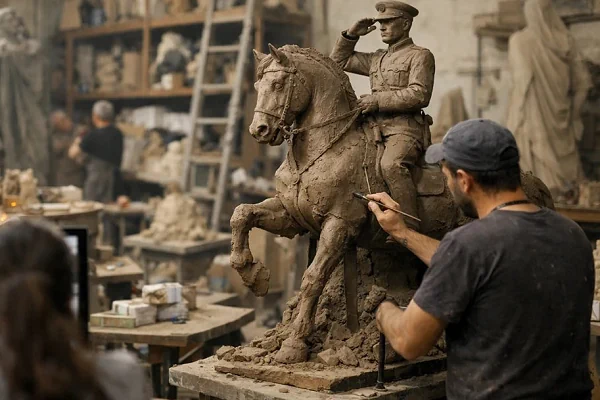
A sculptor is a person who adopts the art of creating three-dimensional works of art as a profession and way of life. Looking at the etymology of the word, it is seen to derive from the combination of the Persian words "heykel" (sculpture) and "tıraş" (to cut, to carve); meaning literally "the person who carves the sculpture." However, this definition falls quite short today. The modern sculptor does not only carve; they cast, weld, construct, deconstruct, install, and sometimes simply transport an idea into space.
The most fundamental characteristic that distinguishes a sculptor from other artists is the relationship they establish with space. A painter works with a surface; a sculptor produces within real space, together with it. Light, shadow, weight, balance, and the distribution of mass are elements that every sculptor must constantly take into account. For this reason, being a sculptor requires a holistic mastery that develops in the mind, the hands, and the body alike.
The Historical Status of the Sculptor
Throughout history, the sculptor has been the person who shapes the memory of societies. In Ancient Egypt, sculptors gave form to the likenesses of gods and pharaohs, making religious and political authority tangible. These artists accepted remaining anonymous; their signatures did not matter, what mattered was the power of the form they created. In Ancient Greece, the situation began to change. Names such as Phidias, Praxiteles, and Myron gained great prestige in their time and their works were recognized as masterpieces of art.
In the Middle Ages, the sculptor was the anonymous master of the cathedrals. The hands that moved stone were mostly buried in obscurity; but the figures they created stood for centuries. With the Renaissance, the figure of the sculptor was once again elevated. They were no longer seen merely as a skilled craftsman, but as the bearer of a divine talent. Michelangelo is the most striking example of this transformation. The people of his time called him "il divino," meaning "the divine one."
The Sculptor's Relationship with Material
To understand a sculptor, one must understand the relationship they establish with their material. Each material offers the artist a different language. Stone is resistant and demands patience; but it lasts for thousands of years. Wood is warm and organic; its grain and texture contribute their own character to the work. Bronze allows the finest details to be captured through casting. Clay, on the other hand, is the most direct material; it carries the sculptor's fingers, pressure, and touch directly on the form.
Great sculptors have generally become identified with a particular material. Michelangelo used marble, Brâncuși used stone and bronze, and Giacometti used bronze each in their own distinctive ways. This choice is not coincidental; over time, the sculptor discovers which material best carries their thoughts and enters into a deep dialogue with that material. For a master sculptor, material is not an object to be subdued, but a partner to be listened to and understood.
Sculptors Who Left Their Mark on World History
In the history of art, some sculptors profoundly influenced not only their own era but the generations that came after them. Michelangelo Buonarroti stands at the forefront of these names. With his David, Pietà, and Moses, he elevated the human form in marble to its highest point. Auguste Rodin, at the end of the 19th century, redefined the understanding of sculpture; he deliberately chose the sense of incompleteness, the roughness of surfaces, and raw expression. The Thinker became one of the most recognized sculptures of all time.
Constantin Brâncuși became the pioneer of abstract sculpture. He simplified forms, reduced them to their essence, and rejected every excess as an element that obscures reality. Alberto Giacometti, with his tall, thin, almost dissolving figures, translated existential solitude into the language of sculpture. These figures produced not only works, but a perspective, a worldview.
Being a Sculptor Requires Patience, Body, and Mind
Sculpture is an occupation that is intense both mentally and physically. A sculptor, while transferring a form taking shape in the mind into real space, must constantly think in three dimensions. Front, back, side; how the light will fall from every angle, where the shadow will intensify, and how the mass will be distributed must all be calculated. This requires intuition and technical knowledge to work simultaneously.
On the other hand, sculpture is a physical art form. A sculptor carving stone exerts physical effort for hours; one casting bronze works at high temperatures; one welding iron struggles with the resistance of flame and metal. For this reason, the studio holds a central place in a sculptor's life. The studio is not merely a workspace, but a space for thinking and transformation.
The Changing Identity of the Sculptor Today
The contemporary sculptor has gone far beyond traditional definitions. Today a sculptor can produce forms with a 3D printer, design spaces with light, make sound and video a part of sculpture, or present a work left to decay in nature as an artwork. With the rise of conceptual art, the sculptor's mind became as decisive as their hands. Sometimes the idea itself is the sculpture.
However, despite all these transformations, there is one thing that remains unchanged at the core of the sculptor: the will to bring an idea into existence in space. Between the ancient Greek master who carves stone and the contemporary artist who creates installations with light, there are thousands of years, countless materials, and entirely different worldviews; but both are driven by the same fundamental impulse. The sculptor produces in order to make the invisible visible, to give concrete form to the abstract, and to seek the permanent within the transient.
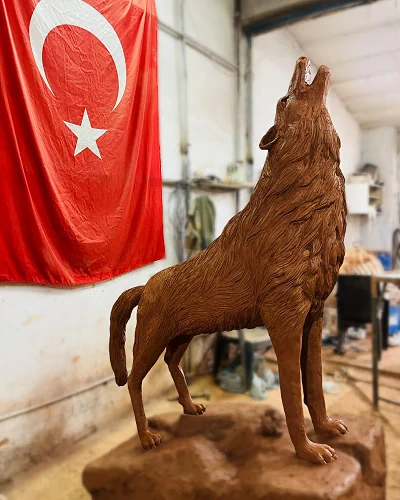
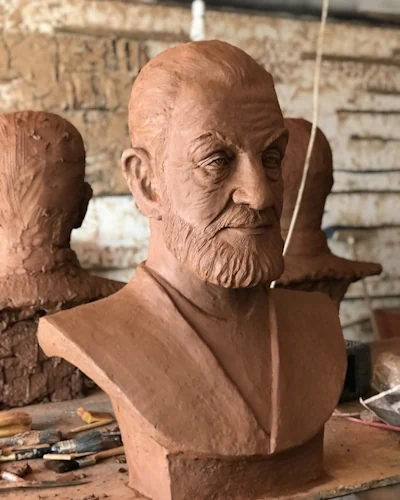
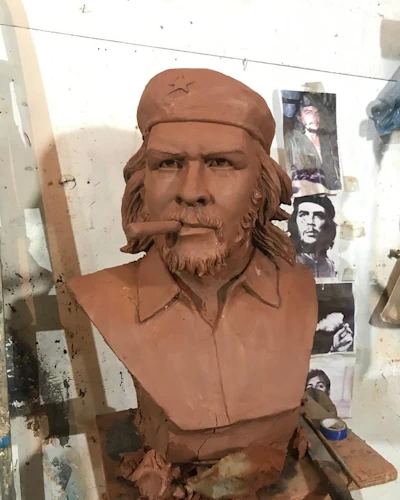
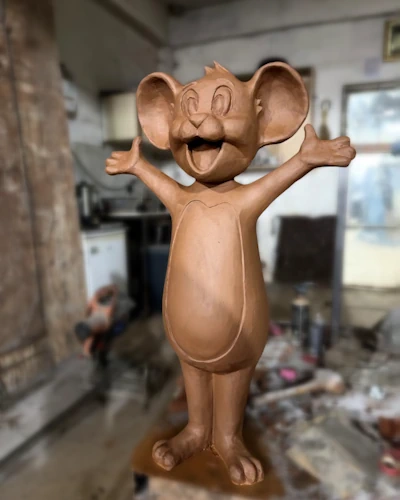
As Heykel.org, none of our 500+ works prepared by us involved the use of a device such as a 3D printer. We produced all our works by reshaping entirely with clay and we continue our work with the same approach.
Date Added: