Vik Muniz - Sculptor from Brazil
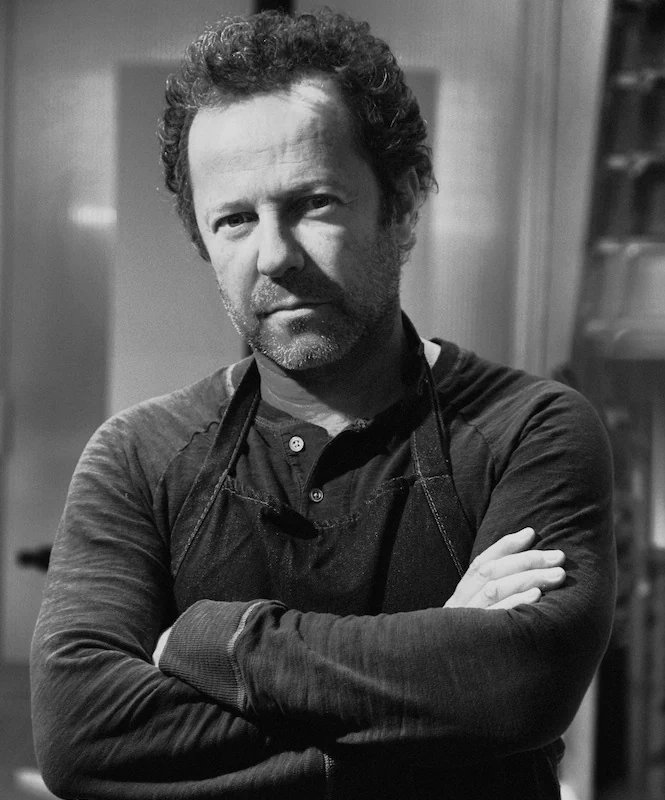
Names that leave a mark on the world art scene not only with their works but also with their way of thinking are rare. Vik Muniz is exactly one of those rare names. This Brazilian-born artist has continuously redrawn the boundaries of art with his photograph-based works created from sugar, chocolate, wire, trash, magazine clippings and dozens of other ordinary materials. In his view, art is not the monopoly of expensive materials or elite studios. Art is hidden everywhere; you just need the right eyes to see it.
Who Is Vik Muniz?
Vik Muniz was born in 1961 in São Paulo, Brazil. His real name is Victor Muniz. In his youth his relationship with art was based more on street observations and curiosity than on formal education. In 1983 a life-changing event occurred: he was caught in a fight, and with the compensation money he received for a gunshot wound he went to the United States. He settled in New York and gradually built his identity as an artist. Today Muniz lives between New York and Rio de Janeiro and has become one of the most recognized and original figures in the international art world.
Artistic Vision: Deceptive Surfaces and Deep Meanings
The most fundamental feature that sets Vik Muniz apart from others is his masterful play on the boundary between illusion and reality. When creating a work Muniz first builds a large-scale composition using unconventional materials, then photographs this composition and presents the photograph as the final work. The resulting image first enchants the viewer; then upon closer inspection the nature of the material becomes clear and this discovery creates an entirely different aesthetic experience. A child's portrait made of sugar, a landscape composed of chocolate or a reproduction of a Renaissance painting built from waste materials all of them feed this dual experience: first beauty, then shock, then deep contemplation.
Outstanding Series and Works
Several important series stand out in Muniz's career. In his "Pictures of Chocolate" series he reinterpreted famous works of art using melted chocolate. In his "Sugar Children" series he portrayed the children of Caribbean sugarcane workers using sugar crystals; the ironic connection between the material and the subject added a deep social layer to the work. In his "Pictures of Junk" series he created masterpieces from art history out of enormous piles of trash. The most striking example of this series is the recreation of Caravaggio's famous painting "Narcissus" using scrap metal and garbage.
The project that resonated most widely with the international public was undoubtedly the "Waste Land" project, which became the subject of a documentary film in 2010. Jardim Gramacho, near Rio de Janeiro, was one of the world's largest open-air landfills. Muniz worked together with the "catadores" the waste pickers who worked at this landfill. Their portraits were created from enormous trash compositions, photographed, and these photographs were put up for sale at international auctions. The proceeds were donated directly to the waste pickers' cooperative. The project attracted great attention both for its artistic and humanitarian dimensions; the documentary film directed by Lucy Walker was nominated for an Academy Award.
Vik Muniz and Sculpture
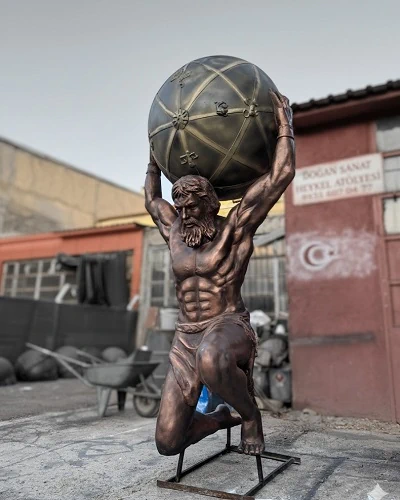
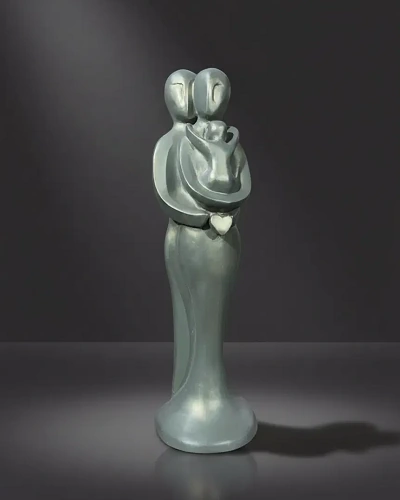
Although Vik Muniz is primarily known as a photograph-based artist, he has also engaged intensively with sculpture and three-dimensional installations during certain periods of his career. His spatial works created from wire and similar industrial materials are a natural extension of his relationship with the two-dimensional surface into three dimensions. For Muniz both sculpture and photography ask the same question: Is what we see really what we see? When does an object become a work of art? Where is the boundary between the ordinary and the extraordinary?
These questions form a philosophical axis that feeds all of his practical production. Muniz approaches sculpture not as a permanent and monumental form in the traditional sense but as a temporary, transformative and conceptual tool. The material is always the message itself.
International Recognition and Awards
Vik Muniz's works are today exhibited in important museums and galleries around the world. The Museum of Modern Art (MoMA), the Guggenheim Museum, the Whitney Museum of American Art and Tate Modern are among these institutions. In 2001 he represented Brazil at the Venice Biennale. The "Waste Land" documentary won the Audience Award at the Sundance Film Festival in 2010 and became a global center of attention with its Academy Award nomination. Muniz also regularly participates in the world's most prestigious art fairs and his works reach high figures at international auctions.
Social Responsibility and the Transformative Power of Art
Evaluating Vik Muniz solely on his technical mastery falls short. At the core of his art lies a strong sense of social responsibility. The Jardim Gramacho project is the most concrete proof of this; by using art as a tool he both made a marginalized community visible and directly improved their living conditions. For Muniz art is not a luxury confined within four walls but a living and transformative dialogue with society.
His Brazilian identity is one of the most important sources that feeds this understanding. Coming from a geography where inequality, poverty and at the same time an incredible energy for life coexist, Muniz positions his art right in the middle of these tensions. He brings ordinary people, forgotten communities and overlooked objects to the center of art. This choice is an inseparable part of both his aesthetic and ethical stance.
Conclusion: The Extraordinary Within the Ordinary
Vik Muniz is one of the most original voices in contemporary art. This artist who creates Caravaggio from trash, children's faces from sugar and impressionist paintings from chocolate stains teaches us the same lesson every time: if you look carefully, nothing ordinary is ever truly ordinary. The journey of a Brazilian artist that began on the streets of New York continues to echo today in the world's most respected museums, the most prestigious biennials and most importantly in the hearts of the poorest communities. Vik Muniz shows us not what art is, but what art can be.
Date Added: