Topkapi Palace Museum - Turkey, Istanbul
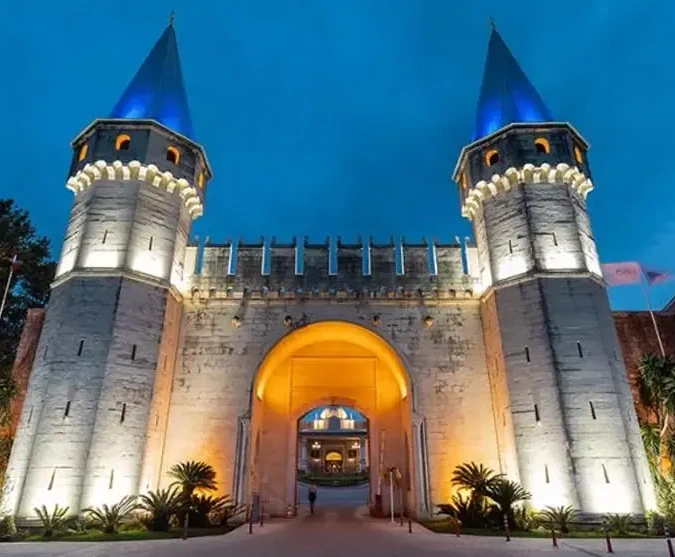
Topkapi Palace, one of the world's most important historical structures, served as both the administrative center and the royal residence of the Ottoman Empire for centuries. Rising on Istanbul's historic peninsula in a commanding position overlooking the magnificent views of the Bosphorus and the Golden Horn, this palace retains its status today as one of the most visited museums in the world.
History of Topkapi Palace
Construction of the palace was initiated in 1459 by Sultan Mehmed II, regarded as the architect of the Ottoman Empire's golden age. Built to serve as the symbol of the new capital following the conquest of Istanbul, the palace was used as the residence of Ottoman sultans and the administrative center of the state for approximately four hundred years. More than thirty sultans lived and reigned in this structure, which served as the heart of the empire until the mid-19th century.
The palace grew and expanded over time, with new structures, courtyards, and spaces added during each sultan's reign. The palace reached its most magnificent form during the reign of Suleiman the Magnificent, and the finest examples of Ottoman palace architecture and decorative arts emerged during this period. With Sultan Abdulmecid's move to Dolmabahce Palace in 1856, the active palace era of Topkapi came to an end, and the structure was converted into a museum in 1924.
Architectural Structure and Courtyards
Topkapi Palace spreads across a vast area of approximately 700,000 square meters. The palace has a unique architectural layout shaped around four main courtyards that open one after another. Each courtyard contains spaces that are more private and accessible to fewer people than the one before it. This hierarchical structure is an architectural reflection of Ottoman palace life and its understanding of governance.
While the first courtyard contains public areas accessible to the general public, the fourth courtyard was reserved exclusively for the sultan and his inner circle. The Gate of Felicity, known as Bâbüssaâde, is one of the most powerful architectural symbols of this hierarchy. The Imperial Council Hall, one of the palace's most important structures, holds historical significance as the place where the heart of Ottoman state governance beat.
The Harem
The most mysterious and intriguing section of Topkapi Palace is undoubtedly the Harem quarters. Consisting of approximately three hundred rooms, this section encompasses the private spaces where the sultan's family, wives, concubines, and eunuchs lived. The Harem functioned not merely as a residential area, but also as a center of power where Ottoman palace politics and power dynamics took shape.
The tile panels adorning the Harem's walls, embroidered ceilings, and stained glass windows house the most exquisite examples of Ottoman decorative arts. Each room has its own unique story and history, offering visitors an unparalleled experience that transports them centuries into the past.
The Museum's Collections
Topkapi Palace Museum is home to an extraordinary collection comprising some of the world's rarest treasures. The Chamber of Sacred Relics is one of the museum's most special sections, housing various sacred objects believed to have belonged to the Prophet Muhammad. The Mantle of the Prophet, beard hairs, sword, and letters are among the most precious pieces in this chamber.
In the treasury section, priceless jewels such as the world-famous Spoonmaker's Diamond and the Topkapi Dagger are on display. The 86-carat Spoonmaker's Diamond attracts great interest from visitors as one of the largest and most valuable diamonds in the world. In addition, the museum also houses extensive collections of Ottoman-era weapons, porcelains, miniatures, manuscripts, and kaftans.
UNESCO and World Heritage
Topkapi Palace was inscribed on the UNESCO World Heritage List in 1985 as part of Istanbul's historic areas. This status is an official recognition of the universal value the palace holds not only for Turkey, but for all of humanity. Every year, millions of visitors travel to Istanbul from all corners of the world to see this unique heritage in person.
Visitor Information
Topkapi Palace Museum is located in the Sultanahmet neighborhood of Istanbul's Fatih district. Situated in the same historic area as Hagia Sophia and the Sultan Ahmed Mosque, the palace is in the city's most central tourist zone. The museum is closed on Mondays and open to visitors on other days. The Harem section requires a separate ticket, and purchasing tickets in advance is recommended, especially during peak tourist seasons. The palace gardens and outer courtyards can be visited free of charge, and even these areas alone offer a historical journey well worth experiencing.
Date Added: