Tony Cragg - British Sculptor
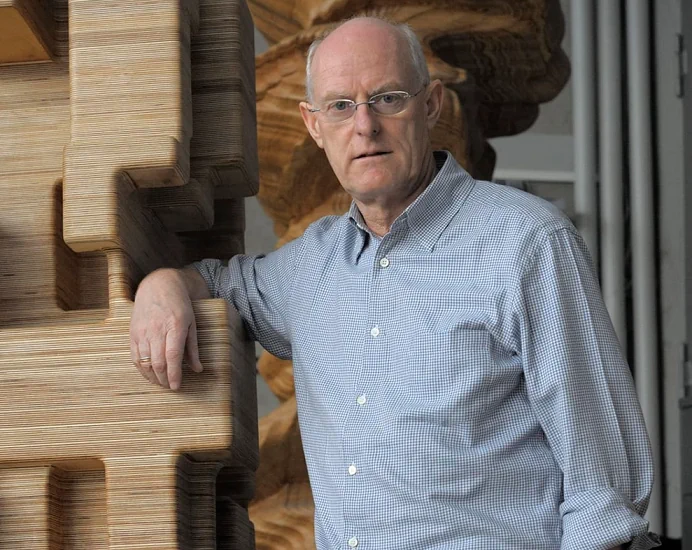
One of the most original and recognized names in contemporary sculpture, Tony Cragg secured a firm place for himself on the world art scene by transforming his deep curiosity about material into an artistic language. The British sculptor is an artist who constantly questions what form is and what it can be, provoking thought and surprise in viewers with every work he creates. When his sculptures enter a room, you cannot ignore them because Cragg's works truly transform the space they inhabit.
Who Is Tony Cragg?
Tony Cragg was born on 9 April 1949 in Liverpool, England. Before beginning his art education, he worked as a laboratory technician in a rubber factory an experience that profoundly shaped both his interest in materials and his scientific perspective. His art education, which began at Gloucester College of Art, continued at the Royal College of Art in London. In 1977, the year he graduated from the RCA, he moved to Germany and has been living and working in Wuppertal ever since. His move to Germany was not merely a geographical choice; it was a decision that also deeply influenced his artistic development.
His Artistic Vision and Style
Tony Cragg's sculptures appear at first glance to be organic forms, yet these forms are the product of an extremely deliberate thought process. Cragg focuses on discovering the potential within material itself. Working with a wide range of different materials wood, bronze, steel, glass, stone, and industrial plastics the artist succeeds in giving voice to the unique language of each material. His rotating and curving forms capture what feels like a frozen moment of movement, evoking a simultaneous sense of motion and balance in the viewer. It is possible to see shapes in Cragg's works that draw inspiration from evolutionary biology, chemistry, and physics which defines him as both an artist and a thinker.
Milestones in His Career
One of the most important turning points in Tony Cragg's career came in 1988, when he won the Turner Prize one of the most prestigious awards in the art world. This award definitively established Cragg on the international art scene and opened the door to exhibition invitations from around the globe. Works featured at the Venice Biennale, Documenta, and the world's leading museums made him one of the unquestionable names in contemporary sculpture. Then in 2007, he founded Skulpturenpark Waldfrieden in Wuppertal; this open-air sculpture park today houses both the artist's own works and those of other significant contemporary sculptors.
Materials and Techniques
Cragg's relationship with material is very different from that of an ordinary sculptor. He does not view material merely as a tool; he treats the material itself as a narrative. In the early years of his career, he created works by arranging plastic pieces collected from the street, broken objects, and industrial waste. This approach contained a powerful critique of consumer society. In the period that followed, he began working more with bronze, stainless steel, and wood. Large-scale cast bronze sculptures and meticulously crafted wooden sculptures are today among his most widely recognized works.
His Works and Exhibitions Around the World
Tony Cragg's works are today found in famous museums and collections across the world. Institutions such as Tate Modern, the Museum of Modern Art New York, the Centre Pompidou Paris, and the Ludwig Museum all host Cragg's works. His outdoor sculptures are permanently exhibited in public spaces, with Germany, England, France, and Japan leading among these countries. With each new exhibition, Cragg continues to make waves in the art world, and his productivity shows no sign of slowing. Despite approaching his eighties, the artist continues to work in his studio, refusing to stop pushing the boundaries of sculptural art.
Tony Cragg and the Future of Sculpture
Tony Cragg does not see sculpture merely as the act of creating form. In his view, sculpture is a way of redefining the relationship between humanity and the world. He constructs the dynamic relationship between material, form, space, and viewer differently in each of his works. This approach positions him not only as a sculptor but also as a thinker who shapes the philosophical foundations of contemporary art. Tony Cragg's legacy is measured not only by the works that emerge from his studio, but also by the young artists he has mentored, the sculpture park he founded, and the new dimensions he has added to our understanding of art. Sculpture art has been carried to a freer, bolder, and more thought-provoking place alongside him.
Date Added: