Terracotta Army Museum - Xi'an, China
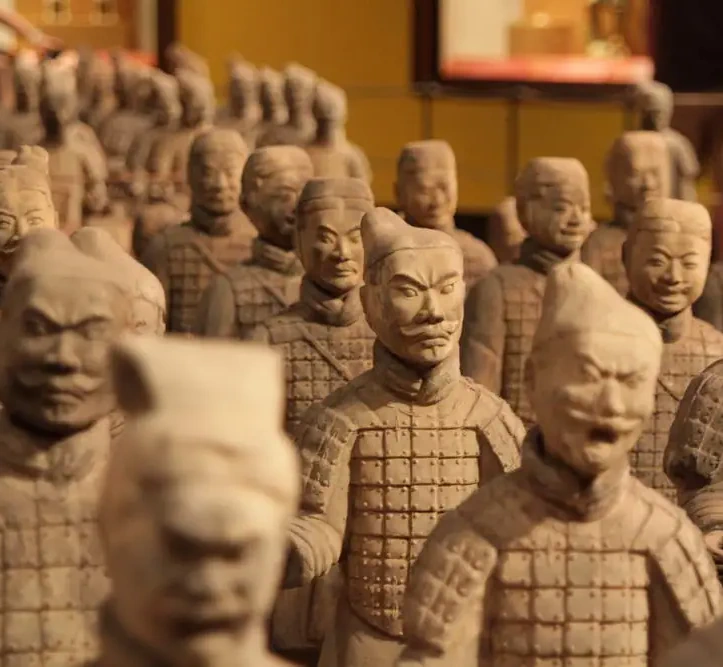
In Xi'an, the capital of China's Shaanxi province, at the starting point of the ancient Silk Road where one of history's greatest archaeological discoveries took place, a museum that defies human imagination awaits: The Terracotta Army Museum. Known as the "Eighth Wonder of the World," this museum houses thousands of terracotta soldiers and horses dating back to 210 BC, forming part of the burial complex of China's first emperor, Qin Shi Huang. These are the famous warriors often featured in Chinese martial arts films. The discovery began in 1974 when a farmer’s shovel hit a terracotta fragment while digging a water well, turning into the 20th century's biggest archaeological surprise and drawing millions of visitors to Xi'an today as a UNESCO World Heritage site.
History and Discovery of the Terracotta Army
In 221 BC, Emperor Qin Shi Huang established the first unified Chinese state by bringing together scattered kingdoms. Believing he would maintain his power in the afterlife, the emperor ordered an army to protect him on his journey. Consequently, more than eight thousand life-sized soldiers, horses, and chariots were crafted from terracotta and placed in hidden galleries around the tomb complex. The fact that each figure has unique facial features suggests they were based on real soldiers' portraits rather than a single model, significantly increasing their artistic value.
Systematic excavations following the accidental discovery in 1974 continue today. Three main pits are open to visitors, each housing different military units. Pit 1 is the largest area, featuring nearly two thousand soldiers in battle formation. Pit 2 showcases archers, cavalry, and chariots, while Pit 3 serves as the command center. Bronze chariots exhibited in a separate hall demonstrate the extraordinary level of metalworking of that period.
Museum Exhibition Concept and Spatial Experience
The Terracotta Army Museum offers a visit far beyond the usual museum experience. Upon entering the exhibition halls, visitors find themselves in the middle of history rather than just a gallery. Massive hangar-like structures allow the figures to be displayed in their original positions, preserving archaeological authenticity while offering a unique spatial experience. Partially excavated areas show that some figures are still waiting to be unearthed, confronting visitors with a living archaeological process. This feature makes the Terracotta Army incomparable to any other museum in the world.
In the interactive workshop area within the museum complex, visitors can experience making small-scale terracotta soldier figures. Following the footsteps of masters from two thousand years ago, shaping the clay and carving a name transforms abstract historical knowledge into a concrete and personal experience. This workshop is often the most memorable part of the visit, especially for children.
Practical Information and Visit Recommendations
Located about an hour from Xi'an city center, the museum is accessible by regular buses and tour services. March to November is the peak season, during which ticket prices increase and advance reservation is required. To avoid crowds, visiting in the early morning or at noon is the best option. It is recommended to avoid weekends and Chinese national holidays, as the crowds can negatively impact the experience. Renting an audio guide or visiting with an expert guide helps in understanding the story behind the figures from a deeper perspective.
Importance for Tourism and Cultural Heritage
Thanks to the Terracotta Army, Xi'an has become one of China's most visited cities after Beijing and Shanghai. Along with historical sites like the Xi'an City Walls, Giant Wild Goose Pagoda, and the Muslim Quarter, the Terracotta Army is the undisputed strongest attraction in the city's tourism route. For visitors interested in archaeology, ancient Chinese history, and Eastern civilizations, this museum is at the top of the "must-see" list. It is hard to imagine another place that presents humanity's shared heritage on this scale and with this authenticity.
Date Added: