São Paulo Museum of Art - São Paulo, Brazil
In São Paulo, Brazil's most populous and dynamic city, a renowned institution meets thousands of visitors every day on Paulista Avenue, the cultural and financial heart of the city. This institution, the São Paulo Museum of Art—locally known as MASP—houses Latin America's most prestigious art collection within one of the world's most unique museum buildings. Founded in 1947 and moved to its current iconic home in 1968, the museum holds double significance: it contains the most important collection of European art in the Southern Hemisphere and represents one of the most striking works of modern Brazilian architecture. Visiting MASP means not only seeing masterpieces by Van Gogh, Rembrandt, and Picasso but also experiencing the architectural wonder of the building itself.
Lina Bo Bardi's Architectural Masterpiece
The MASP building is the greatest work of Italian-Brazilian architect Lina Bo Bardi and a symbol of modern Brazilian architecture. The design constraint was striking: a requirement not to block the view of the lower parts of the city along Paulista Avenue. Bardi solved this constraint—and transformed it into an extraordinary architectural statement—by designing a 74-meter-long structure suspended by four massive concrete pillars. These giant pillars, painted bright red, and the open space beneath them instantly capture the attention of everyone walking along the boulevard. The area under the building has become a vibrant public space used for concerts, markets, and urban events; this feature makes MASP one of the rare structures that dissolves the boundary between the museum and city life.
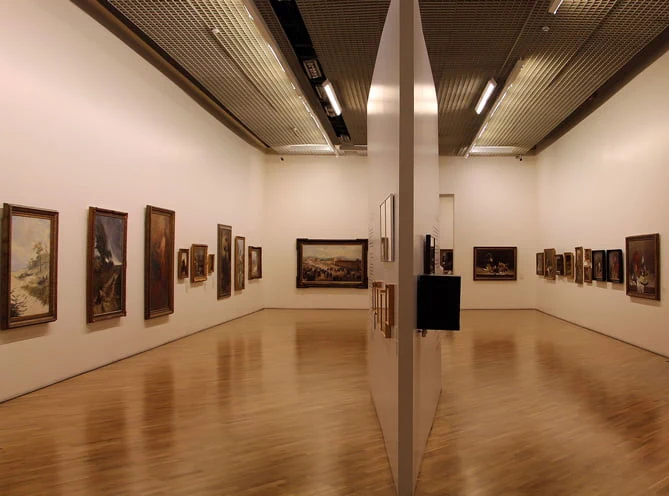
The design of the exhibition halls was also revolutionary for its time. The paintings displayed on glass easels (crystal easels) invented by Bo Bardi allow visitors to see both the front and back of the works simultaneously, creating an almost physical intimacy with the paintings. This approach transforms the artwork from a sacred, untouchable object into a living, accessible experience.
The Depth of the Collection
The MASP collection consists of over eight thousand works, the vast majority of which are of European origin. Spanning from Raphael, Bellini, Mantegna, and Titian to Velázquez, Rembrandt, Goya, and Delacroix, and further to Monet, Renoir, Cézanne, Van Gogh, and Picasso, the collection covers nearly the entire history of European art. Holding the title of the most comprehensive European art collection in Latin America, MASP places Brazil in a powerful position on the global art map. The Brazilian art section is also exceptionally rich, featuring works by pioneers of Brazilian modernism such as Tarsila do Amaral and Cândido Portinari.
The Museum's Social Role and Programs
Since its inception, MASP has taken on a role far beyond that of a standard museum. Within the Institute of Contemporary Art established in the 1950s, workshops for printmaking, painting, sculpture, dance, and design were organized; Lina Bo Bardi herself taught in these workshops. This educational legacy remains an integral part of the museum's identity today. The antique and craft market held every Sunday in the open space beneath the museum on Paulista Avenue creates the most organic and warm meeting point between the people of São Paulo and MASP.
Importance in Terms of Tourism and Cultural Heritage
MASP is undoubtedly São Paulo's most important cultural destination. Alongside other cultural hubs like Ibirapuera Park, Pinacoteca, and Vila Madalena, MASP has become an essential part of the itinerary for both Brazilians and foreign visitors. The collection and the building itself, listed as part of Brazil's National Heritage, define MASP not just as a museum but as a source of cultural pride for the entire country. For anyone interested in Latin American art, modern architecture, and European Impressionism, this museum remains one of the strongest reasons to visit São Paulo.
Date Added: