Simon Bolivar Statue - Ecuador Quito
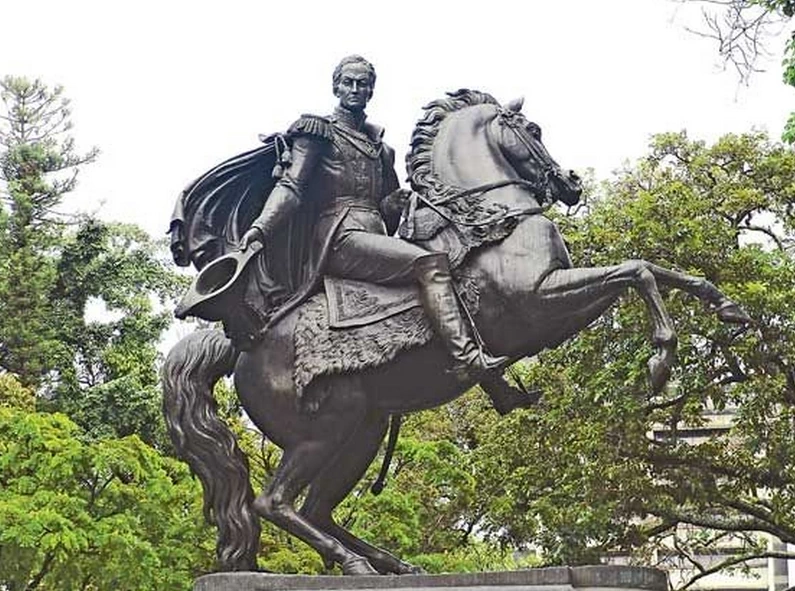
Ecuador's capital Quito doesn't settle for being merely the second highest-altitude capital in the world; it impresses visitors with the depth of its history and the unique weight it carries through its streets. At the center of that weight stands the Simón Bolívar Statue. Gazing over Quito's historic fabric from the tip of La Alameda Park, that equestrian statue is not simply a memorial it is a people's passion for freedom cast in stone and bronze. Even a first-time visitor to Quito, standing before the statue, will feel something surge from the region's past and strike them head-on.
Where Is La Alameda Park and the Statue?
The Simón Bolívar Statue is positioned at the apex of the triangular La Alameda Park, right at the starting point of Quito's historic city center. The park sits at the beginning of Guayaquil Avenue and functions like a gateway to the old town. Quito's La Alameda also draws attention for housing one of South America's oldest observatories; opened during President García Moreno's tenure in 1873, it is still used today for both meteorology and astronomy. At the northern end of the park lie two ornamental lakes where visitors can rent rowboats and spend time on the water. Taken together, the park is already a destination in its own right and the Bolívar Statue is undeniably its focal point.
Who Was Simón Bolívar? What Was His Connection to Ecuador?
Standing before the statue, one can't help but ask: who was this man, and why does he matter so much? Simón Bolívar was born on July 24, 1783, in Caracas, Venezuela. Known by his full name Simón José Antonio de la Santísima Trinidad Bolívar Palacios Ponte y Blanco, he represents the military and political genius who liberated the nations now known as Colombia, Venezuela, Ecuador, Peru, Panama, and Bolivia from Spanish rule. His popular title was "El Libertador" the Liberator of America. No one officially bestowed this name upon him; it was a spontaneous tribute from the people when he entered Venezuela's capital in 1813, and he carried it until his dying day.
His connection to Ecuador runs especially deep. On May 24, 1822, General Antonio José de Sucre, under Bolívar's command, won a historic victory on the slopes of the Pichincha volcano. That victory secured the independence of Quito and its surrounding territories once and for all. In June 1822, Bolívar himself walked through the streets of Quito. The city welcomed him with great enthusiasm. From that point on, Ecuador became part of Gran Colombia. In other words, Bolívar is no abstract hero to Quito he is the man who actually won this city's freedom.
What You Should Know About the Statue
The Bolívar Statue in Quito depicts him mounted on horseback in a commanding pose. The horse rears up on its hind legs while Bolívar sits upright. This composition follows the classic equestrian statue tradition seen in many Bolívar monuments across Latin America. Indeed, equestrian Bolívar statues have become iconic landmarks in cities such as Bogotá, Lima, and Mexico City. The Quito statue is placed at the sharp tip of La Alameda, slightly elevated, creating a striking silhouette against the sky when viewed from the surroundings. In the morning light or on mildly misty days, the statue takes on an almost mythological appearance.
The statue is located very close to Quito's busiest tourist areas. Since it is within walking distance of the historic city center, the majority of visitors exploring the city pass through this park. Yet La Alameda tends to be less crowded than Independence Square or the Cathedral which is an advantage for those who want a quiet moment in front of the statue.
Bolívar's Death and His Legacy
After all these struggles, Bolívar passed away on December 17, 1830, at the age of 47. The cause of death was tuberculosis. He spent his final days at the Quinta de San Pedro Alejandrino estate near Santa Marta, Colombia. At the moment of his death, only his childhood friend Jose Palacios and his comrade General Montilla were by his side. The words Montilla is said to have spoken at that moment still echo through the pages of history: "The sun of Colombia has set." The country of Bolivia bears his name; when it gained independence in 1825, the name was chosen as a tribute to the respect felt for him.
Today, monuments, squares, universities, and cultural centers dedicated to Bolívar can be found in cities around the world. Statues of him have been erected in Paris, Madrid, London, and Washington. His face appears on coins and banknotes, on postage stamps, and schools and theaters carry his name. But the statue in Quito carries a meaning beyond mere commemoration or symbolism: Bolívar actually set foot in this city, walked its streets, and fought to win the freedom of this land.
How to Get to the Bolívar Statue During a Visit to Quito
La Alameda Park is easily reachable on foot from Quito's historic center. Walking along Guayaquil Avenue, the park appears naturally before you. Access by public transport is also quite straightforward, as the majority of Quito's central routes pass through this area. In the morning hours the park is calm and refreshing, and the statue catches the best light at this time of day. If an old town tour of Quito is on the agenda, La Alameda makes a natural starting or finishing point for the route. The observatory and small lake inside the park are also well worth making use of.
Date Added: