Prado Museum - Spain, Madrid
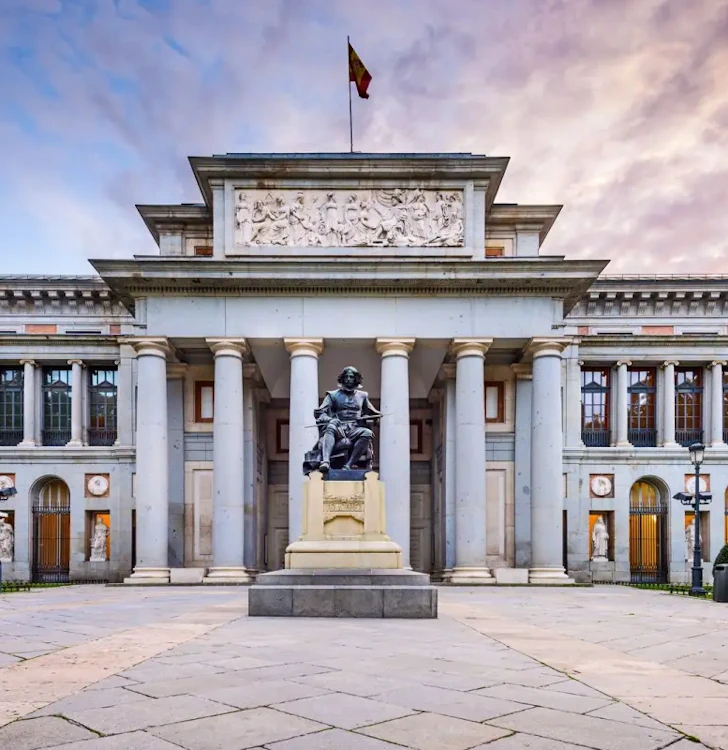
The Prado Museum is located in the very heart of Madrid, the capital of Spain, on the Paseo del Prado boulevard. Known as the city's most important art and cultural axis, this area is referred to as the "Golden Triangle of Art" because it houses major art institutions such as the Reina Sofia Museum and the Thyssen-Bornemisza Museum alongside the Prado Museum. Located within walking distance of Madrid's Retiro Park, the museum can easily be included in visitors' daily travel plans thanks to its proximity to the city center. Drawing attention with its neoclassical architecture, the building has become one of Madrid's landmark structures, not only with the works inside but also with its exterior facade. Its closeness to other historical points of the city makes the Prado Museum a priority stop on the itinerary of every visitor coming to Madrid.
Where is the Prado Museum and How to Get There?
Thanks to Madrid's advanced metro and bus network, transportation to the Prado Museum is highly practical. When wishing to go by metro, the museum can be reached with a short walk by getting off at the Banco de España or Atocha stations. Many of the city's bus lines also pass through the boulevard where the museum is located. Due to its proximity to the Atocha Train Station, access is also extremely easy for visitors arriving by intercity train. For those who prefer taxis, there are drop-off and pick-up points around the museum. The distance is also walkable for those who want to come on foot from the city center. To avoid waiting in ticket queues due to heavy tourist traffic, especially during the summer months, purchasing online tickets in advance is recommended.
What is the Significance of the Prado Museum?
The Prado Museum was opened in 1819 for the purpose of exhibiting royal collections and has over time acquired one of the richest painting collections in the world. The works collected by the Spanish royal family over centuries form the foundation of the museum. Covering a wide period of European painting from the 12th century to the 20th century, the Prado serves as an indispensable resource for art history researchers. The vast majority of the works of the most important representatives of the Spanish school of painting are gathered in this museum. For this reason, the Prado Museum holds a critical importance not only for Spain but also for world art history. The Museum is considered one of the most important institutions representing the artistic heritage of Spanish identity.
What is Inside the Prado Museum?
The museum's collection includes masterpieces such as Diego Velazquez's "Las Meninas", Francisco Goya's famous works like "The Third of May 1808" and "The Nude Maja", El Greco's religiously themed paintings, and Hieronymus Bosch's triptych "The Garden of Earthly Delights". In addition to these, works by great European painters such as Titian, Rubens, and Rembrandt are also exhibited in the museum. The collection, consisting of tens of thousands of pieces, includes paintings as well as sculptures, decorative art pieces, and historical documents. Having many works from different periods of Goya together makes the museum a special center for those who want to examine this artist's works. Thanks to the works periodically rotated in the spacious halls, each visit can offer a different experience.
Recommendations for Visiting the Prado Museum
Considering the size of the collection, allocating at least two to three hours to visit the Prado Museum is recommended. Visiting during the morning hours when the crowds are less offers an opportunity to examine the works more comfortably. Taking a short guided tour that includes the highlights within the museum can be an efficient option for visitors with limited time. Those who want to take advantage of the free admission hours applied on certain days would benefit from checking up-to-date information in advance. The Prado Museum continues to be one of the most valuable stops of a Madrid trip for every visitor interested in art history.
Date Added: