National Museum of Korea - Seoul, South Korea
In Seoul, the capital of South Korea, situated within the modern development of the Yongsan district and close to the banks of the Han River, an institution presenting the most comprehensive display of Korea's five-thousand-year history and cultural heritage meets its visitors: the National Museum of Korea. With its current building opened in 2005, the museum ranks among the largest in Asia and forms the most extensive archive of Korean cultural heritage with a collection of over 400,000 artifacts. Moreover, this museum is entirely free of charge, offering both Korean citizens and foreign visitors the most accessible and high-quality way to deeply explore Korean history.
History of the Museum and the Significance of Its New Building
The origins of the National Museum of Korea date back to the 1910s, when Japan annexed Korea. Operating in different locations during various political periods, the museum existed in a state of both physical and institutional instability for decades. Having played a critical role in the reconstruction of Korean identity following independence in 1945, the museum was only able to move into its current building in 2005. This delay actually became an opportunity; designed with a modern museology approach, the new building has reached a level that can easily be compared with the world's best examples in terms of both exhibition conditions and visitor experience. The garden, featuring pools and green spaces that visitors leave behind as they exit the building, also gives the museum the identity of an urban breathing point.
Richness of the Collection and Highlighted Sections
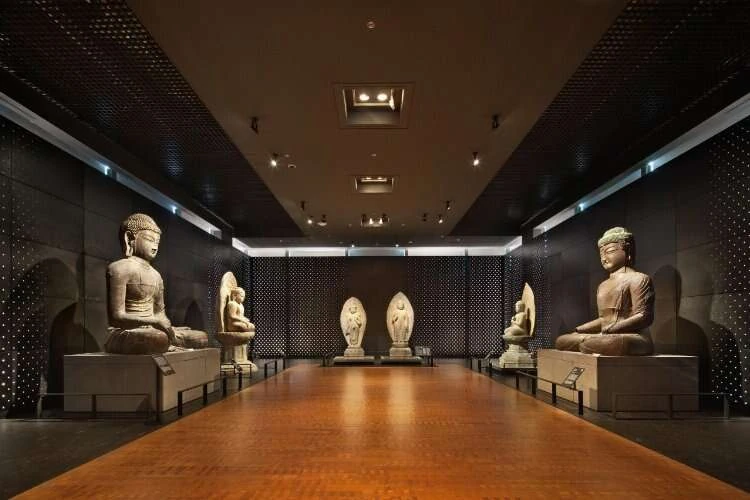
The collection of the National Museum of Korea is organized around six main galleries. The archaeology gallery conveys Korea's long history through objects and documents, starting from the prehistoric period and moving through the Three Kingdoms, Goryeo, and Joseon dynasties. The Goryeo period ceramics displayed in the Celadon section are among the most elegant and valuable porcelain collections in the world; the glaze colors and delicate patterns of these works clearly demonstrate the extraordinary technical mastery of the period's artisans. The calligraphy and painting gallery is one of the sections that most powerfully reflects Korea's intellectual tradition and artistic understanding based on Confucianism. In the Buddhist art gallery, the most distinguished examples of the Buddhist art tradition that Korea maintained for centuries are exhibited together.
One of the museum's most captivating objects, the Baekje Gilt-Bronze Incense Burner, is a masterpiece from the golden age of Korean art, unparalleled in the world for its extraordinary craftsmanship. This single object alone constitutes a sufficient reason to visit the National Museum of Korea.
Educational Programs and the Social Role of the Museum
The National Museum of Korea functions as an active educational and cultural institution beyond merely exhibiting its collection. Interactive programs for children and youth, special guided tours for school groups, and regular conferences and symposia reflect a dynamic programming approach that keeps the museum in constant contact with different segments of society. Multi-lingual guidance services, especially offered for foreign visitors interested in Korean culture, make the museum highly accessible on an international level.
Importance in Terms of Tourism and Cultural Heritage
The National Museum of Korea is one of the most important stops on Seoul's cultural tourism map. Along with routes such as Gyeongbokgung Palace, Bukchon Hanok Village, and the DMZ, the museum remains the place where visitors to Seoul establish the deepest contact with Korean history and culture. With the ever-increasing global interest in Korean culture, the number of international visitors to the museum grows every year. It is truly difficult to find another museum outside of Korea that presents the heritage of a five-thousand-year-old civilization with this quality and scope.
Date Added: