National Museum of India - New Delhi
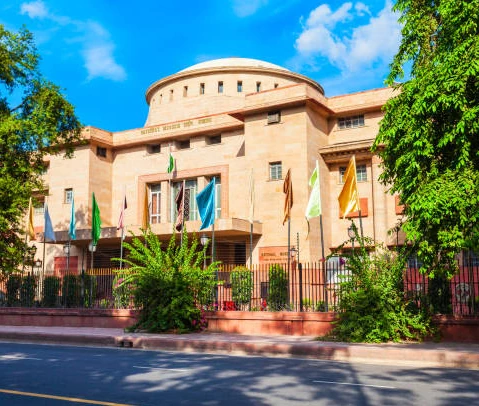
In New Delhi, the capital of India, situated on Janpath Road and close to the Rajpath Boulevard where Republic Day ceremonies are held, a long-standing institution housing the thousands-of-years-long artistic and cultural heritage of one of the world's oldest and richest civilizations welcomes its visitors: The National Museum of India. As one of the country's most significant cultural institutions, this museum, with its approximately 200,000 artifacts, remains the archive that most comprehensively documents India's uninterrupted civilizational journey from the prehistoric period to the present day. This collection, ranging from Indus Valley Civilization seals to Mughal period miniatures, Buddhist sculptures to textile art, strikingly reveals how multi-layered and deep-rooted a cultural heritage India possesses.
History and Foundation of the Museum
The origins of the National Museum of India are based on the institutional preparation process that began just before the country gained independence. The temporary exhibition organized in 1948 on the occasion of Prince Albert's visit to Delhi became one of the most important catalysts for the museum's foundation. When this exhibition, opened at Rashtrapati Bhavan, attracted great interest, the idea of establishing a permanent national museum gained momentum. Founded in 1949, the museum moved to its current building in 1960. As one of the most concrete institutional products of India's efforts to build its cultural identity post-independence, the museum carries a meaning far beyond a mere exhibition space with this historical context.
The museum's collection grew continuously over decades through both archaeological excavation finds and donations from private collections. Close cooperation with the Archaeological Survey of India ensured that the most valuable artifacts unearthed during excavations were brought directly to the museum. Thanks to this, the collection achieved an extremely diverse structure, representing different periods and coming from various regions of India.
Depth of the Collection and Highlighted Artifacts
The collection of the National Museum of India starts with Indus Valley Civilization artifacts dating back to 2500 BC, and even this starting point is a surprise in itself. Bronze dancer figures and stone sculptures from the Mohenjo-daro and Harappa excavations clearly reveal the artistic sophistication of this early civilization. Buddhist sculptures from the Maurya and Gupta periods represent the most refined eras of Indian art; the balance, anatomical understanding, and depth of spiritual expression in these works deeply affect the viewer. The section of miniature paintings and manuscripts from the Mughal period contains the most striking products of the artistic dialogue India established with the Islamic world.
The museum's textile and decorative arts collection is also highly noteworthy. Traditional weavings from different regions of India, jewelry, and examples of metallic handicrafts present the country's cultural diversity and the unique artistic language of each region as a visual panorama.
Museum Location and Visitor Experience
Since the museum is within walking distance of New Delhi's administrative and cultural center, it can be easily integrated into the city's tourist route. Being on the same axis as India Gate, Rajpath, and Rashtrapati Bhavan turns the museum into an organic part of New Delhi's political and cultural fabric. Guided tours, audio guide systems, and regular temporary exhibitions are also available at the museum, enriching the experience. However, it should be kept in mind that some sections of the museum may be closed at different times due to modernization and renovation works.
Importance for Tourism and Cultural Heritage
The National Museum of India is one of the primary cultural stops for every tourist visiting New Delhi. Along with iconic Delhi sites like the Red Fort, Qutb Minar, and the Lotus Temple, the museum forms one of the cornerstones of the city's cultural tourism axis. For visitors interested in Indian civilization, Buddhist history, and South Asian art, this museum offers content with a depth that cannot be found anywhere else in the world. Attempting to grasp India's five-thousand-year-old accumulation under a single roof is an ambitious goal; however, this museum continues to be a unique platform that makes reaching the closest point to that goal possible.
Date Added: