National Museum of China - Beijing, China
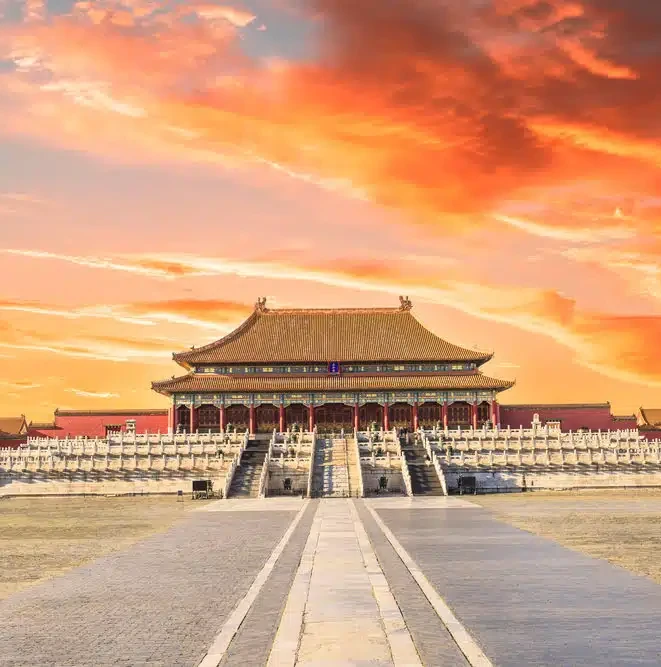
In Beijing, the capital of China, on the eastern edge of Tiananmen Square and in this unique location carrying the historical and cultural heritage of the world's most populous country, one of Asia's largest museums opens its doors to thousands of visitors every day: The National Museum of China. With a collection housing approximately eight million artifacts, the museum forms one of the most comprehensive cultural archives not only of China but of all human history. Presenting the traces of a five-thousand-year-old civilization under one roof, this massive institution remains the most important reference point conveying China's past, art, scientific heritage, and social transformation in the most extensive way.
History and Foundation of the Museum
The origins of the National Museum of China date back to 1912, immediately following the collapse of the Qing Dynasty and the museological efforts initiated after the founding of the Republic of China. Having operated under different institutional structures for decades, the museum was reorganized in 2003 under its current name and in its current building. The subsequent extensive renovation process was completed in 2011, and the museum was introduced to the world with its new face. With its massive facade facing Tiananmen Square, the current building easily ranks among the world's largest museum structures, covering approximately 200,000 square meters. This scale offers a spatial expression proportional to the size of the museum's collection.
The most decisive factor in the museum's foundation and development is China's archaeological richness. Neolithic artifacts unearthed during centuries of excavations, bronze objects belonging to the Shang and Zhou dynasties, Han period silk weavings, and the gold ornamentation art of the Tang period form the backbone of the museum's permanent collection. Each of these works serves as evidence documenting the contribution of Chinese civilization to world history in the most concrete way.
Scope of the Collection and Highlighted Artifacts
The collection of the National Museum of China spans an extraordinarily wide range chronologically, from the prehistoric period to the 20th century. Ritual vessels from the Bronze Age are among the most striking works reflecting the religious beliefs and social hierarchy of the period. The jade craftsmanship collection offers the opportunity to follow the thousand-year evolution of the mystical and political meaning China attributed to this green stone. Silk pieces dating from the Han period visually prove why the Silk Road held such strategic importance. The sections of the museum dedicated to modern Chinese history present a comprehensive narrative documenting the radical transformations the country has experienced from the 1949 revolution to the present day.
Museum Location and Visitor Experience
Positioned right at Tiananmen Square, the museum is located at the very heart of Beijing's political and cultural geography. Being on the same axis as the Forbidden City and the Tiananmen Monument turns the museum into an inseparable part of one of Beijing's most significant historical sites. While entry is free, ticket reservations must be made in advance; this is an important practical piece of information, especially for foreign visitors. Regular temporary exhibitions focusing on Chinese history and culture are also quite noteworthy; these exhibitions provide an additional layer of experience presenting different dimensions of the collection in thematic depth.
Importance for Tourism and Cultural Heritage
The National Museum of China is at the top of the list of places every tourist visiting Beijing must see. Along with iconic routes like the Forbidden City, the Great Wall of China, and the Summer Palace, the museum forms the backbone of Beijing's cultural tourism itinerary. Especially for visitors wishing to explore the depths of Chinese civilization, this museum offers content that cannot be found elsewhere on this scale. Ranking among the most visited museums in the world with tens of millions of visitors each year, the National Museum of China continues to be the strongest symbolic expression of how seriously a country takes its own past.
Date Added: