National Archaeological Museum - Athens, Greece
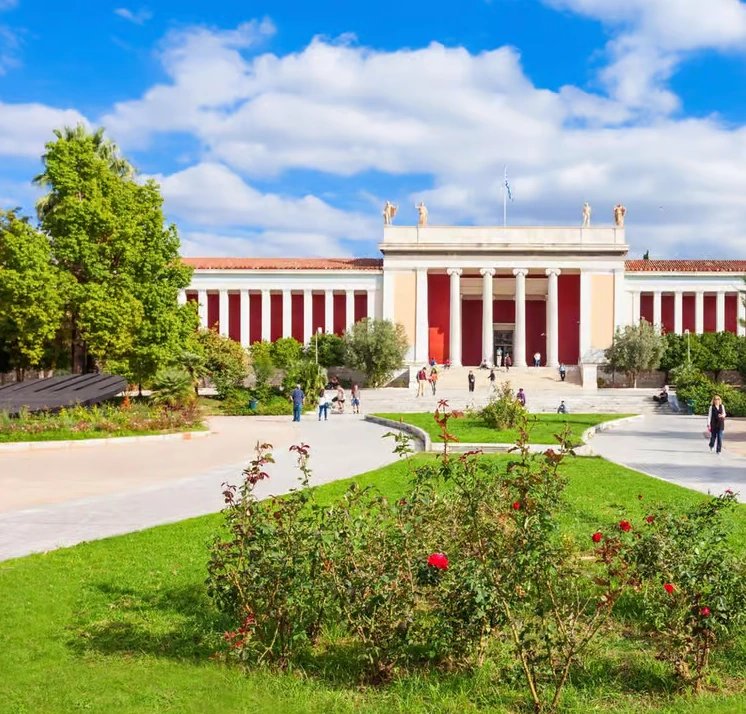
Located in the very heart of Athens, Greece, amidst the vibrant fabric of the Exarcheia neighborhood, stands a prestigious institution that houses one of the largest archaeological collections in the Mediterranean world: the National Archaeological Museum. Opened to the public in its current building in 1893, this long-standing institution is the only venue that provides the most comprehensive presentation of ancient Greece's thousands of years of artistic and cultural heritage, stretching from the Stone Age to Late Antiquity. While the Venus de Milo may be in the Louvre, the Elgin Marbles in London, and the Pergamon Altar in Berlin, the essential collection for understanding the entirety of ancient Greek art remains in Athens, within this museum. Unwaveringly maintaining its place among the world's most significant archaeological museums, this institution continues to be an inexhaustible resource for both scholars and curious visitors alike.
Where is the National Archaeological Museum: Location and Information
The National Archaeological Museum is located at 44 Patission Street in Athens. It is easily accessible by a five-minute walk from the Victoria metro station. While the museum is open year-round, it operates with shorter hours on Tuesday afternoons and may be closed on certain national holidays. Generally less crowded than the Acropolis, the museum is ideal for visitors seeking a quieter and deeper experience. The museum's garden also houses various archaeological remains and monumental works; exploring the exterior before heading inside provides a powerful introduction to the visit. If your stay in Athens is limited, it is recommended to set aside at least half a day for the museum; however, given the density of the collection, a full day offers a much more productive experience.
Among the museum's most recognized collections, the Mycenaean gold treasures stand out. Discovered by Heinrich Schliemann during the Mycenae excavations and dating back to the 16th century BC, these artifacts strikingly showcase the grandeur of Bronze Age Greece through gold masks, swords, and jewelry. The gold funeral mask, also known as the "Mask of Agamemnon," has become one of the most recognizable images of both the museum and ancient Greek archaeology.
Richness of the Collection and Featured Sections
The museum's sculpture collection is a unique resource for tracking the entire evolution of ancient Greek art. This journey, starting from the rigid and geometric kouros figures of the Archaic period and extending to the flawless anatomical understanding of the Classical era and the dramatic expression of the Hellenistic period, reveals the thousands-of-years-long course of sculptural history within a single museum. The Artemision Bronze is one of the museum's most impressive works; recovered from the depths of the Aegean Sea, this massive bronze figure depicts either Zeus or Poseidon, and the debate over which god it represents continues today. This ambiguity adds an extra layer of mystery to the piece.
The museum's wall painting collection is also remarkably noteworthy. These frescoes, originating from the Akrotiri excavations on the island of Thera (Santorini) and dating back to the 17th century BC, are rare works that bring the urban life, maritime culture, and understanding of nature in the ancient Aegean world to the present day with vivid colors. These frescoes are exhibited in a separate hall and constitute one of the earliest chronological layers of the collection.
Significance for Tourism and Cultural Heritage
The National Archaeological Museum is Athens' most visited cultural site after the Acropolis. Along with the Acropolis Museum and the Ancient Agora, it forms one of the three fundamental pillars of Athens' ancient world tourism route. For visitors interested in ancient Greek civilization, Bronze Age Aegean cultures, and the origins of Western art history, this museum offers a wealth of content that cannot be found in such scope anywhere else in the world. Coming to Athens and seeing original works in a context close to their original locations—after having seen the Greek collections at the Louvre or the British Museum—profoundly changes the meaning of those prior experiences.
Date Added: